A senior Pentagon official warned on Tuesday that Europe should not freeze American companies out of its defence build-up, even as Washington presses its NATO allies to take over responsibility for the continent’s conventional security.
Elbridge Colby said Europe still needs the F-35, as Germany expects clarity on U.S. troop cuts within weeks and pledges more Patriot missiles for Ukraine.
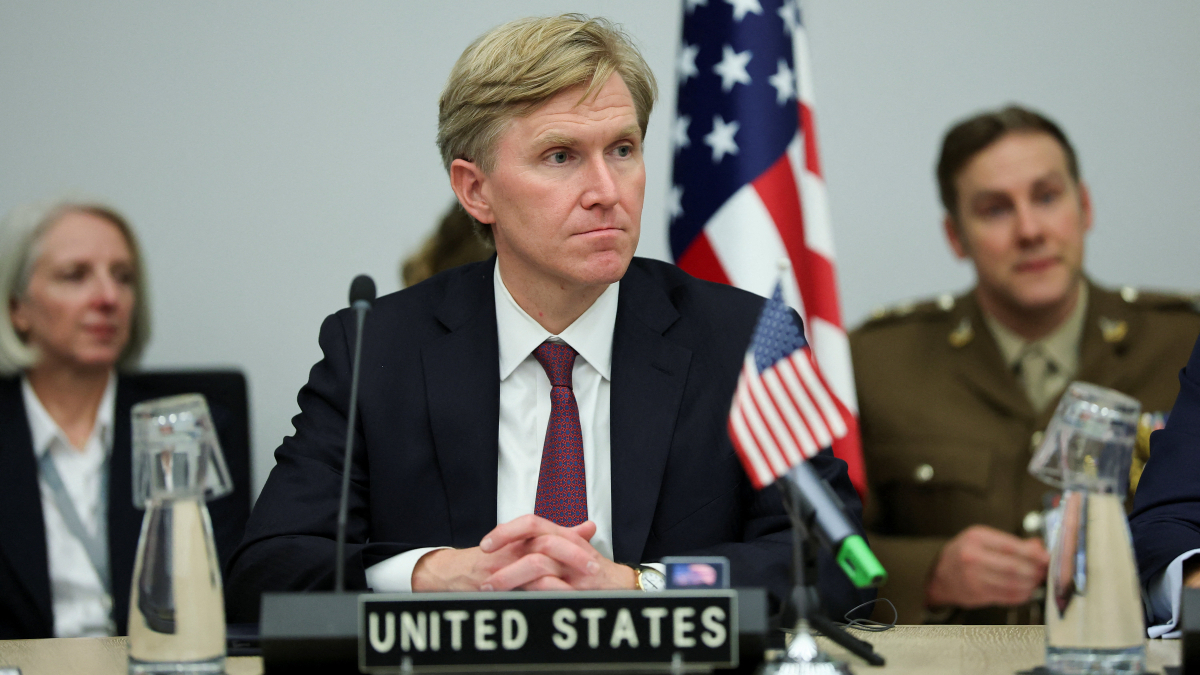
Speaking after talks at NATO headquarters in Brussels, Colby, the U.S. under secretary of defence for policy, said Washington understood that European governments wanted their own economies to benefit from higher military spending.
“We understand European populations need to benefit from greater defence spending. That’s only fair and reasonable,” he said. “But American companies make the best weaponry in the world. If you’re going to have a secure Europe in NATO 3.0, you need things like the F-35,” he added, referring to the U.S. fighter jet.
Colby said Washington was not demanding that weapons be built only in America, and was willing to support cooperation between U.S. and European defence industries. But the partnership, he said, had to be “pragmatic” and “balanced”.
He singled out Germany, the Nordic countries, Poland and the Netherlands for praise for raising their defence efforts, but said others needed to catch up urgently.
Troop review nears deadline
Colby said he still hoped a review of U.S. military deployments in Europe would be completed by its 1 December deadline. He was answering questions about how far, and how soon, American forces on the continent might be reduced.
Defence Secretary Pete Hegseth launched the six-month review in June. Colby did not say directly that it could cut the 80,000 U.S. troops stationed in Europe. Instead, he said the aim was to push Europe to do more while freeing the U.S. military to meet its commitments elsewhere.
“We’re going to allocate our military where it’s most needed for Americans,” he said, naming the Western Hemisphere and the Indo-Pacific as priorities.
“That doesn’t mean abandoning Europe. Rather, it means a different, rebalanced relationship with your allies, which harkens back to NATO 1.0 to the era of the Cold War, which is based on military readiness.”
Before the meeting, German Defence Minister Boris Pistorius said he expected a clearer picture of any U.S. drawdown within weeks.
“We expect changes in troop levels, but we don’t know anything concrete yet,” he said. He added that a shift in the balance of conventional forces “would have occurred under any other U.S. president, due to increased engagement in the Indo-Pacific”.
Germany is home to about 35,000 U.S. troops, the largest American contingent in Europe. European military sources have speculated that Washington could move a brigade, or around 5,000 troops, out of Germany, either to Asia or to Poland, closer to NATO’s eastern flank.
More air defence for Ukraine
The talks in Brussels were held by the Ramstein Group of countries supporting Ukraine’s military. They focused on getting more weapons to Kyiv before a harsh winter, as Russia intensifies air strikes on civilian infrastructure.
Pistorius said Germany and Norway would fund another package of U.S. weapons for Ukraine under the PURL programme. It will focus on PAC-2 and PAC-3 missiles for Patriot air defence systems, with Germany contributing about $300 million.
He said Germany was also working to integrate its IRIS-T missiles with Norway’s NASAMS air defence systems, and would supply more radars as well as ammunition for drones and fighter jets.
Pistorius said allies would again be urged to act on “everyone’s sense of responsibility”, an apparent reference to countries such as Greece that still hold large stocks of Patriot missiles.
Supporting Ukraine was not a charity event, he said, and went beyond solidarity with a country under attack.
“It is about the security of Europe, and it is about stopping Vladimir Putin and putting him in his place.”
Read more:














What is your opinion on this topic?
Leave the first comment