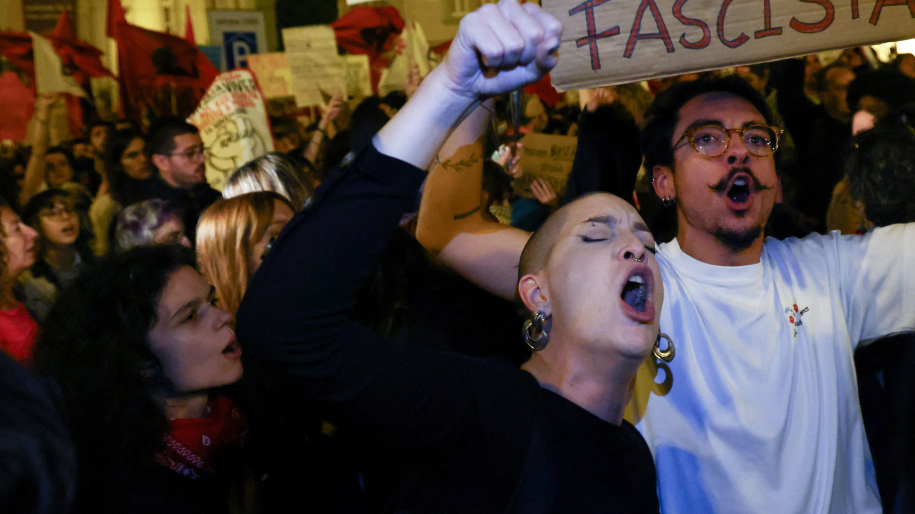
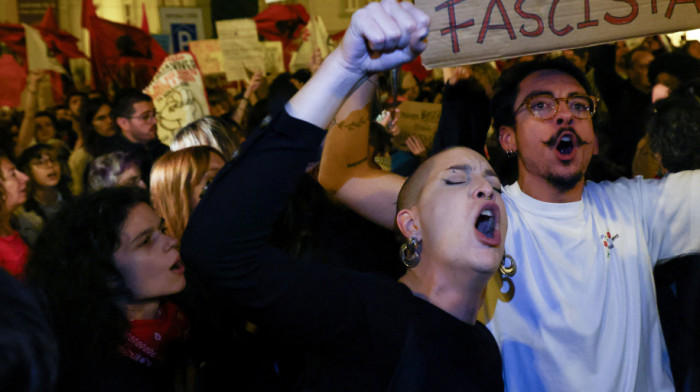
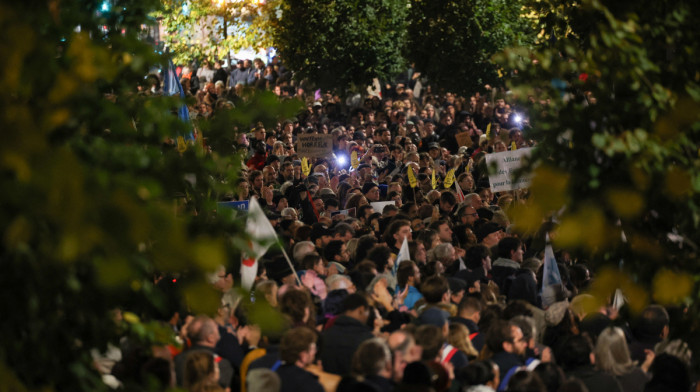
Thousands of demonstrators gathered outside Portugal's parliament on Tuesday to demand action on the country's worsening housing crisis and to protest recent police operations targeting housing activists, as lawmakers opened debate on the government's proposed 2027 budget.
The demonstration unfolded against a backdrop of mounting public frustration over soaring rents, rising property prices and growing concerns about affordable housing, particularly among younger Portuguese struggling to buy or rent homes.
Organisers said several thousand people took part in the rally near parliament, though police did not provide an official estimate.
The protest followed police operations in Lisbon and Porto on Sunday that removed encampments set up by housing activists. The actions, which involved officers using batons to clear the sites, sparked accusations of excessive force from campaigners and rights groups.
Portugal has become one of Europe's most expensive housing markets relative to income levels.
Residential property prices have more than doubled since 2017, while rents for newly signed leases have almost doubled over the same period. Critics argue that wages have failed to keep pace, leaving many households under increasing financial strain.
The issue has become particularly acute for younger generations, who face growing difficulties entering the housing market.
Among those attending the protest was actress Erica Rodrigues, who said the crisis was affecting people across age groups.
“The cost of living in Portugal is very high for what people earn. It is unbearable,” Rodrigues said.
She also criticised the government's handling of the issue, saying: “My congratulations to this government for the clown show it has put on in recent times. It has done a terrible job.”
Opposition to eviction reforms
Many demonstrators directed their criticism at a government-backed housing bill that would accelerate eviction procedures and remove rent caps on new rental contracts.
The legislation recently cleared its first parliamentary hurdle after the far-right Chega party abstained during the vote.
Protesters demanded the proposal be withdrawn, arguing that it would worsen housing insecurity at a time when affordability is already under pressure.
Joao Martins, a 39-year-old unemployed protester, said demonstrators were campaigning for “decent and affordable housing for everyone.”
He also called for a budget that would serve the wider population rather than a privileged minority.
“We are fighting for a state budget that genuinely reflects the interests of the majority of the population, rather than just a few privileged people,” Martins said.
According to Martins, demonstrators were also defending civil liberties following the police operations.
“We are also here for the right to protest, which has been seriously threatened in recent days,” he said.
The confrontations over the weekend have attracted scrutiny from oversight bodies and judicial authorities.
Portugal's internal affairs watchdog, the IGAI, has opened an inquiry into the police actions, while prosecutors have launched a separate investigation examining officers' conduct during the operations.
Police said 11 people suffered minor injuries, including three officers.
Housing advocacy group Casa para Viver (Homes to Live), however, disputed that figure and said around 60 people were injured during the clearances.
The differing accounts are expected to form part of the ongoing investigations.
Prime Minister Luis Montenegro, whose centre-right minority government faces growing pressure over housing policy, defended the police response during remarks in parliament.
Montenegro said officers acted within accepted legal and operational standards, arguing that the measures taken complied with principles of necessity and proportionality.
His comments are unlikely to ease tensions with housing activists, who have accused the government of prioritising enforcement over solutions to the affordability crisis.
Crisis echoes across Europe
The demonstrations in Portugal mirror similar protests that have taken place elsewhere in Europe, including Spain, as governments grapple with expanding housing shortages, rising rents and public anger over living costs.
Across the continent, housing has emerged as a defining political issue, particularly in major cities where demand continues to outstrip supply.
For Portugal, the challenge has become increasingly urgent as pressure grows on the government to address affordability concerns while balancing public finances and broader economic priorities.
With the 2027 budget now under parliamentary scrutiny and investigations into this week's police operations under way, both housing policy and the government's response to dissent are likely to remain at the centre of Portugal's political debate in the weeks ahead.
Read more:












What is your opinion on this topic?
Leave the first comment