



08:29 CET
Middle East conflict
live Saudi Aramco building attacked, limited fire reported
A building at Saudi Aramco’s headquarters in ...
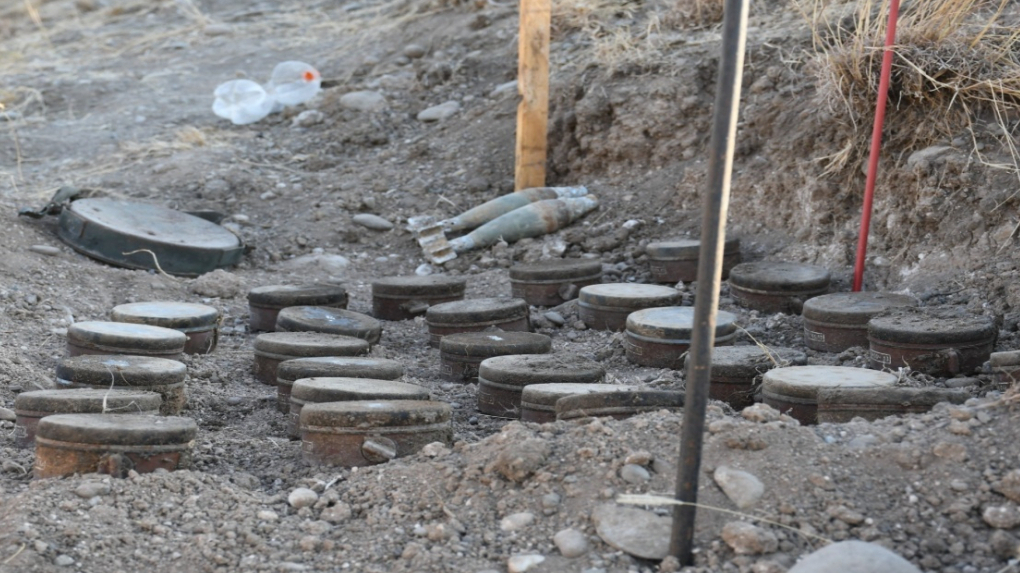


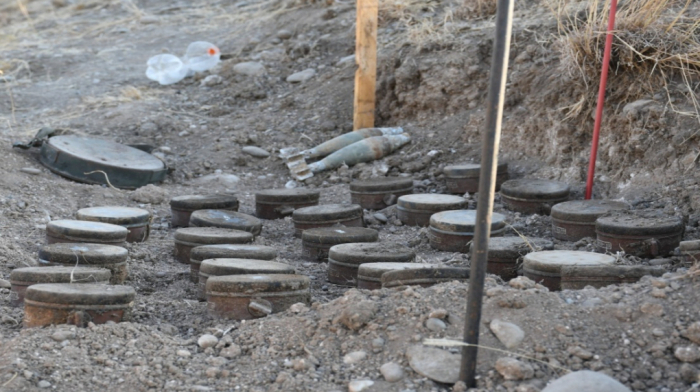
As leaders arrive in Baku for the Conference on Interaction and Confidence Building Measures in Asia (CICA), one issue linked Azerbaijan with guests from Southeast Asia more than trade, diplomacy or regional politics: the long and costly legacy of landmines and unexploded ordnance.
Cambodian Prime Minister Hun Manet and Lao President Thongloun Sisoulith both held talks with Azerbaijani President Ilham Aliyev ahead of the summit, with mine action featuring among the areas of discussion. While the conflicts that created the danger differ greatly, all three countries continue to face the challenge of making contaminated land safe for their citizens.
Laos remains one of the countries most heavily affected by unexploded ordnance. According to the Landmine and Cluster Munition Monitor, more than two million tonnes of bombs were dropped on the country during the Vietnam War era between 1964 and 1973, including over 270 million cluster submunitions.
Despite decades of clearance work, around 1,500 square kilometres of land remained confirmed hazardous at the end of 2024. Authorities cleared 75 square kilometres during the year, but the country acknowledges that further work will be required beyond its current 2030 target.
Cambodia's contamination stems from nearly three decades of conflict between 1970 and 1998. The Associated Press estimates that between four and six million landmines and explosive remnants of war were scattered across the country. Since the fighting ended, almost 20,000 people have been killed and around 45,000 injured by mines and other explosives.
Although the threat remains, Cambodia has developed internationally recognised expertise in humanitarian demining and today contributes personnel and technical knowledge to clearance operations abroad.
Azerbaijan faces a newer challenge. Mine clearance has become one of the country's largest reconstruction priorities in the Garabagh region.
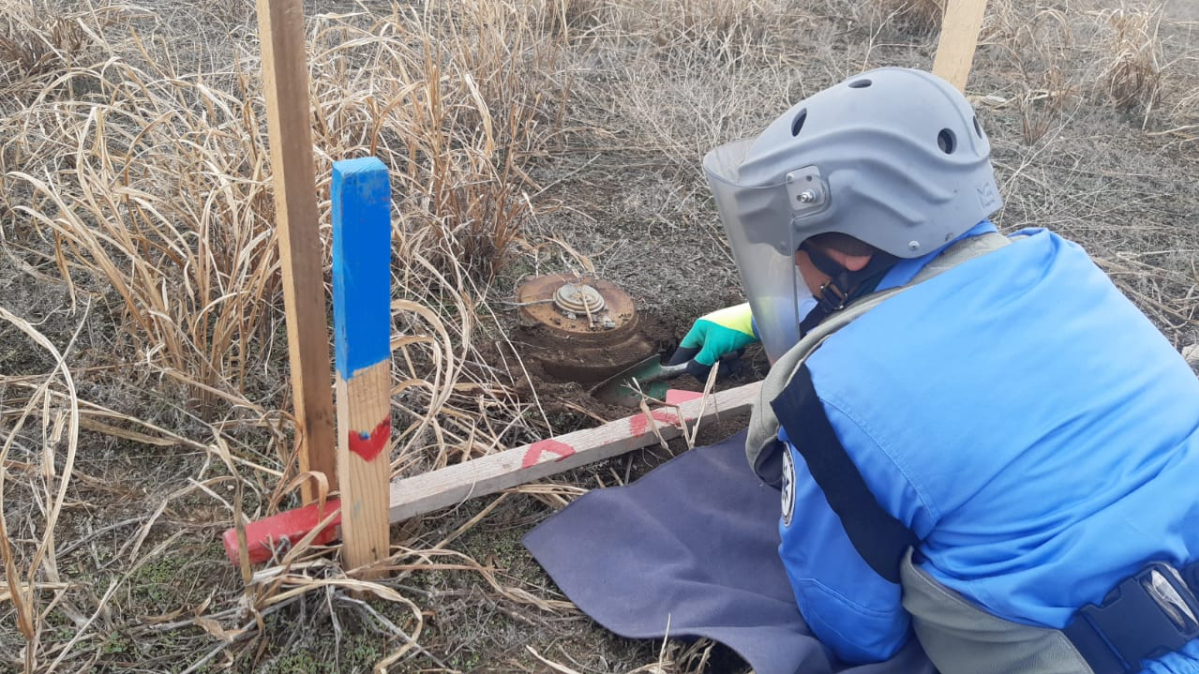
President Ilham Aliyev has said that 437 people have been killed or injured by mines since 2020, including 73 fatalities. Azerbaijani authorities estimate that more than 13 per cent of the country's territory is contaminated by mines or explosive remnants of war.
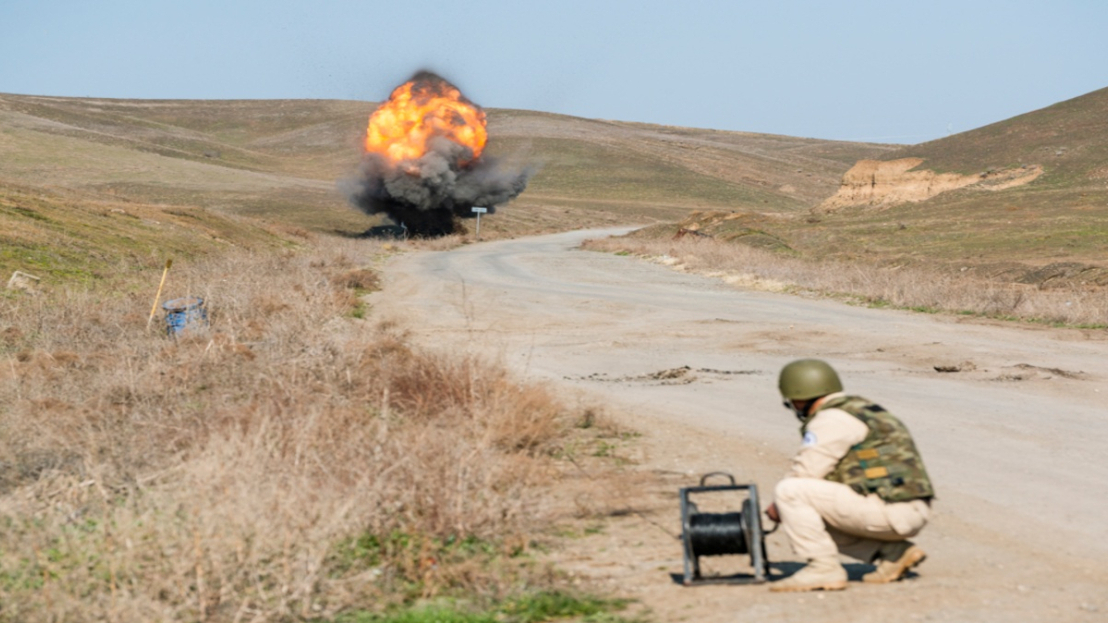
The bilateral discussions in Baku between the leaders of Azerbaijan, Laos and Cambodia highlighted how countries facing different security realities increasingly share similar technical and humanitarian challenges.
For mine-action specialists, the task is not simply removing explosives but identifying where they are located. Surveying contaminated land accurately is often the most important and costly stage of the process, helping authorities avoid deploying resources in areas that pose little risk.
Institutional cooperation between Azerbaijan and Southeast Asia has already begun taking shape.
In September, Azerbaijan's mine action agency, ANAMA, signed a memorandum of understanding with the ASEAN Regional Mine Action Centre (ARMAC), based in Phnom Penh. The two organisations have also engaged with Lao authorities as part of broader efforts to exchange expertise and best practices.
International demining organisations have played a role as well. Humanitarian group APOPO previously deployed a Cambodian team to Azerbaijan under a project focused on mine detection and clearance, while its training facilities in Cambodia continue to support operations worldwide.
No dedicated mine-action agreements were signed during the Cambodian delegation's visit to Baku. Rather, documents concluded between the two countries focused on economic cooperation, taxation and education.
However, public statements from both sides suggest a growing interest in practical cooperation on demining. Aliyev spoke of exchanging “experience, knowledge and training”, while Azerbaijani officials have repeatedly promoted the country's experience in combining mine clearance with reconstruction and resettlement efforts.
The most likely outcome of these discussions is therefore not a major new initiative but expanded technical cooperation through training programmes, study visits, institutional exchanges and technology-sharing projects.
For all three countries, financing remains one of the greatest obstacles.
Azerbaijan says it continues to fund most clearance operations from national resources while seeking greater access to specialist equipment and advanced technologies. Cambodia's mine-action sector remains heavily dependent on international donors, while Laos also relies significantly on external assistance.
Humanitarian organisations warn that progress can slow considerably when funding becomes uncertain, regardless of the technical expertise available.
The discussions in Baku underscored a shared reality: although the wars were different, the challenge of removing their explosive legacy remains remarkably similar.

A building at Saudi Aramco’s headquarters in ...

Ukrainian President Volodymyr Zelenskyy says Russia hit at least six energy targets in deadly strikes across Ukraine, showing Moscow is unwilling t...
As leaders arrive in Baku for the Conference on Interaction and Confidence Building Measures in Asia (CICA), one issue linked Azerbaijan with ...
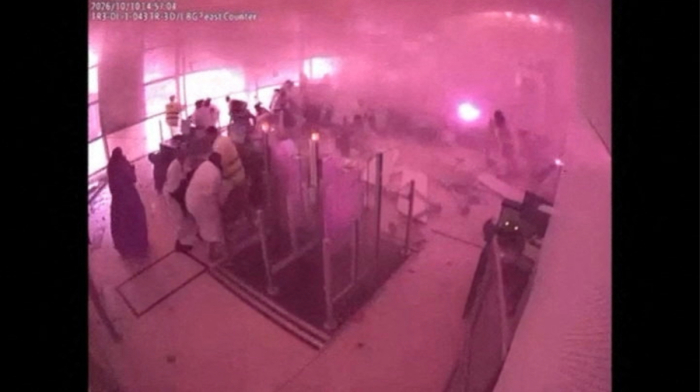
One person was killed and nearly a dozen hurt in a fresh attack on Riyadh's international airport on Sunday, Saudi authorities reported, a day after a strike claimed by Yemen's Houthis killed 13 people and wounded more than 300.

The Saudi-led coalition in Yemen said late Monday that it intercepted and destroyed two ballistic missiles launched by the Houthi group toward Khamis Mushait in southwestern Saudi Arabia.

The Houthi movement has escalated their attacks on Saudi Arabia, targeting the airport in Riyadh and other cities, killing more than a dozen people.
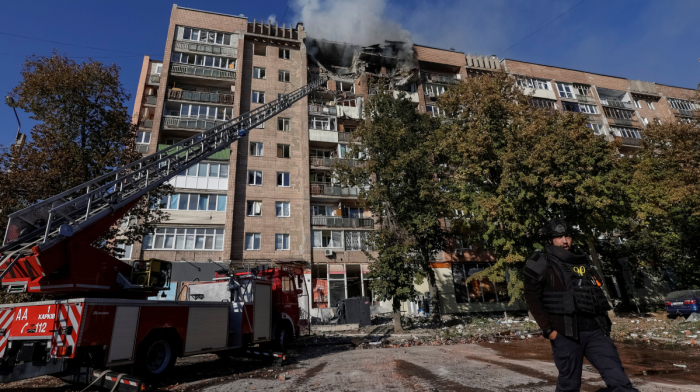
The Kremlin on Monday rejected a 60-day ceasefire idea proposed by Ukrainian President Volodymyr Zelenskyy to allow his country to hold presidential elections, saying it wanted an overall peace deal instead.
Ukrainian President Volodymyr Zelenskyy says Russia hit at least six energy targets in deadly strikes across Ukraine, showing Moscow is unwilling to accept the energy ceasefire announced by U.S. President Donald Trump.
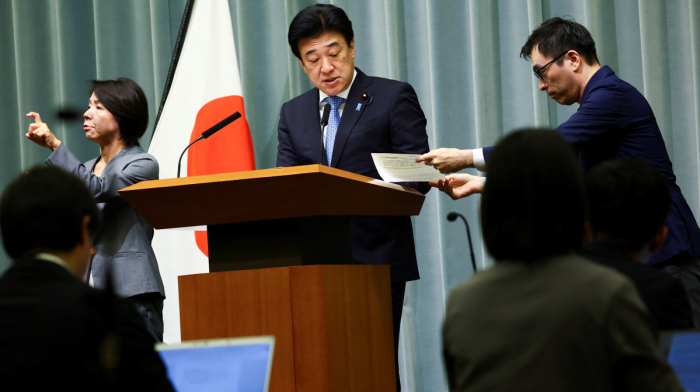
Russia’s Federal Security Service (FSB) has detained a Japanese journalist on suspicion of espionage, as relations between Moscow and Tokyo remain strained over Russia’s war in Ukraine.

The European Union has opened accession negotiations with Ukraine on two major policy clusters, marking another step in Kyiv's long-term effort to join the bloc.
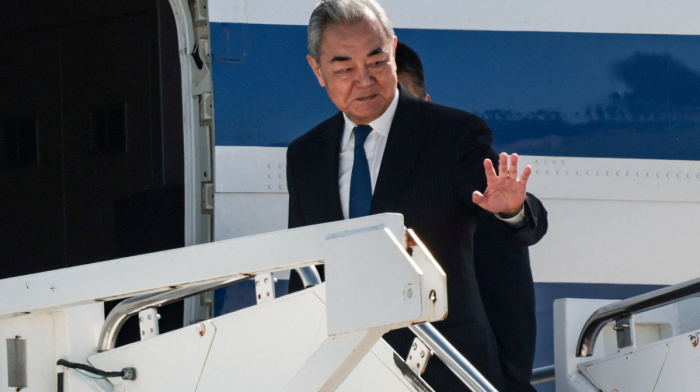
Chinese Foreign Minister Wang Yi has departed for a six-day tour of Azerbaijan, Croatia, Montenegro and Bulgaria, a visit that underscores Beijing's steady effort to build relationships and trade corridors in parts of Europe that often sit outside the spotlight of major power diplomacy.
Ukrainian President Volodymyr Zelenskyy says Russia hit at least six energy targets in deadly strikes across Ukraine, showing Moscow is unwilling to accept the energy ceasefire announced by U.S. President Donald Trump.
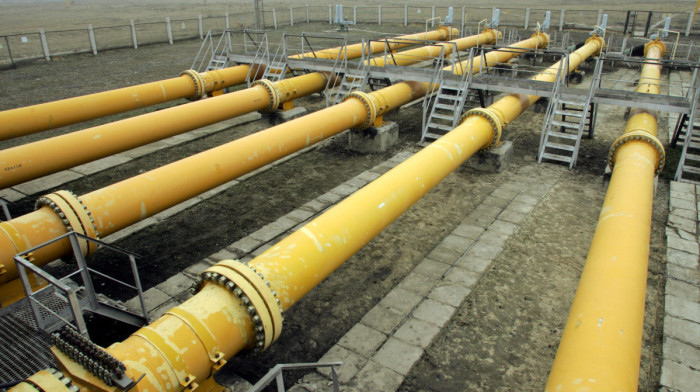
An explosion and fire have been reported at a major underground gas pipeline in Russia’s Penza region on 13 October, according to UA News, as cited by Azerbaijan’s APA news agency. The reports have not been independently verified.
You can download the AnewZ application from Play Store and the App Store.




What is your opinion on this topic?
Leave the first comment