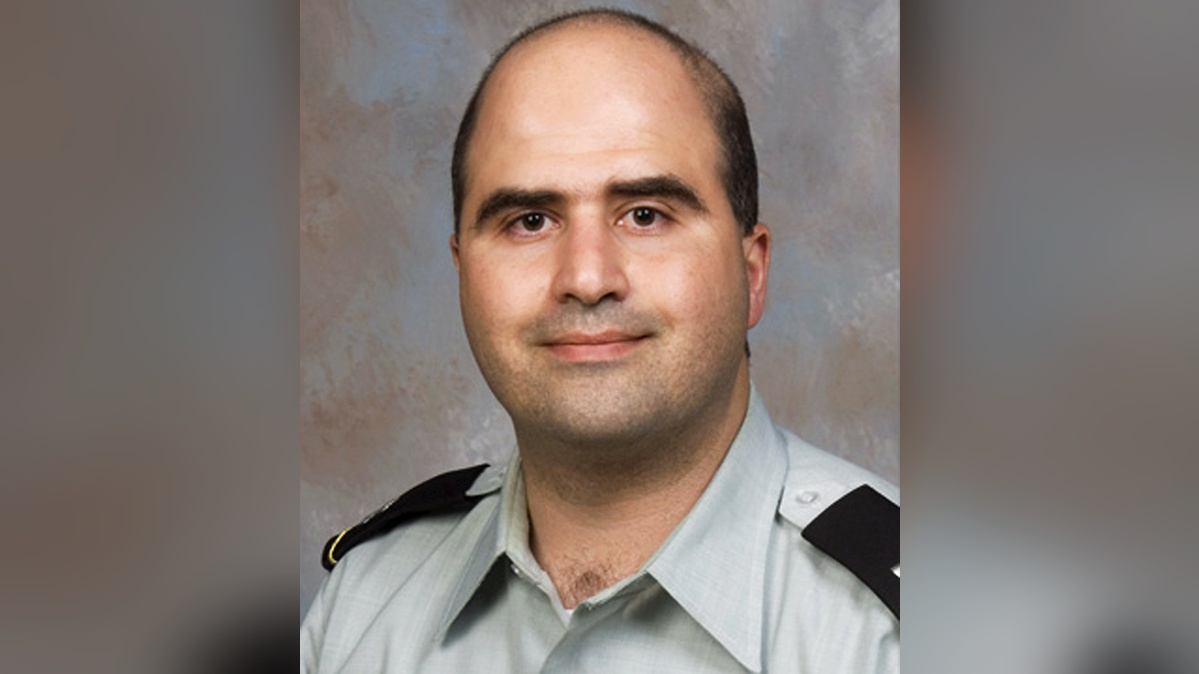
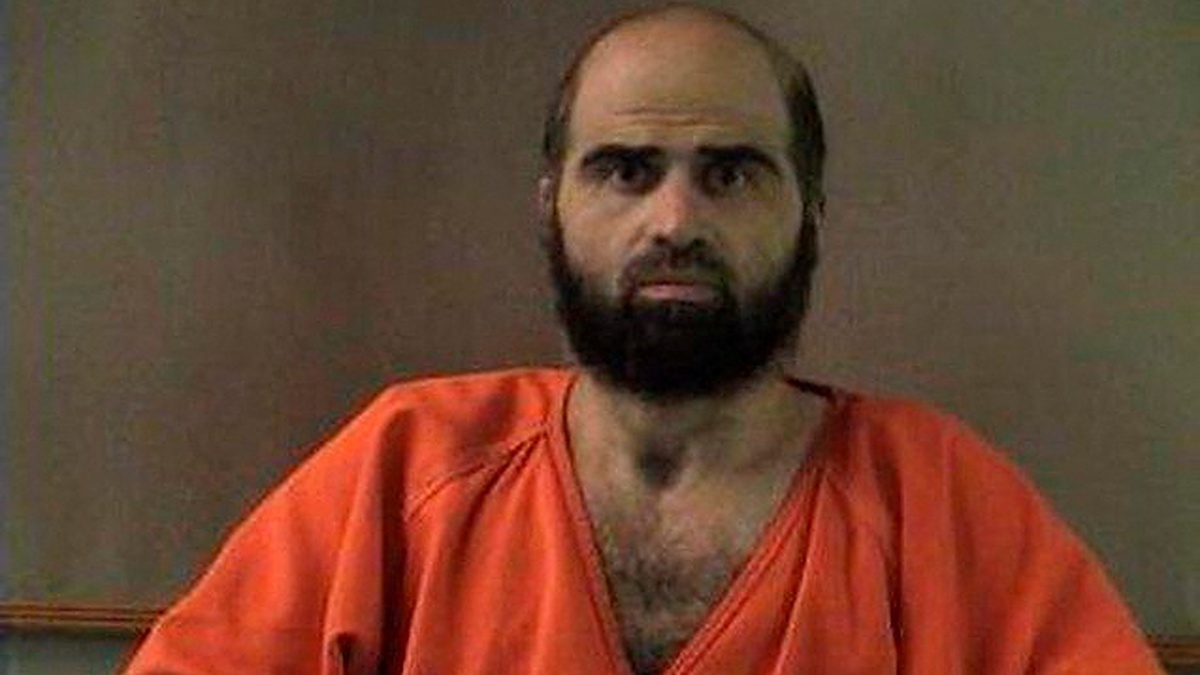
The Pentagon’s plan to livestream the execution of Nidal Hasan, the former U.S. Army psychiatrist who killed 13 people and wounded more than 30 others at Fort Hood in 2009, has raised questions about the legality of broadcasting executions and the limits of military justice.
The Pentagon said on Thursday that it would livestream Hasan’s execution by firing squad. The execution is scheduled for 3 December, following President Donald Trump’s approval of the plan on 5 October.
Is execution by firing squad legal in the U.S.?
Yes. In an 1879 ruling, Wilkerson v. Utah, the U.S. Supreme Court found that the method did not constitute cruel and unusual punishment prohibited by the Constitution.
Five states currently permit execution by firing squad: Idaho, Mississippi, Oklahoma, South Carolina and Utah. The Trump administration has also said it would allow the method in the federal prison system.
The U.S. military has historically used firing squads to execute soldiers convicted of offences including desertion. Under the Uniform Code of Military Justice, the president is the only person authorised to approve a death sentence for a member of the armed forces.
A military jury convicted Hasan of premeditated murder in 2013 following a court-martial.
Can executions be broadcast?
Federal rules prohibit the recording or broadcasting of executions in the federal prison system. Military regulations have not imposed the same prohibition on military executions, which raises questions about the Pentagon’s proposed livestream.
Executions in the U.S. were once held in public but have largely moved behind closed doors in correctional facilities. State laws generally restrict witnesses to authorised officials, relatives, legal representatives and a limited number of journalists.
Courts have also rejected attempts to expand public access. In 2001, a judge denied a request to livestream the execution of Timothy McVeigh, who was convicted of killing 168 people in the 1995 Oklahoma City bombing. The Justice Department instead arranged a restricted broadcast for survivors and victims’ families.
Could Hasan challenge his execution?
Hasan has exhausted his direct appeals within the military justice system, but he can still challenge his conviction and sentence in federal civilian courts through a habeas corpus petition. Such proceedings could delay the execution for years, even if the challenge ultimately fails.
Legal experts have said Hasan could also file a civil rights lawsuit challenging the method of execution.
Hasan represented himself at his 2013 trial and presented almost no defence.
What has the UN said?
The United Nations Office of the High Commissioner for Human Rights has condemned the proposed livestream, saying it would amount to a public execution and breach international human rights standards.
“The livestreaming of an execution is tantamount to a public execution and would breach the absolute prohibition of torture,” the office said.
It also argued that the plan violates the Convention Against Torture, a 1984 treaty the U.S. ratified in 1994. However, international legal frameworks do not automatically provide an enforceable basis for challenging the plan in U.S. courts.
Read more:



















What is your opinion on this topic?
Leave the first comment