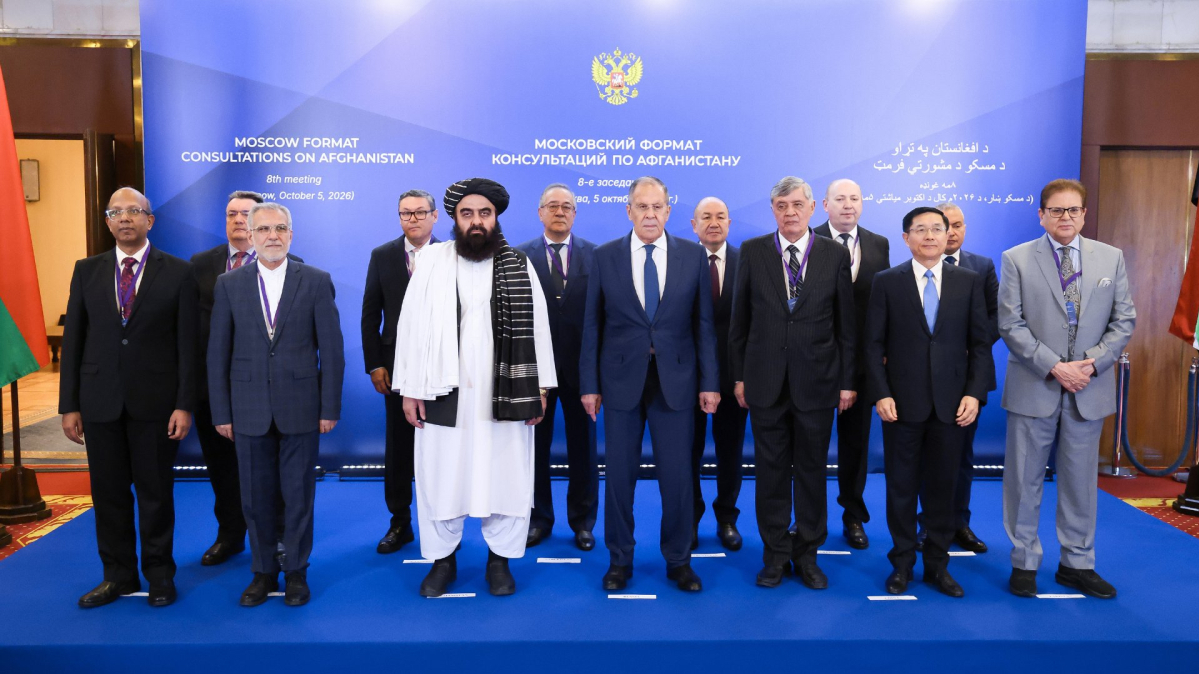
A regional conference on Afghanistan in Moscow ended on Monday without a joint statement after Pakistan and the Afghan Taliban delegation failed to agree on wording about terrorism. It was the first time since the inaugural meeting that participants failed to issue a joint statement.
The sharply contrasting positions made agreement on language concerning terrorism virtually impossible.
Russia’s presidential envoy Zamir Kabulov said the sticking point rested between Kabul and Islamabad.
“Our Afghan and Pakistani colleagues didn't see eye to eye. We regret this,” he said. He added that the Afghan side objected to the draft for referring too often to Afghanistan in a terrorism context.
The impasse marks a significant setback for the Moscow Format, a Russia-led regional mechanism established in 2017 to build consensus on Afghanistan.
Pakistan's position on terrorism and self-defence
Pakistan was represented by Special Representative for Afghanistan Ambassador Mohammad Sadiq.
Addressing the meeting, he said, “Terrorism remains at the core of Afghanistan's problems, with roots in the nexus between the Taliban Regime and terrorist groups”. He said more than 4,700 Pakistanis have been killed in the last three years by terrorism “emanating from Afghanistan.”
He named the banned Tehreek-e-Taliban Pakistan – also known as the Pakistani Taliban – and said Pakistan would continue “all appropriate measures” in line with international law, as “a measure of last resort.”
Sadiq also accused the Taliban regime of being complicit in the problem and defended Pakistan's military operations inside Afghanistan as acts of self-defence. “The Taliban regime is complicit in this,” Sadiq said, describing Pakistan's counterstrikes as “precise, intelligence-based and defensive in nature.”
He added that Pakistan's “numerous goodwill gestures” had been misconstrued, resulting in more attacks. He called on the Afghan authorities to end the impunity with which terrorist groups operate from their soil.
The Pakistani position challenged the narrative Kabul has been presenting to regional countries that the recent escalation is primarily the result of Pakistani action against Afghanistan.
The Taliban's Response
In his address, the Taliban’s Foreign Minister Amir Khan Muttaqi accused Pakistan of relying on military pressure rather than diplomacy.
He said Kabul wanted its disputes with Islamabad resolved through dialogue and diplomacy and rejected what he described as a policy of accusations, propaganda and military action.
Islamabad accuses Kabul of sheltering militants behind a surge in attacks inside Pakistan. Kabul denies this and says militancy is Pakistan's internal problem. Tensions have escalated in recent weeks, including Pakistani strikes inside Afghanistan.
Russia offers to help
Kabulov said Russia is ready to help end the conflict between the two sides “in any possible, permissible way,” if both sides make such a request. He stressed that settling bilateral disputes is not the purpose of the Moscow Format.
Russia was the first country to recognise the Taliban administration in 2025. In his opening statement, Foreign Minister Sergey Lavrov praised the Taliban, calling the group a “national government” that has “successfully” ruled the country, and warned against any NATO military infrastructure in Afghanistan or neighbouring states. He said strengthening Afghanistan’s counterterrorism capacity served regional interests.
The eighth round of Moscow Format consultations brought together envoys and senior officials from Afghanistan, China, India, Iran, Kazakhstan, Kyrgyzstan, Pakistan, Russia, Tajikistan and Uzbekistan. Belarus and Egypt attended as guests.
The outcome shows regional countries are increasingly divided over how to deal with the Taliban and how to assess the security threat from Afghan territory. Countries that once broadly agreed on the need for an inclusive, stable and secure Afghanistan are increasingly divided over how to deal with the Taliban regime. Pakistan's emphasis on the Taliban's links with militants contrasted with Moscow's support.
Read more:











What is your opinion on this topic?
Leave the first comment