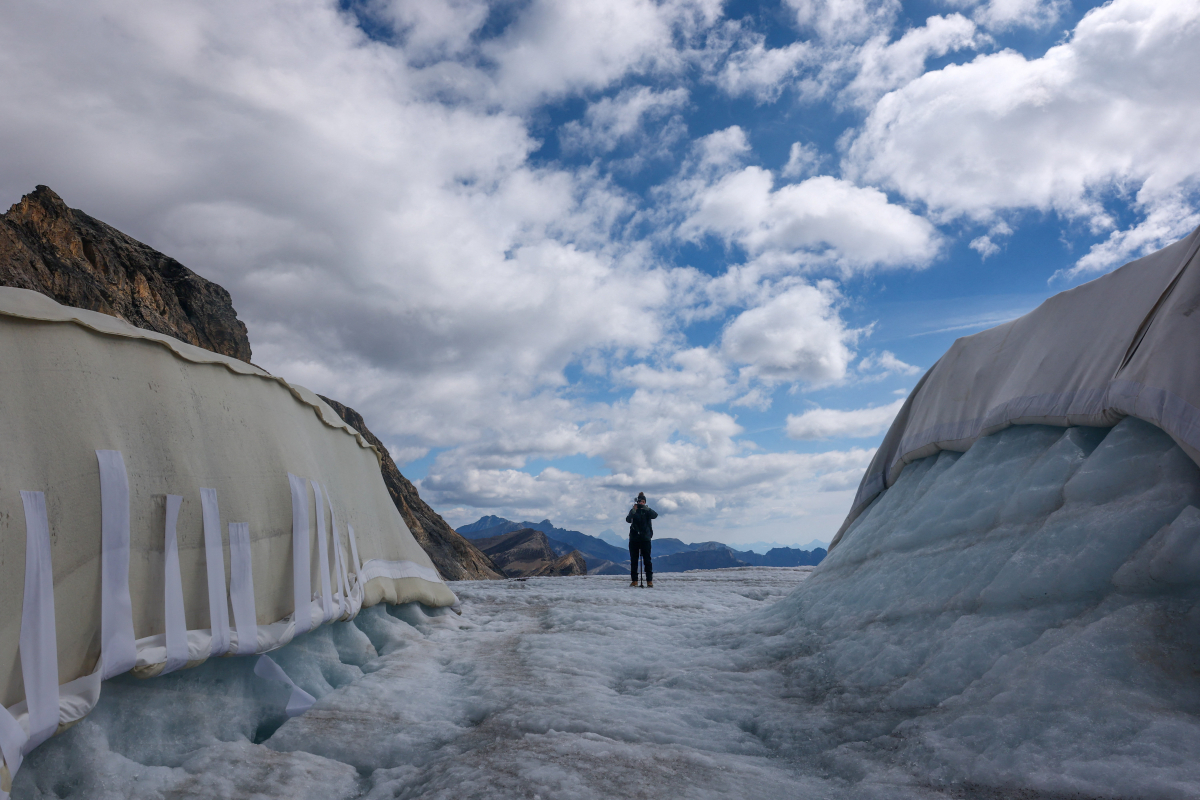
Swiss glaciers lost more than 5 per cent of their ice in 2026, making it one of their worst years on record as a dry winter and repeated heatwaves accelerated melting across the Alps.
The findings, published by the Swiss Glacier Monitoring Network (GLAMOS) and the Swiss Commission for Cryosphere Observation of the Swiss Academy of Sciences on Thursday, show that glaciers have lost almost one-fifth of their ice over the past five years.
Matthias Huss, director of GLAMOS, said the scale of this year's loss was driven by a combination of unusually low snowfall during winter and prolonged heatwaves from May through September.
“The glaciers this year, they have lost enormous quantities of ice,” Huss said, adding that total ice volume fell by about per cent.
He said the lack of snow left glaciers without their normal protective layer early in the season, while record temperatures later accelerated the loss.
The rate of melting has not yet exceeded the record set in 2022, when Swiss glaciers lost an even greater share of their ice. But Huss said the frequency of extreme years has become increasingly concerning.
“Extreme years almost every year now” are creating a worrying situation, he said.
Glaciers lose billions of litres of water
Measurements at the Scex Rouge Glacier in Les Diablerets showed the scale of the melting.
A four-metre measuring stick installed in the ice in July was exposed by three metres when researchers returned in September. Huss said this meant that about three metres of ice had disappeared in August and September alone at an elevation of almost 3,000 metres.
“This clearly indicates these conditions that we had this summer; they are just inconsistent with the survival of these small glaciers in the Alps,” he said.
Across Switzerland, scientists estimate that glaciers lost about 2.2 trillion litres of water between July and September alone, which is more than four times the annual freshwater consumption of Swiss households.
The melt can temporarily help ease summer water shortages, but Huss said that benefit is declining as glaciers shrink.
Losses accelerate over past decade
Swiss glaciers have lost between 25 per cent and 30 per cent of their volume over the past decade, according to Huss.
By comparison, losses during the 1990s and around 2000 averaged about 10 per cent per decade, meaning the rate of ice loss has more than doubled.
The Aletsch Glacier recorded its largest annual melt on record, while the Tsanfleuron Glacier lost more than four metres of average thickness during 2026.
“These thickness changes they have been unthinkable, I would say, still a few years ago,” Huss said.
“It is clearly a catastrophic year,” he added.
“However, already 2022 was catastrophic and I'm sure more catastrophic years are up in the next decades.”
Scientists say the continued retreat of Alpine glaciers will reduce the amount of stored freshwater available during dry summer periods as the ice reserves become progressively smaller.
Read more:
















What is your opinion on this topic?
Leave the first comment