The United States has extended visa restrictions on officials from the Palestinian Authority (PA) and members of the Palestine Liberation Organization (PLO), just days before world leaders gather in New York for the annual UN General Assembly.
The State Department said on Wednesday that the decision followed what it described as a failure by the PA and PLO to meet commitments under U.S. law.
Washington accused the Palestinian leadership of seeking to internationalise the Israeli-Palestinian conflict through bodies including the International Criminal Court (ICC) and International Court of Justice (ICJ), as well as pursuing what it called the “unilateral recognition” of a Palestinian state.
The department also repeated accusations that Palestinian officials support or glorify terrorism and provide payments to people convicted of attacks.
“As a consequence of their failure to reform ... the United States will extend sanctions that deny visas to PLO members and PA officials,” the State Department said.
Abbas again unable to attend in person
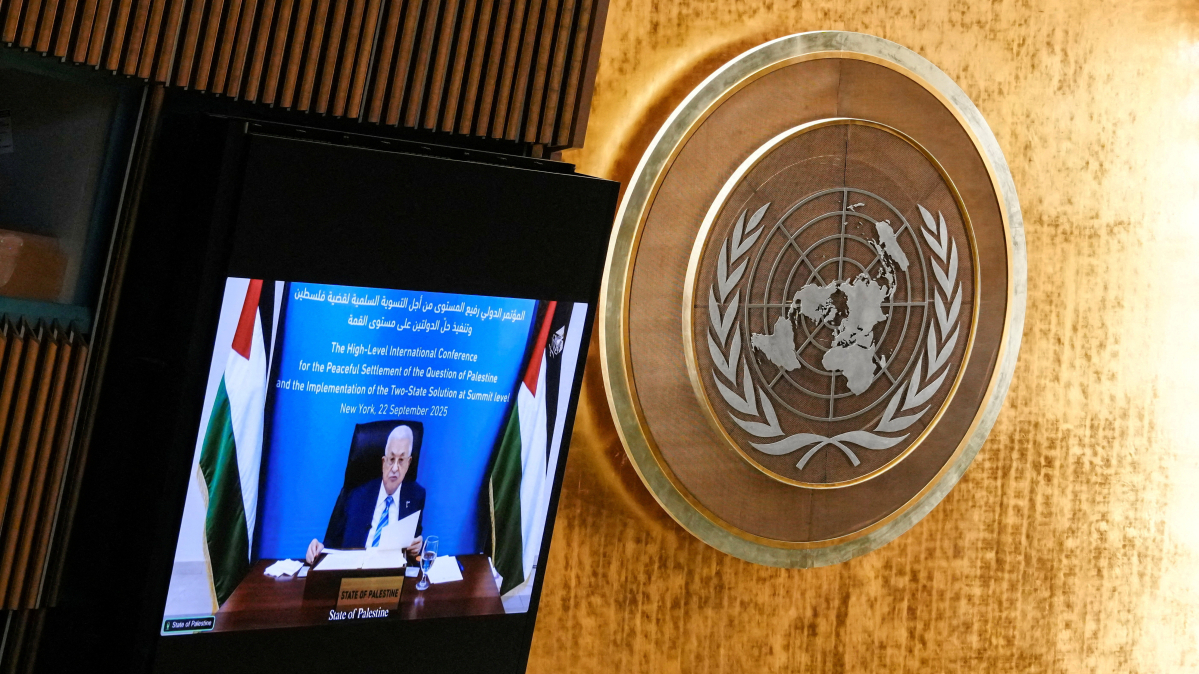
The announcement comes a year after Washington denied or revoked visas for Palestinian officials ahead of the 2025 General Assembly, preventing PA President Mahmoud Abbas from travelling to New York.
The UN General Assembly subsequently voted overwhelmingly to allow Palestine to participate remotely, with Abbas delivering a pre-recorded address.
This year's measures again put the spotlight on whether Abbas and other senior Palestinian officials will be able to attend in person.
The U.S. has maintained a waiver for personnel formally notified to the PLO Observer Mission to the UN, according to the State Department.
The Palestinian Authority has not immediately issued a public response.
Washington cites national security
U.S. officials say the restrictions are part of the administration's wider approach to visa screening.
State Department deputy spokeswoman Paloma Chacón said the U.S. considers “every visa decision is a national security decision”, including applications from participants in the General Assembly.
“While we take seriously our obligations as a host country to the UN, we will continue to protect Americans by upholding the highest standards of vetting and screening for all applicants,” she said.
Under the UN headquarters agreement, the U.S. generally has obligations to facilitate access to the United Nations in New York, although Washington maintains that visas can be restricted on security, foreign policy and other grounds.
The decision comes against a long-running disagreement over how the Israeli-Palestinian conflict should be resolved.
U.S. officials have objected to Palestinian efforts to pursue recognition and legal action through international institutions rather than relying solely on direct negotiations.
Palestinian officials, meanwhile, argue that decades of U.S.-backed negotiations have failed to end the occupation or deliver an independent Palestinian state.
Palestine holds non-member observer state status at the UN and does not have a vote in the General Assembly.
The visa dispute is also unfolding as the Trump administration continues to take a tougher stance towards the ICC.
Washington has sanctioned ICC officials after the court issued an arrest warrant for Israeli Prime Minister Benjamin Netanyahu in 2024 over alleged war crimes and crimes against humanity in Gaza.
Read more:














What is your opinion on this topic?
Leave the first comment