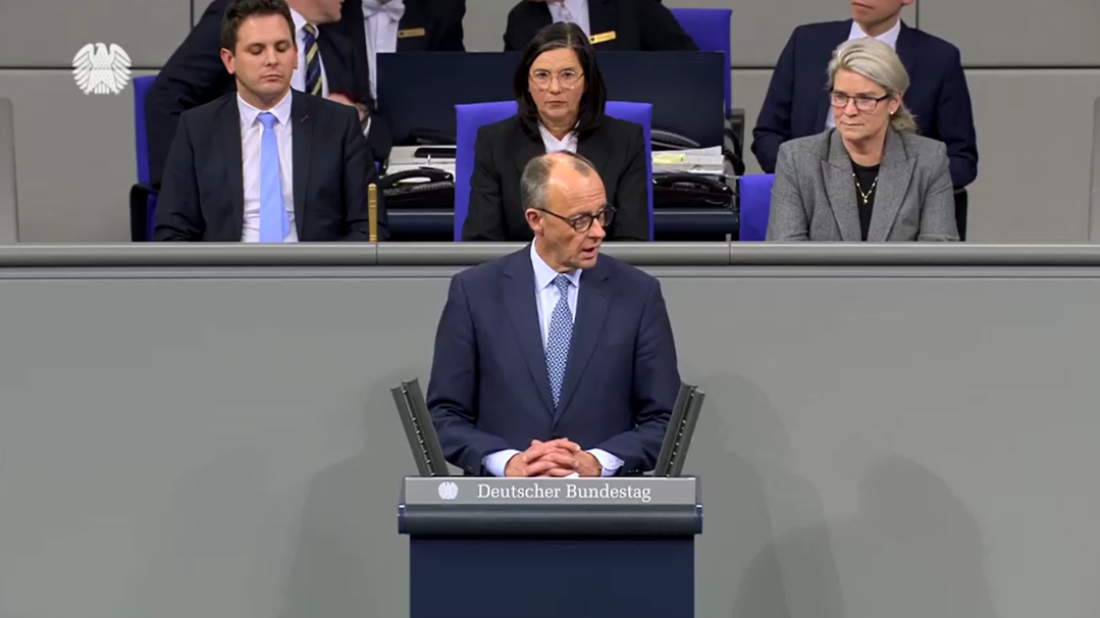
A vote on a bill calling for stricter migration rules set for today in the German Bundestag was delayed after the proposer of the law and conservative CDU party leader Friedrich Merz came under fierce criticism.
The motion introduced by CDU party faced criticism from the ruling coalition of the Social Democrats (SPD) and the Greens, who argued that the proposed measures violated both German and European Union law.
The Social Democrats’s Chancellor Olaf Scholz and Robert Habeck of the Greens condemned the motion, with Scholz drawing a comparison between Merz's actions and the policies of Hungarian Prime Minister Viktor Orbán, who is known for his anti-immigration stance.
Merz acknowledged the involvement of the Alternative for Germany in the motion’s passage and said he regretted needing their support but placed the blame on the governing parties for not backing his proposals.
The political tension surrounding the motion comes in the context of recent events, particularly the murder of two people by an Afghan man in Aschaffenburg, Bavaria, who should have been deported, a fact that contributed to the heated political debate on immigration. Merz's proposal, which included a pledge to implement an entry ban on his first day in office, was framed as a response to public concerns over immigration and asylum seekers.
In response to the motion, thousands of people across Germany participated in protests against Merz's approach, arguing against the idea of restricting immigration further. Despite the backlash, Merz emphasized his position, asserting that Germany needed a tougher stance on immigration.
This debate is ongoing, with the Bundestag set to vote on another CDU motion on Friday.
This motion, which is legally binding, would expand police powers and limit the ability of some migrants to bring family members to Germany. Like the earlier motion, this proposal is expected to receive support from the AfD.
The political implications of these developments remain uncertain. While Merz's proposals are popular among certain segments of the German electorate, they have also raised questions about the broader impact on his party’s coalition prospects. If the CDU leads the next government, it may face challenges in negotiating with parties like the Social Democrats or the Greens, who are unlikely to support any drastic changes to Germany’s asylum system.
Legal experts say the European Union has consistently ruled against efforts by member states to unilaterally close their borders, and Germany has seen a decline in illegal immigration in recent years. Merz’s position, therefore, raises questions about the feasibility of his proposals, as well as their potential to strain Germany's relations with its European neighbors.
As the February 23rd election approaches, Merz's CDU remains the leading party in the polls. However, the unfolding political drama around immigration policy and the involvement of the AfD in passing these motions could have a significant impact on the outcome of the election and Merz’s ability to form a coalition government.



















What is your opinion on this topic?
Leave the first comment