Russia launched a fresh wave of missile strikes on Ukraine early on Thursday, saying it had hit military and industrial facilities in Kyiv, as well as key port infrastructure in the southern Odesa region.
Russia's Defence Ministry said the attacks targeted facilities involved in the production and storage of medium- and long-range drones in the Ukrainian capital. It also claimed to have struck infrastructure at the ports of Odesa and Pivdennyi used for receiving, storing and handling military cargo and fuel supplies.
Moscow further said it had hit a Ukrainian military vessel and a high-speed boat while they were travelling towards ports in the Odesa region.
Missile strike kills two in Kyiv
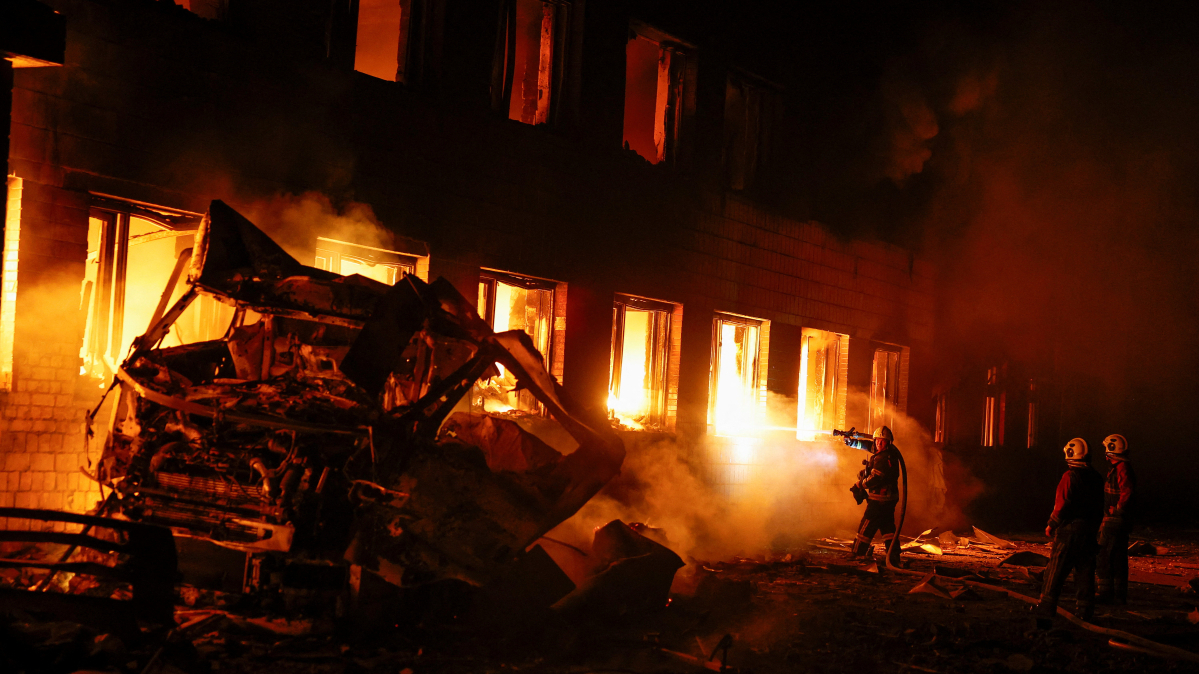
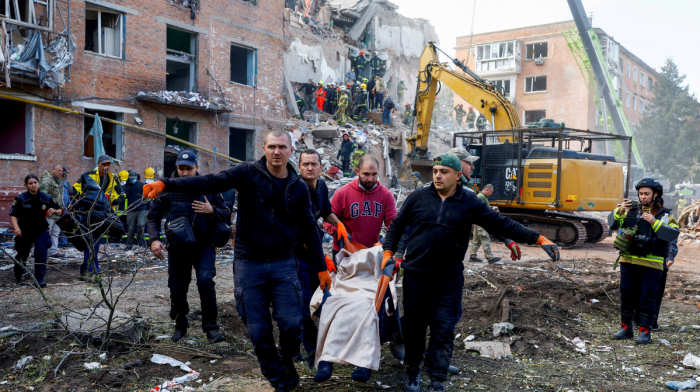
Ukrainian officials said Russian ballistic missiles struck at least two districts of Kyiv overnight, triggering fires and killing two people. Several others were injured, while warehouses, storage buildings and vehicles were damaged in the attacks.
Officials also reported damage in the Black Sea port city of Odesa, where an educational facility was struck. The latest assault marked another major missile attack on the Ukrainian capital this month.
Black Sea infrastructure increasingly in the crosshairs
The strikes come as both sides intensify attacks on infrastructure considered vital to the other's war effort and economy.
In recent weeks, Russia has stepped up attacks on Ukraine's Black Sea ports, aiming to disrupt logistics, fuel supplies and agricultural exports. Ukraine has responded by targeting Russian energy infrastructure, including oil depots, refineries and fuel tankers, in an effort to weaken Moscow's military supply chain.
Ukraine has repeatedly said it will continue protecting its ports and maintaining exports despite the attacks, with the Odesa region remaining a critical gateway for the country's agricultural shipments.
Ukraine steps up long-range strikes
Over the past 24 hours, Ukraine said it had struck a Russian Mi-28 attack helicopter in the Belgorod region and that its air defences had intercepted or neutralised more than 100 Russian drones launched overnight.
Russia, meanwhile, said it had intercepted hundreds of Ukrainian drones and destroyed several uncrewed surface vessels in the Black Sea, reflecting the growing use of drones and long-range precision weapons by both sides.
Fighting also continued along the eastern and southern front lines, where both militaries reported dozens of combat engagements.
Escalation beyond the battlefield
The latest exchanges highlight a broader shift in the war, with both Russia and Ukraine increasingly targeting strategic infrastructure far from the front lines.
Ukraine has expanded its campaign against Russian military, transport and energy facilities in an effort to disrupt logistics and impose economic costs. Russia, meanwhile, has intensified strikes on Ukrainian cities, ports and industrial sites, particularly those linked to military production and exports.
The increasing focus on infrastructure underscores how the conflict is evolving beyond conventional battlefield operations, with both countries seeking to weaken each other's economic resilience and military capabilities through sustained long-range attacks.
The past 24 hours have seen a renewed cycle of escalation, with missile and drone strikes hitting key economic and military targets on both sides of the border. Russia has focused on Ukraine's capital and Black Sea ports, while Ukraine has continued targeting Russian military assets and energy infrastructure.
As neither side shows any sign of reducing military operations, the conflict continues to broaden in scope, placing greater pressure on civilian infrastructure, trade routes and critical supply networks while prolonging a war that remains locked in a costly stalemate.
















What is your opinion on this topic?
Leave the first comment