live Hormuz shipping slows as Iran's Araghchi sets conditions for resumption
Shipping through the Strait of Hormuz slowed to a near standstill over the weekend, with five commodity vessels transiting Saturday and none on Sun...
NATO leaders met Tuesday for the first day of a two-day summit in the Turkish capital Ankara, at which defence spending, Ukraine, and alliance unity topped the agenda.
Turkish President Recep Tayyip Erdoğan welcomed U.S. President Donald Trump to the Presidential Complex, after which the two leaders held one of the summit's most highly anticipated bilateral meetings.
In his first visit to Ankara since returning to office last year, Trump met with his Turkish counterpart behind closed doors to discuss defence cooperation, regional security, and broader strategic ties.
According to Turkish officials, discussions focused on U.S. sanctions imposed on Türkiye under the Countering America's Adversaries Through Sanctions Act (CAATSA), Ankara's hope of rejoining a U.S.-led F-35 jet fighter programme, and expanding cooperation in the defence industrial field.
The summit brings together leaders from NATO's 32 member states at a time when the Western alliance is confronting Russia's ongoing war in Ukraine, instability across the Middle East, and mounting pressure to strengthen its collective deterrent capacity.
At a high-profile NATO Defence Industry Forum held alongside the summit, Ukrainian President Volodymyr Zelenskyy met NATO chief Mark Rutte, with whom he discussed military assistance to Kyiv, especially in terms of air defences.
Along with Ukraine, the summit’s first day was dominated by the issue of defence spending by allies.
In pre-summit remarks, Rutte urged NATO allies to step up investment in their military capabilities, as leaders seek to achieve a spending target of 5% of GDP on defence and security by 2035.
At the Defence Industry Forum, several multinational initiatives were unveiled to enhance the production of missiles, drones, air defence systems, and other vital military equipment.
The summit’s first day also saw continued debate over inter-alliance burden-sharing, with Trump again urging European allies to increase defence spending and stressing the need for a stronger NATO.
Leaders are set to continue talks on Wednesday before issuing a final declaration laying out NATO’s position on collective defence, defence-industrial cooperation, and continued support for Ukraine.

At least 11 people were killed in Israeli strikes on southern Lebanon on Saturday, among the deadliest since a June ceasefire. Meanwhile, Qatar denied holding Iranian pilots. It said it had found the remains of one pilot after an airspace violation and had contacted Iran to coordinate a handover.
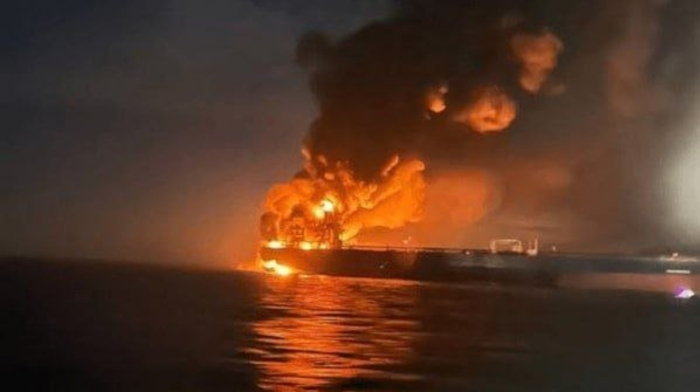
Shipping through the Strait of Hormuz slowed to a near standstill over the weekend, with five commodity vessels transiting Saturday and none on Sunday. Iran's Foreign Minister Abbas Araghchi said Washington must meet Tehran's conditions for shipping to resume.
A wildfire in Croatia driven by strong winds descended on the tourist town of Omis overnight, engulfing houses, forcing about 1,000 people to evacuate to safety and injuring dozens, fire brigade and health officials said on Friday.
U.S. President Donald Trump's threats to make the Strait of Hormuz part of U.S. territory have been mocked by Iran's Deputy Foreign Minister, Kazem Gharibabadi, who said the sea passage "cannot be seized by tweet."
Residents of villages in eastern Indonesia hit by a deadly earthquake that killed at least 54 people were awaiting aid on Monday as rescuers prepared to comb through collapsed buildings in search of people trapped beneath the rubble.
Nearly a week after a powerful 7.4-magnitude earthquake struck western Colombia, hopes of finding more survivors are fading as rescue teams search collapsed buildings and communities confront widespread destruction.
Central Asia has become a major focus for Eurasian transport investment, with $71.7 billion committed to 114 projects, according to the Eurasian Development Bank’s 2026 Transport Observatory.
The European Union is preparing what foreign policy chief Kaja Kallas has described as its most far-reaching sanctions package against Russia since the war in Ukraine began.
Weeks after thousands of students protested in New Delhi over alleged failures in India’s examination system, the so-called Cockroach movement is taking its campaign to the grassroots, launching audits of state-run schools.
UNESCO Director-General Khaled El-Enany visited Ukraine for the first time since taking office, meeting Foreign Minister Andrii Sybiha in Kyiv on 15 August to discuss protecting the country’s cultural heritage amid continued Russian attacks.
You can download the AnewZ application from Play Store and the App Store.
What is your opinion on this topic?
Leave the first comment