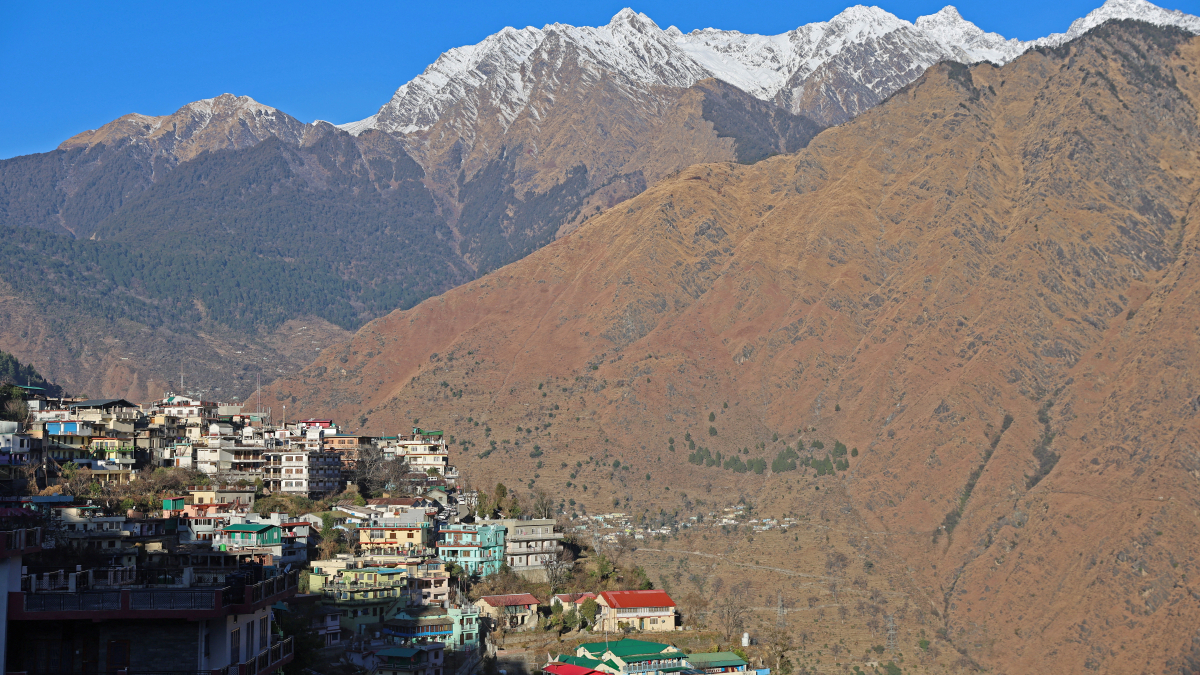
For the first time in six years, Indian traders are crossing through the Lipulekh Pass in the Himalayas into Tibet to do business.
Twenty-six traders from the northern Indian state of Uttarakhand made the crossing, heading to the market town of Taklakot - a journey that would have been impossible just months ago.
It is a meaningful moment in a relationship between two giant neighbours that has been difficult for quite a while.
Border clash froze India-China ties
The pass was first disrupted by Covid in 2020. But what really kept it shut was a deadly border clash in the Galwan Valley in June 2020, where at least 20 Indian soldiers and an unknown number of Chinese troops were killed in hand-to-hand fighting.
It was the worst violence between the two countries in more than 50 years. After that, the relationship went cold. Trade slowed, flights were cut, visas became harder to get, and thousands of soldiers faced each other across disputed mountain terrain for years.
Diplomatic breakthrough paves the way
Getting back to a better place has taken a long time. In October 2024, both countries reached an agreement to ease tensions along their shared border.
High-level meetings followed, including a visit to India by China's Foreign Minister Wang Yi in August 2025, when both sides agreed to reopen three Himalayan trade routes. Lipulekh is the first of those three to actually open.
Kailash Mansarovar pilgrimage resumes
The reopening also means something special for Hindu pilgrims. The Kailash Mansarovar Yatra (a pilgrimage to the sacred Mount Kailash and Lake Manasarovar in Tibet that is deeply important to millions of Hindus ) has resumed for the first time since 2019.
Groups of 50 pilgrims at a time are making the journey between June and August this year, crossing either through Lipulekh in Uttarakhand or Nathu La in Sikkim. For many of them, it is a trip they have been waiting years to make.
Relations improve, but challenges remain
Analysts say the reopening is a positive sign but should not be read as a complete repair of the India-China relationship. The two countries still disagree about their border, still compete for influence across South Asia, and still eye each other with a degree of suspicion.
But both sides also appear to have decided that talking and trading is better than standing off against each other in the mountains.
For the traders who made that first crossing last week, a market they have not been able to reach in six years is open again. The trading window runs until September, and more crossings are planned. After a long pause, business between two old neighbours is finally resuming.
Read more:












What is your opinion on this topic?
Leave the first comment