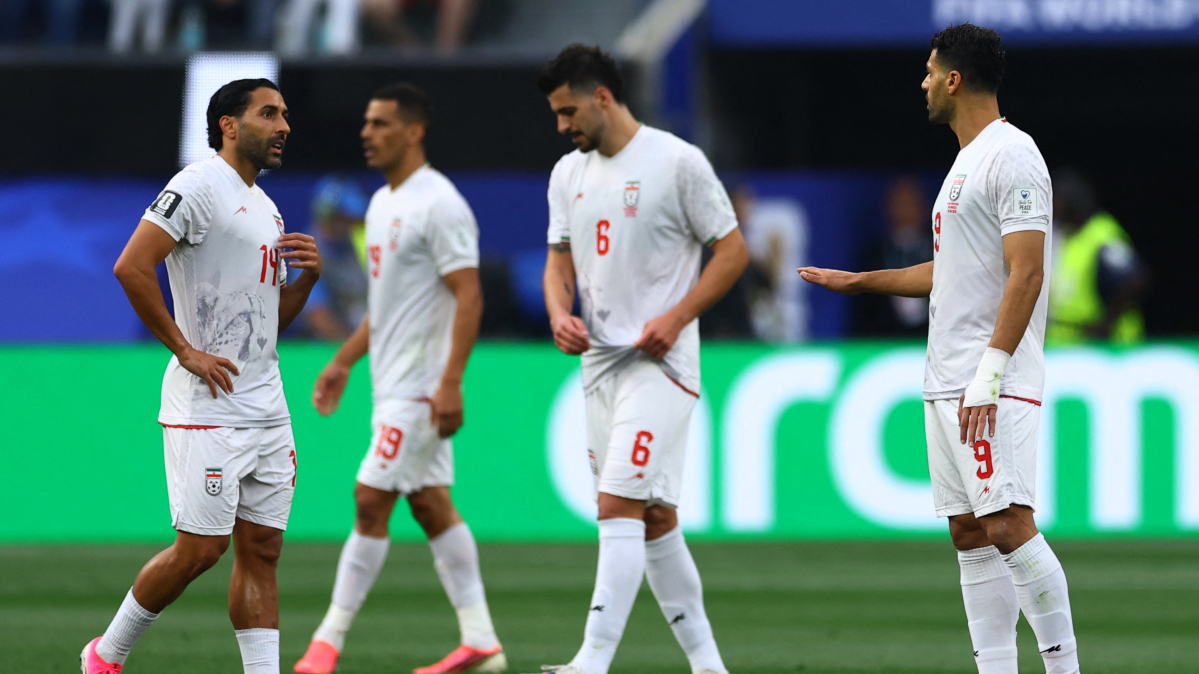
Iran’s World Cup campaign has been overshadowed by travel disruption, organisational problems and a shortage of key support staff, with players and coaches openly criticising conditions around the team.
Forward Mehdi Taremi described the situation as “a disaster”, citing confusion over travel arrangements and a breakdown in communication between officials and the squad.
“We didn’t know that we have to leave Los Angeles now… it’s a bad situation,” Mehdi Taremi said. “We are just tired of the situation because for the last two months we have had a lot of problems.”
According to Taremi, players were instructed to leave immediately after a match despite needing time to recover before their next fixture. Instead of resting, the team was forced to travel again, disrupting preparations.
Missing staff and communication breakdown
The difficulties have been compounded by the absence of key federation officials and support staff, leaving players without what they say are essential structures around the team.
“We don’t have our media officer… we don’t have our president of federation… no one,” Mehdi Taremi said. “Some staff, also, which is so important for us, are not here.”
He added that routine responsibilities were being carried out by people outside their usual roles, increasing pressure on the squad.
“Our analyser, for example, is doing the job of the media… everything is like disaster.”
Coach criticises ‘unfair treatment’
Head coach Amir Ghalenoei echoed those frustrations, accusing organisers of treating Iran unfairly and making preparations unnecessarily difficult.
“We have spent so much time in the air that we were hardly ever on the ground,” Amir Ghalenoei said. “We were not allowed to arrive earlier and adapt.”
Iran hosted a public screening of Iran-New Zealand match
He also criticised last-minute schedule changes that forced the team to travel immediately after matches rather than focus on recovery.
“Tonight is the most important time for our next match… but instead, we have to get on a plane. This is causing us a great deal of hardship.”
In one of his strongest remarks, Ghalenoei said Iran may be “the most unfairly treated team in the history of the World Cup”.
Pressure building before key matches
The constant travel and uncertainty have affected tactical preparations, with the coach admitting that even the team is unclear about some planning decisions.
“We don’t know ourselves… the planning is decided elsewhere,” Amir Ghalenoei said.
Despite the challenges, he said the difficulties had strengthened the team's resolve.
“It has made things more difficult for us day by day, but it has also made us more determined to work harder… for our people.”
Playing for unity amid adversity
For the players, the situation extends beyond football. Taremi said the team sees its role as bringing Iranians together during a difficult period.
“We are here for football first of all… we want to make our people united,” he said. “We are playing for all Iranians around the world.”
That sense of unity was reflected in the stands, with tens of thousands of supporters creating a strong atmosphere during matches.
Ghalenoei described it as a “turning point”, saying people with different views had come together behind the national team.
“That was the real victory… that people supported their national team wholeheartedly.”
Balancing hardship and support
While the team has faced significant logistical challenges, both players and coaching staff have expressed gratitude for the support they have received from fans and host cities.
Taremi said the atmosphere in Los Angeles felt “like a home”, while also praising the welcome the team received in Mexico.
“We are very comfortable there… we appreciate them too,” he said.
However, behind the scenes, Iran continues to deal with uncertainty and disruption that could affect performances on the pitch as the tournament progresses.












What is your opinion on this topic?
Leave the first comment