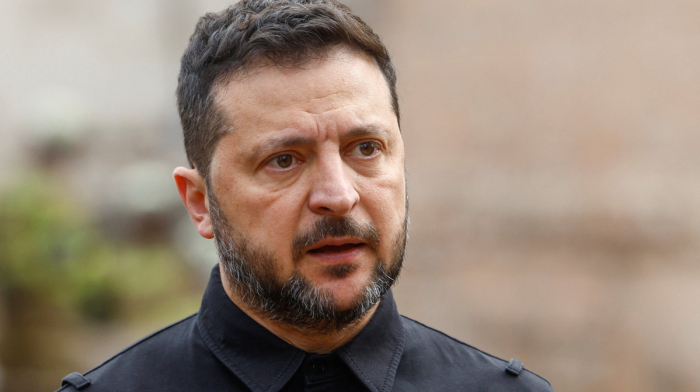
The leaders of Britain, France and Germany have backed Ukrainian President Volodymyr Zelenskyy's proposal to hold direct talks with Russian President Vladimir Putin, as efforts to secure a ceasefire continue.
British Prime Minister Keir Starmer, French President Emmanuel Macron and German Chancellor Friedrich Merz met Zelenskyy at Downing Street on Sunday to define Europe's role in any future peace process.
In a joint statement, the leaders praised Zelenskyy's call for an end to the war through diplomacy and backed his proposal for direct dialogue between Kyiv and Moscow, with participation from both the United States and Europe.
"Leaders commended President Zelenskyy's call for an end to the war, negotiated by diplomatic means, as set out in his letter to the president," the statement said.
Europe seeks a stronger role
The meeting came days after Zelenskyy published an open letter to Putin proposing face-to-face talks aimed at ending the conflict, now in its fifth year.
In the letter, Zelenskyy argued that Russians were increasingly feeling the effects of the war through inflation, fuel shortages and continued Ukrainian drone and missile strikes.
He also warned against allowing Ukraine to slip down the international agenda while attention remains focused on the conflict involving Iran.
"It would be wrong to simply wait until the war in Europe returns to the centre of its attention," he wrote.
Putin rejected the proposal, saying it did not appear sincere and that he saw little point in a meeting at present. He added that any agreement would need to provide a long-term solution.
Ukraine pushes for security guarantees
During the London meeting, Zelenskyy said Ukraine continued to need additional air defence missiles as Russian attacks persisted.
The gathering took place after some of the largest Russian air raids since the start of the war in 2022, including strikes on Kyiv.
"Russia is not winning on the battlefield, and our mid-range strikes and deep strikes are significantly limiting its ability to expand its aggression," Zelenskyy said.
"But it is also extremely important to have protection against ballistic threats, with which the Russians are terrorizing our cities and communities."
The four leaders said a "just and lasting peace" would require an immediate and complete ceasefire as a starting point.
They also agreed that the current front line should form the basis for negotiations, while Ukraine should receive legally binding security guarantees, including the possible deployment of a multinational force.
In addition, they said Russian assets should remain frozen until Moscow compensates Ukraine for the damage caused by the war.
Fighting continues despite diplomatic efforts
Zelenskyy said discussions also focused on how to revive diplomatic efforts and ensure Europe remains closely involved in negotiations.
"For Ukraine, it has always been a priority that Europe’s position and voice in the negotiations be strong," he said.
Starmer reiterated Britain's commitment to Kyiv following the meeting.
"Our support for Ukraine is ironclad," he wrote on X. "Ukraine's security is Europe's security."
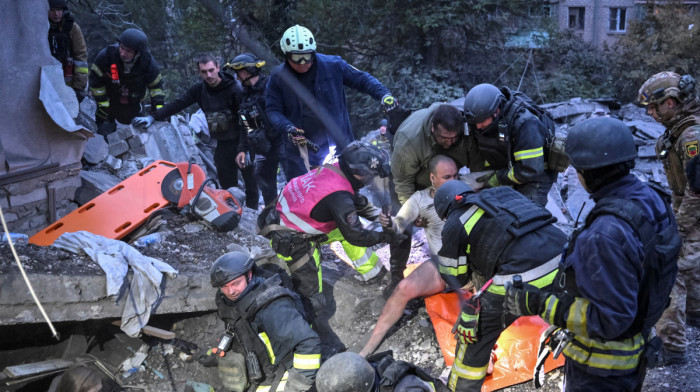
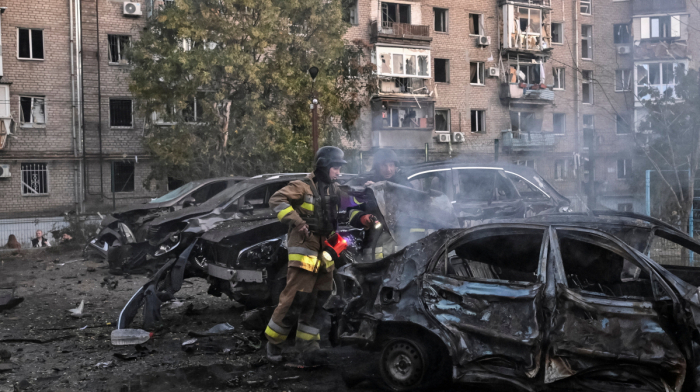
Despite renewed diplomatic efforts, fighting continued on the ground. Ukraine's Zaporizhzhia region came under Russian air strikes, drone attacks and shelling on Monday, according to regional governor Ivan Fedorov.
He said five people were killed and 14 injured, while infrastructure, homes and vehicles were damaged.








What is your opinion on this topic?
Leave the first comment