Seven killed in Qatar military helicopter crash during joint training exercise with Türkiye
Qatar has confirmed that seven people, including four of its military personnel and three Turkish nationals, were killed on Sunday (22 March) ...
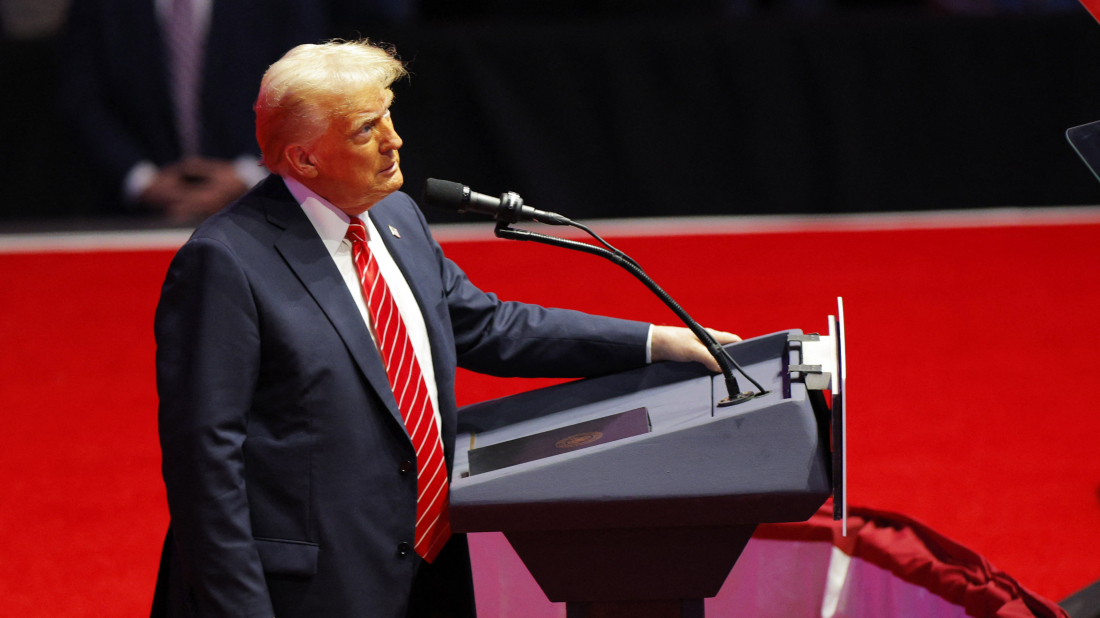
President-elect Donald Trump plans to sign nearly 100 executive orders immediately upon taking office, aiming to overturn key policies introduced by the Biden administration. His focus will be on immigration, energy, and federal government operations, according to senior aides.
During a call with senior Conservative lawmakers, Trump’s team outlined major immigration measures, including declaring a national emergency at the border, unlocking Defence Department funds, and reinstating the "Remain in Mexico" policy. His administration also plans to classify drug cartels as foreign terrorist organisations.
In government operations, Trump is set to reinstate Schedule F, a measure that removes job protections for certain civil servants, and roll back diversity, equity, and inclusion policies introduced under Biden. He will also establish the Department of Government Efficiency, led by Elon Musk and Vivek Ramaswamy.
On energy, Trump is expected to declare a national emergency, allowing for the expansion of domestic energy production and changes to permitting rules and land use policies.
Speaking at a pre-inauguration event, Trump said these actions would immediately revoke dozens of Biden-era policies. However, legal challenges are expected to follow.

President Donald Trump said the U.S. was considering "winding down" its military operation against Iran, as Iran and Israel traded attacks on Saturday (21 March) and Iranian media said the nuclear enrichment facility in Natanz had been attacked.
U.S. President Donald Trump warned that American forces could target Iranian power plants if the strategic Strait of Hormuz remains closed, and Iran, in return, warned that any attack on its energy infrastructure would trigger strikes on regional facilities.
Slovenia heads to the polls on Sunday (22 March) in a closely contested race between incumbent Prime Minister Robert Golob and right-wing former Prime Minister Janez Janša.
Italy is voting on 22 and 23 March in a judicial reform referendum that could reshape the justice system and test Prime Minister Giorgia Meloni’s political strength ahead of the 2027 general election.
Iceland could reopen talks on joining the European Union after a 13-year pause, as shifting security concerns and renewed economic debate bring EU membership back to the centre of national politics.
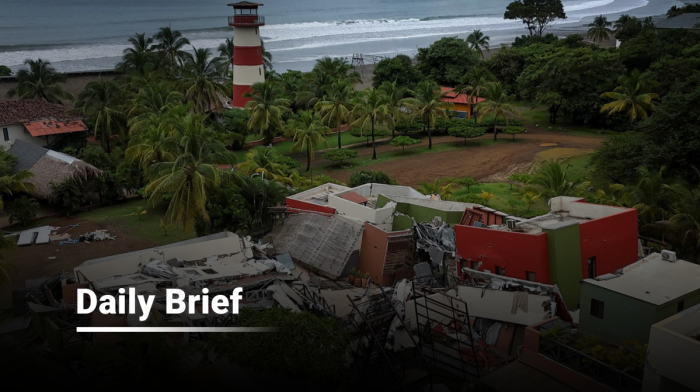
Qatar has confirmed that seven people, including four of its military personnel and three Turkish nationals, were killed on Sunday (22 March) when a helicopter crashed in the country’s territorial waters.
Belgium has marked the 10th-anniversary of the 2016 Brussels terror attacks, remembering the victims of the country’s deadliest peacetime attack and reflecting on changes to national security.
A drone attack on a hospital in East Darfur, Sudan, has killed at least 64 people and injured 89 more, the World Health Organisation (WHO) reported on Saturday.
Cuba’s national power grid went down on Saturday, cutting electricity for millions, officials said. The outage marks the second nationwide blackout in a week and the third major grid failure in March.
A British nuclear-powered submarine armed with Tomahawk cruise missiles has reportedly taken up position in the Arabian Sea, the Daily Mail reported on Saturday (21 March). The deployment gives the UK the ability to carry out long-range strikes if tensions in the Gulf escalate.
You can download the AnewZ application from Play Store and the App Store.
What is your opinion on this topic?
Leave the first comment