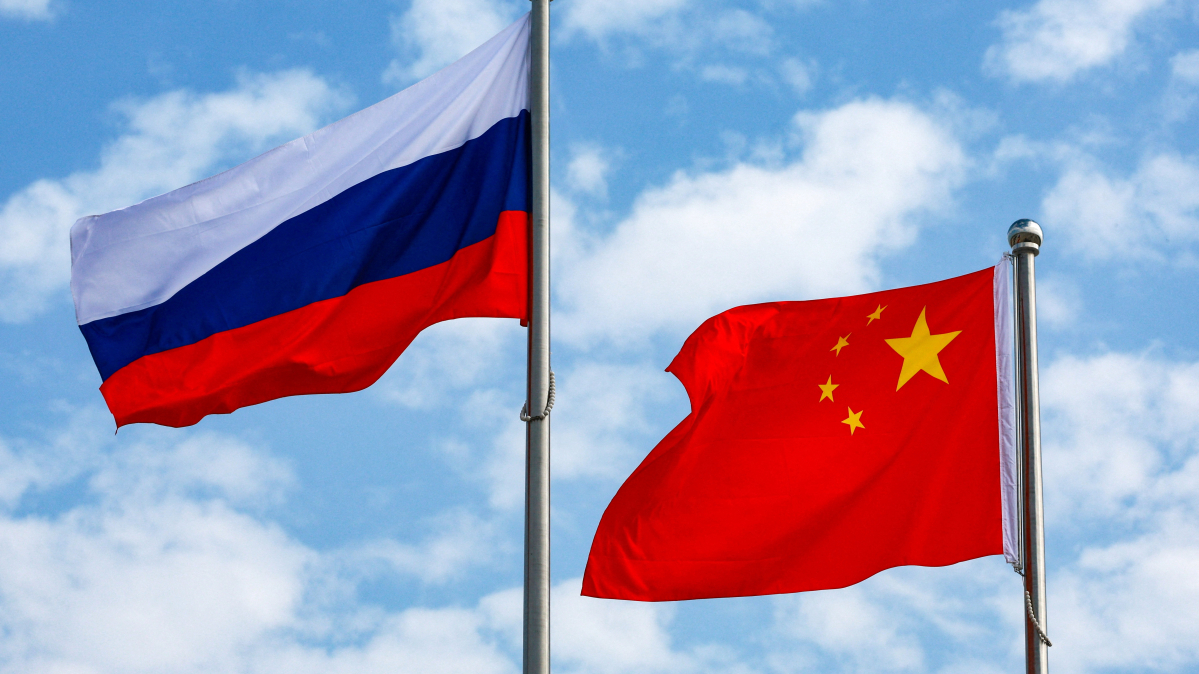
Russian President Vladimir Putin said Russia and China are prepared to support each other on issues linked to sovereignty and national unity, ahead of his visit to Beijing for talks with Chinese President Xi Jinping.
Putin’s two-day visit, beginning Tuesday (19 May) , comes less than a week after U.S. President Donald Trump travelled to China, as Beijing seeks to present itself as a stable global power amid rising geopolitical tensions and economic uncertainty.
In a video address released before the trip, Putin described relations between Moscow and Beijing as having reached an “unprecedented level” of trust and understanding.
The Russian president said the two countries are ready “to support each other on issues affecting the core interests of the two countries, including the protection of sovereignty and national unity.”
Putin added that Russia and China continue to expand cooperation across the economy, politics and defence sectors, describing the partnership as “close” and “strategic.”
“We are not aligning against anyone, but working for the cause of peace and universal prosperity,” he said.
China and Russia have strengthened ties significantly since the start of the war in Ukraine, with Beijing maintaining close economic and diplomatic engagement with Moscow despite Western pressure and sanctions.
Beijing projects stability
The summit is expected to reinforce what both governments describe as an “all-weather” partnership, while also signalling resistance to Western efforts to isolate Russia internationally.
Analysts say Beijing is using high-level diplomacy to position itself as a pillar of global stability at a time of ongoing wars, trade tensions and disruptions to energy markets.
“The Xi-Putin summit will telegraph to the world that the China-Russia strategic partnership remains the cornerstone of both countries' foreign policies,” said Ian Storey of Singapore’s ISEAS-Yusof Ishak Institute.
China has presented itself as neutral in the Ukraine conflict and has repeatedly called for peace talks, though Western governments accuse Beijing of providing economic and diplomatic support that helps sustain Russia’s war effort.
Chinese officials insist the country has not supplied lethal weapons to either side and says it strictly controls exports of dual-use goods.
Chinese Foreign Ministry Spokesperson Guo Jiakun said Xi and Putin will discuss “cooperation across all areas of bilateral relations” as well as regional and international issues during the visit.
Energy in focus
Energy cooperation is expected to feature prominently in the discussions, particularly negotiations surrounding the proposed Power of Siberia 2 gas pipeline.
Russia and China agreed in principle last year to move forward with the project, though pricing negotiations remain unresolved.
Analysts say recent disruptions to global energy markets linked to conflict in Iran may strengthen Moscow’s argument for long-term gas agreements with Beijing.
China remains the largest buyer of Russian oil, including both pipeline deliveries and seaborne shipments. Much of the trade is increasingly conducted in Chinese yuan as Moscow seeks alternatives to Western financial systems following sanctions imposed over Ukraine.
Russia also agreed in 2025 to increase annual oil supplies to China via Kazakhstan.
“In principle, we have reached a high degree of consensus regarding the taking of a serious, indeed, very substantial, step forward in our cooperation within the oil and gas sectors,” Putin said earlier this month.
Putin’s latest trip to China, his 25th visit to the country, underscores the growing strategic alignment between Moscow and Beijing as both governments seek to counter Western influence and reshape global power dynamics.
















What is your opinion on this topic?
Leave the first comment