AmerAmerican businesses are preparing for a major moment next week as the U.S. government launches a long-awaited system to return billions in unlawfully collected tariffs.
For many, it feels like both an opportunity and a gamble.
Jay Foreman, chief executive of Basic Fun, says he is ready. His company, known for toys such as Tonka trucks and Care Bears, is seeking about $7 million in refunds. Still, he is cautious.
“You have to be worried about what they could possibly do to jam things up,” he said.
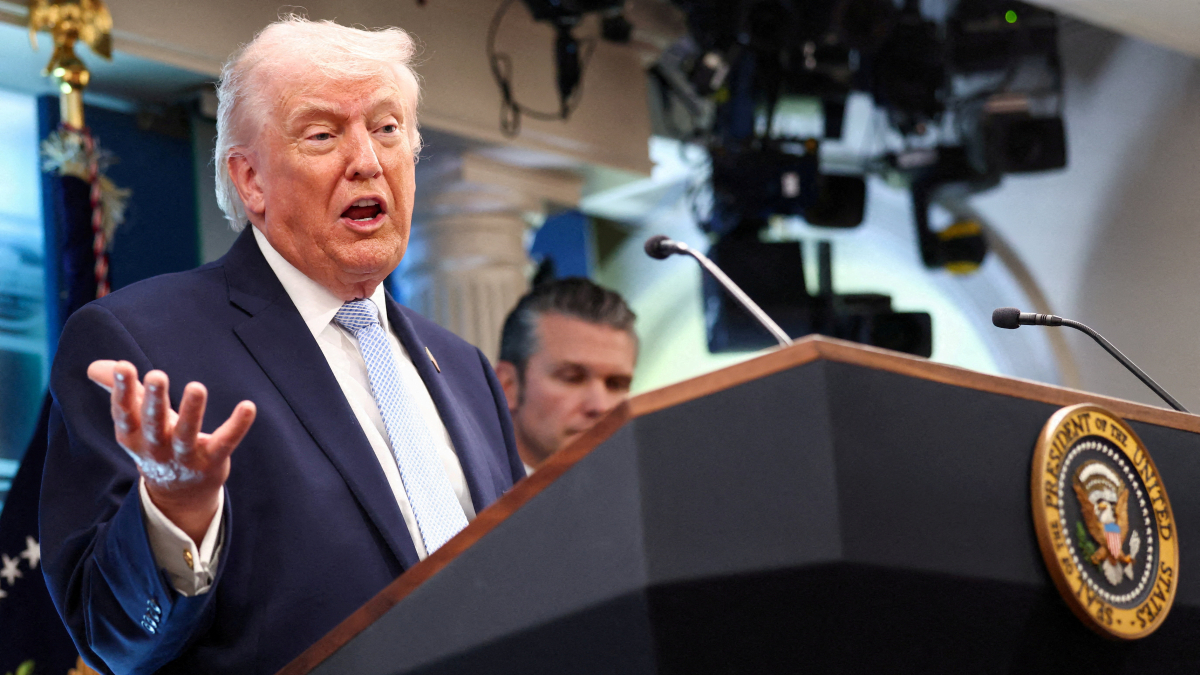
The new system, called CAPE, is expected to handle refunds worth up to $166 billion. It follows a February decision by the U.S. Supreme Court, which struck down tariffs imposed by Donald Trump under emergency powers.
Those tariffs had shaken global trade. Companies scrambled to shift supply chains, while many struggled to decide who should absorb the extra costs.
Now, attention has turned to getting that money back.
A race against the system
The refund portal, developed by U.S. Customs and Border Protection, aims to simplify the process. Instead of handling claims one by one, companies will receive a single payment, sometimes with interest.
More than 56,000 importers have already signed up. Together, they account for roughly $127 billion in potential refunds.
But there is concern that the system may struggle under pressure.
“It’s not like Taylor Swift tickets going on sale,” Foreman joked. “But there’s no telling if it crashes the portal.”
Others share that concern. Some companies plan to wait a few days before filing, hoping early glitches will be ironed out.
Matt Field, finance chief at Oshkosh, says the refund is significant for his firm, though he has not revealed the amount.
“I do chase every dollar,” he said, adding that he may hold off briefly to let the system “settle”.
‘There are wrinkles’
Early users say the process is not without frustration.
Jason Cheung, head of Huntar Co., said small details caused delays when registering. Even slight differences in company names led to repeated attempts.
“It took me five tries,” he said. “But we’re used to paperwork.”
Despite the hiccups, most firms remain confident they will eventually receive their money.
Rick Woldenberg, boss of Learning Resources, is among those feeling cautiously optimistic. His company is claiming more than $10 million.
“There are wrinkles, of course,” he said, “but I am pleased to see the government do the right thing.”
International firms are also involved. German manufacturer ebm-papst has already registered, though it warned that the system’s ability to handle large volumes is still untested.
Legal and political questions remain
There is also uncertainty over whether the process could face further legal challenges.
U.S. customs officials have until early May to appeal the court ruling that forced the creation of the refund system. Any move could slow things down.
Even if payments go through, another question looms: who should ultimately benefit?
The system is designed to refund the importer, not the consumer. Yet many households paid higher prices as tariffs drove up costs.
At a recent hearing, U.S. Trade Representative Jamieson Greer said state officials who challenged the tariffs had asked for refunds to go back to companies, not the public.












What is your opinion on this topic?
Leave the first comment