A 6.8 magnitude earthquake struck Tibet's Himalayan foothills, killing at least 100 and shaking Nepal, Bhutan, and India. Tremors reached as far as Kathmandu and Thimphu.
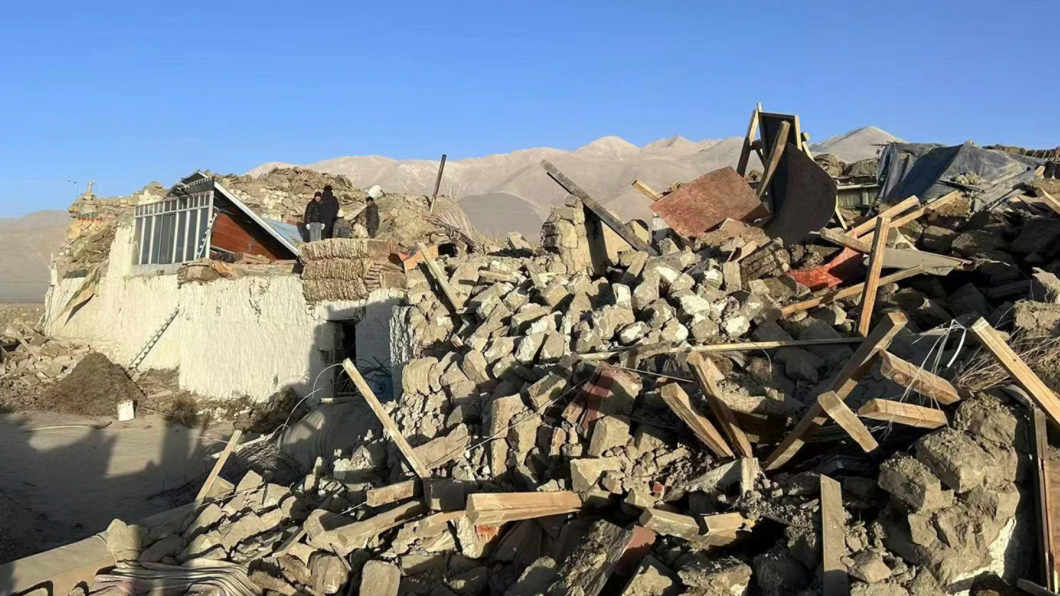
A magnitude 6.8 earthquake, opens new tab rocked the northern foothills of the Himalayas near one of Tibet's holiest cities on Tuesday, Chinese authorities said, killing at least 100 people and shaking buildings in neighbouring Nepal, Bhutan and India.
The quake hit at 9:05 a.m. (01:05 GMT), with its epicentre located in Tingri, a rural Chinese county known as the northern gateway to the Everest region, at a depth of 10 km (6.2 miles), according to the China Earthquake Networks Centre. The U.S. Geological Service put the quake's magnitude at 7.1.
At least 32 people had been killed and 38 injured on the Tibetan side, China's state-run news agency Xinhua reported.
The impact of the temblor was felt across the Shigatse region of Tibet, home to 800,000 people. The region is administered by Shigatse city, the traditional seat of the Panchen Lama, one of the most important figures in Tibetan Buddhism.
Villages in Tingri reported strong shaking during the quake, which was followed by dozens of aftershocks with magnitudes of up to 4.4.
Crumbled shop fronts could be seen in a video on social media showing the aftermath from the town of Lhatse, with debris spilling out onto the road.
Reuters was able to confirm the location from nearby buildings, windows, road layout, and signage that match satellite and street view imagery.
There are three townships and 27 villages within 20 km (12 miles) of the epicentre, with a total population of around 6,900, Xinhua reported. Local government officials were liaising with nearby towns to gauge the impact of the quake and check for casualties, it added.
The National Weather Service said more than five inches of snow had already fallen in the nation's capital by midday on Monday.
Tremors were also felt in Nepal's capital Kathmandu some 400 km (250 miles) away, where residents ran from their houses.
"We felt a very strong earthquake. So far we have not received any report of injuries or physical loss," said Anoj Raj Ghimire, chief district officer of Solukhumbu district in Nepal, at the foot of Mount Everest, the world's highest mountain.
"We have mobilised police and other security forces as well as locals to collect information about the damage," he added.
The quake also jolted Thimphu, the capital of Bhutan, and the northern Indian state of Bihar which borders Nepal.
So far, no reports of any damage or loss to property have been received, officials in India said.
Southwestern parts of China, Nepal and northern India are frequently hit by earthquakes caused by the collision of the Indian and Eurasian tectonic plates.
A huge quake in China's Sichuan province in 2008 killed almost 70,000 people, while a magnitude 7.8 tremor struck near Kathmandu in 2015, killing about 9,000 people and injuring thousands in Nepal's worst ever earthquake.
















What is your opinion on this topic?
Leave the first comment