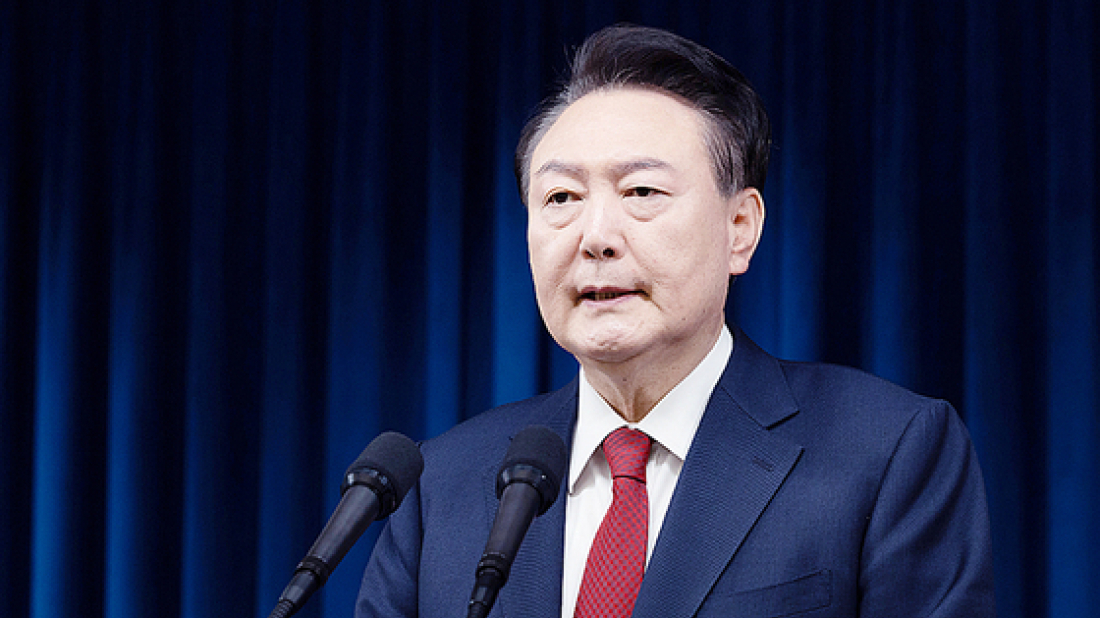
A South Korean court gave authorities approval on Tuesday to arrest President Yoon Suk Yeol after he was impeached and suspended from power for imposing martial law, marking the first time that a sitting president of the country has faced arrest.
The Corruption Investigation Office for High-ranking Officials (CIO) confirmed the Seoul Western District Court approved an arrest warrant requested by investigators examining Yoon's short-lived imposition of martial law.
Yoon is facing investigation on allegations that he was the leader of an insurrection, one of the few criminal charges from which a South Korean president does not have immunity. Separately, his trial on impeachment is being heard at the Constitutional Court.
The arrest warrant for an incumbent president is unprecedented, and deepens the political crisis that has engulfed South Korea, Asia's fourth-largest economy and a key U.S. ally.
Prime Minister Han Duck-soo, who took over from Yoon as acting president, has also been impeached by parliament, which is dominated by the opposition.
Finance Minister Choi Sang-mok, who took over as acting president after Han's impeachment, has been dealing with Sunday's crash of Jeju Air flight 7C2216, which killed 179 people in the deadliest air disaster on South Korean soil.
The current arrest warrant is viable until Jan. 6, and once it is exercised, Yoon is expected to be held at the Seoul Detention Center, Yonhap news agency said, citing the CIO.
Yoon Kab-keun, a lawyer for the impeached president, said the arrest warrant was illegal and invalid because the CIO did not have the authority under South Korean law to request a warrant.
He said the president's legal team will file for an injunction at the Constitutional Court to stop the warrant.
The district court issued the warrant due to the likelihood that Yoon will not respond to summons without a justifiable reason, and there being a substantial reason to suspect Yoon of a crime, Yonhap said. The court declined to comment.
It was unclear when or how the arrest warrant for Yoon will be carried out. South Korea's presidential security service said in a statement on Tuesday that it will treat the arrest warrant according to due process.
The court also approved a search warrant for Yoon's residence, the CIO said.
Previously, police tried but failed to successfully raid the presidential office as part of the investigation, due to the presidential security service blocking access.
SHORT-LIVED MARTIAL LAW
Yoon has failed to respond to investigators' summons for questioning multiple times since the Dec. 3 martial law declaration. The announcement, an attempt to ban political activity and censor the media, was the first such order in South Korea since the 1980s.
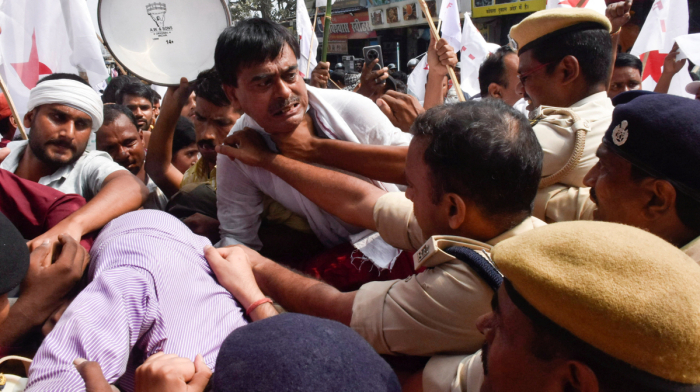
That night, troops forced their way into the National Assembly building in Seoul but stood back when parliamentary aides sprayed them with fire extinguishers. Lawmakers rejected the martial law decision while protesters scuffled with police outside, and Yoon rescinded the order within hours.
The backlash was swift. While Yoon survived a first impeachment attempt, members of his party later joined opposition parties to impeach him on Dec. 14.
Han took over as acting president, but he too was impeached on Friday after he declined to approve justices appointed by parliament to the Constitutional Court.
The next hearing in Yoon's Constitutional Court case is scheduled for Friday.
Kim Yong-hyun, who resigned as Yoon's defence minister after playing a major role in the martial law decree, has been detained and was indicted on Friday on charges of insurrection and abuse of power.
The acting leader of South Korea's ruling People Power Party, Kweon Seong-dong, said on Tuesday that attempting to detain a sitting president is inappropriate.
Kim Yong-min, a lawmaker in the opposition Democratic Party, which holds a majority in parliament and brought on Yoon's impeachment vote, said on Tuesday: "The process of executing the warrant and investigation could be very difficult", calling for investigators to immediately execute the warrants.


















What is your opinion on this topic?
Leave the first comment