live Iran reopens Hormuz Strait, demands end to U.S. naval blockade- Saturday 18 April
Iran temporarily reopened the Strait of Hormuz on Friday (17 April) following a ceasefire agreement in Lebanon, ra...
The International Court of Justice (ICJ) on Wednesday ruled that Israel is obliged under the Geneva Convention to permit and facilitate humanitarian aid from third states and neutral organisations,
including the International Committee of the Red Cross (ICRC) and the UN Relief and Works Agency for Palestine Refugees (UNRWA), to ensure sufficient assistance reaches the Gaza Strip.
The court emphasised that Israel, as the occupying power, has an unconditional duty to meet the basic needs of the population. It found that Gaza’s population has been “inadequately supplied” and that Israel cannot block or restrict humanitarian operations.
ICJ rejected Israel’s claims that UNRWA staff were linked to armed groups and noted that aid distribution was carried out without discrimination based on nationality, religion, race, or political opinion. The court underlined that the occupying power cannot use security concerns to justify a general suspension of humanitarian activities, and that its obligation to facilitate aid is unconditional.
The ruling also reiterated that Israel’s claim over East Jerusalem is null and void, and that starvation cannot be used as a method of warfare. ICJ called on Israel to respect the property, assets, and immunity of UN institutions and to avoid interfering with their operations.
Israel’s Foreign Ministry rejected the advisory opinion, calling it “entirely predictable”. Spokesperson Oren Marmorstein alleged on social media that UNRWA staff had participated in the October 2023 attacks and claimed Israel had provided extensive evidence of Hamas infiltration into UNRWA.
The ICJ ruling has sparked international attention, with humanitarian organisations stressing the urgent need for uninterrupted aid delivery to Gaza.

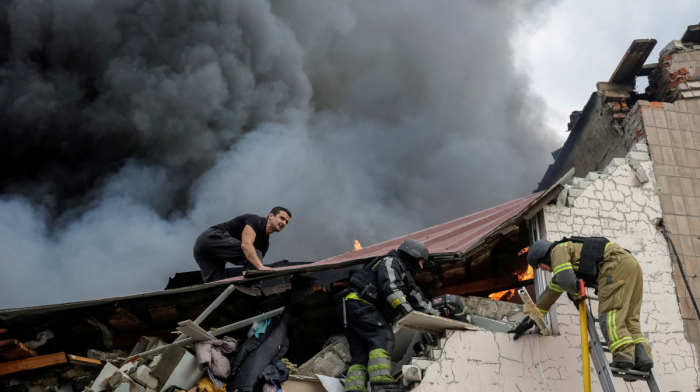
The past 24 hours of the Russia-Ukraine war have seen a drastic escalation in both aerial bombardment and frontline losses.
Iran reopened the Strait of Hormuz to commercial shipping on Friday (17 April) for the first time since the U.S. and Israel killed Iran's ex-Supreme Leader in air strikes, triggering the Middle East conflict, at the end of February. A U.S. blockade on Iranian ports, however, remains in force.
Russia published addresses of manufacturers allegedly producing drones or components for Ukraine on Wednesday (15 April), warning European countries against plans to step up UAV supplies to Kyiv.
Netflix shares fell sharply on Friday after the streaming group issued a weaker-than-expected outlook and said chairman and co-founder Reed Hastings will step down from the board.
U.S. President Donald Trump says Israeli and Lebanese leaders have agreed to a 10-day ceasefire that includes Hezbollah, raising cautious hopes of a pause in hostilities after weeks of escalating tensions.
The Trump administration extended a sanctions exemption on some Russian oil as prices continue to skyrocket in the wake of the U.S.- Israeli war against Iran on Friday (17 April).
Australia and Japan signed contracts on Saturday (18 April) launching their landmark A$10 billion ($7 billion) deal to supply Australia with warships, Tokyo's most consequential military sale since ending a military export ban in 2014.
Leaders from across Europe and beyond gathered in Paris on Friday for a summit aimed at managing the global impact of the Middle East conflict.
European leaders have set out plans for a coordinated defensive mission to restore freedom of navigation in the Strait of Hormuz, once security conditions allow, following talks involving more than 40 countries.
NeaNearly 900 Rohingya refugees were reported missing or dead in the Andaman Sea off Myanmar in 2025, making it the deadliest year on record, the United Nations Refugee Agency said on Friday.
You can download the AnewZ application from Play Store and the App Store.
What is your opinion on this topic?
Leave the first comment