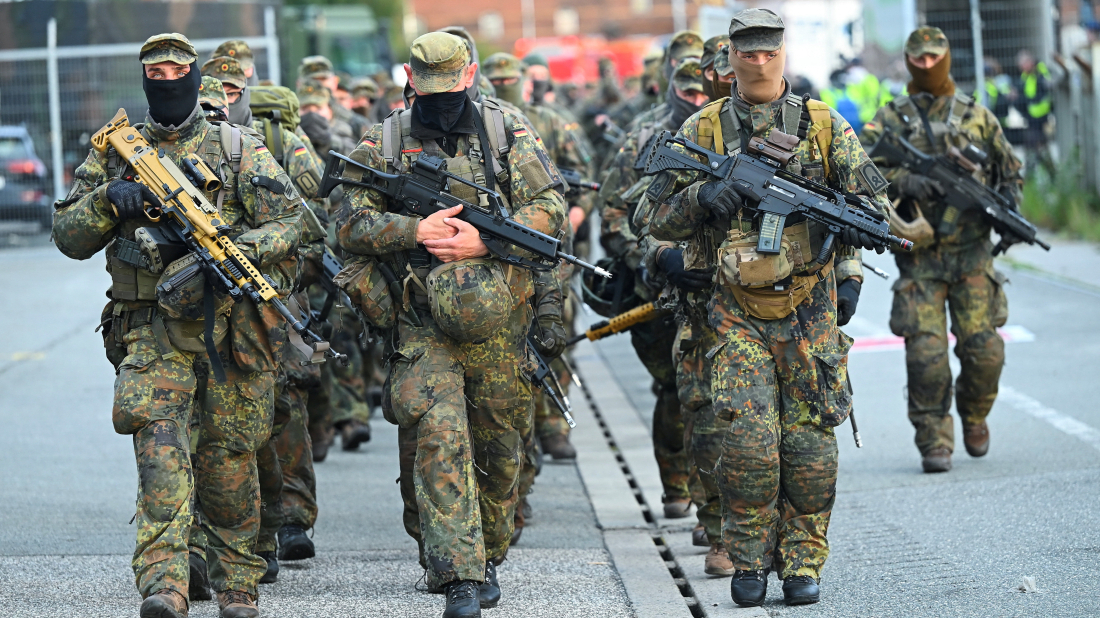
Germany has outlined plans to ramp up its military strength, committing billions to modernize equipment and increase personnel to 260,000 over the next decade.
The government is addressing personnel shortages and fixing years of neglect to ensure a stronger defence amid growing security concerns, according to AP.
In response to Russia’s invasion of Ukraine, Germany has allocated a 100-billion-euro special fund to modernize its military. This includes F-35 fighter jets, Leopard 2 tanks, and Chinook helicopters. However, these upgrades will take time, as the country grapples with outdated equipment.
Chancellor Friedrich Merz says that “because of its size and its economic strength, Germany is the country that must have the strongest conventional army in NATO on the European side.”
Germany’s military has struggled to attract recruits since conscription was suspended in 2011. The current force stands at 180,000, significantly below the 300,000 personnel in 2001. The government aims to raise that number to 260,000 by the next decade and double the number of reservists to 200,000.
“Credible deterrence requires operational readiness,” said the Bundeswehr’s chief of staff, Gen. Carsten Breuer. “And operational readiness requires matériel, personnel, training and ... exercising, exercising, exercising.”
To address recruitment, a new service system has been introduced, offering better pay, flexible terms, and improved training for short-term enlistees. However, the idea of reinstating conscription remains a topic of debate within the government, particularly among Merz’s conservative bloc.
Given the historical reluctance toward military service in Germany, the government has worked to raise the military’s status. Recruitment ads now appear on pizza boxes and kebab wrappers, while a TikTok channel has been launched to attract younger recruits.
New recruits like Lina, a 21-year-old woman, say the growing global tensions make military service more important than ever: “If no one goes into this service, who will do it?” Vincent, 26, added, “I want to contribute to the defence of Germany and its European allies.”
While Germany’s military force has historically been smaller compared to countries like the U.S. and the U.K., the invasion of Ukraine has increased the perception of the Bundeswehr as essential to Germany’s national defence and to NATO’s security goals in Europe.











What is your opinion on this topic?
Leave the first comment