Strike near Nakhchivan raises fears of wider regional spillover in the South Caucasus
Tensions are rising in the South Caucasus after a reported strike near Azerbaijan’s Nakhchivan exclave, fuelling fears that instability linke...
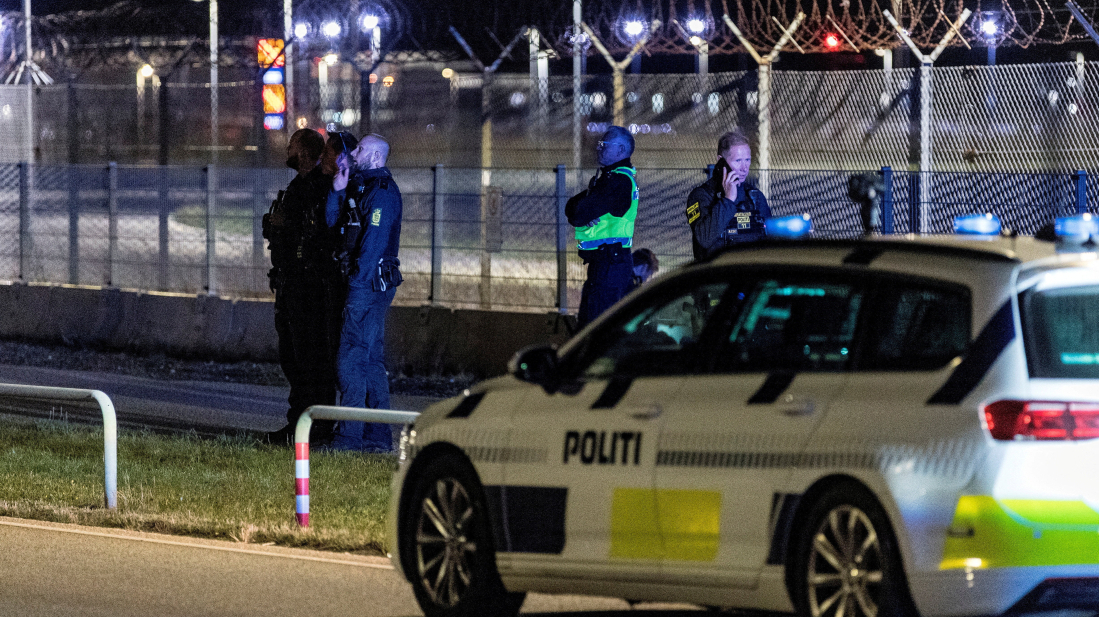
Denmark announced on Sunday that it was banning civilian drone flights after sightings of drones near several military facilities overnight, following a week in which drone activity forced the temporary closure of a number of Danish airports.
In a statement, the Danish military said it had deployed “several capacities” in response to the incidents but declined to provide further details. Earlier in the week, drone activity led to the closure of airports, including Copenhagen Airport, which was shut for almost four hours on Monday.
The Danish government has described the activity as part of a “hybrid attack”. While it has not formally attributed blame, Prime Minister Mette Frederiksen has hinted at Russian involvement, calling Moscow the main “threat to European security”. The Kremlin has rejected the accusation.
The temporary ban will prevent all civilian drones from flying in Danish airspace between Monday and Friday, coinciding with Denmark’s hosting of European leaders during its tenure as holder of the EU’s rotating presidency.
“We are currently in a difficult security situation, and we must ensure the best possible working conditions for the armed forces and the police when they are responsible for security during the EU summit,” Defence Minister Troels Lund Poulsen said in a statement.
Denmark will host EU leaders on Wednesday, followed by a Thursday summit of the 47-member European Political Community, established after Russia’s 2022 invasion of Ukraine to bring together the EU and other allied European nations.
On Sunday, a German air defence frigate docked in Copenhagen to provide support with airspace monitoring during the high-profile gatherings.

Tensions in the region remained high on Tuesday (10 March), as the United States and Iran exchanged increasingly sharp warnings, including threats over the strategic Strait of Hormuz, a critical artery for global oil supplies.
China has urged Afghanistan and Pakistan to resolve their dispute through dialogue after Chinese envoy Yue Xiaoyong met Afghan Foreign Minister Amir Khan Muttaqi, as fighting between the two neighbours entered its eleventh day.
Entry and exit across the state border between Azerbaijan and Iran for all types of cargo vehicles, including those in transit, will resume on 9 March, according to a statement by the Cabinet of Ministers of Azerbaijan.
Iranian civilian and military officials have pledged their obedience to the new leader, Ayatollah Seyed Mojtaba Khamenei, with President Masoud Pezeshkian saying his leadership “will herald a new era of dignity and authority for the Iranian nation.”.
Norwegian police are searching for a suspect after an explosion at the U.S. embassy in Oslo on 8 March caused minor damage but no injuries, in what authorities say may have been a deliberate attack linked to the Middle East crisis.
Iran and Israel continue to exchange missile and drone strikes across the Middle East - all the latest updates throughout the day on AnewZ
U.S. Ambassador to the United Nations, Mike Waltz, has addressed the U.N. Security Council, saying the world must consider how effective its engagement with the Taliban-run country is as millions face hunger.
British MPs have rejected a proposal to introduce an Australia-style ban on social media for under-16s, opting instead to give ministers flexible powers to impose restrictions on platforms.
Australia has granted humanitarian visas to five Iranian women footballers who sought asylum, fearing persecution after refusing to sing their national anthem at an Asia Cup match.
Start your day informed with AnewZ Morning Brief. Here are the top news stories for the 10th of March, covering the latest developments you need to know.
You can download the AnewZ application from Play Store and the App Store.
What is your opinion on this topic?
Leave the first comment