live Hopes for Hormuz deal fade as Trump adds new demands to Iran peace talks
U.S. President Donald Trump has called for Iran to pay compensation for decades of deaths and damage, adding a new demand to peace talks as Tehran see...
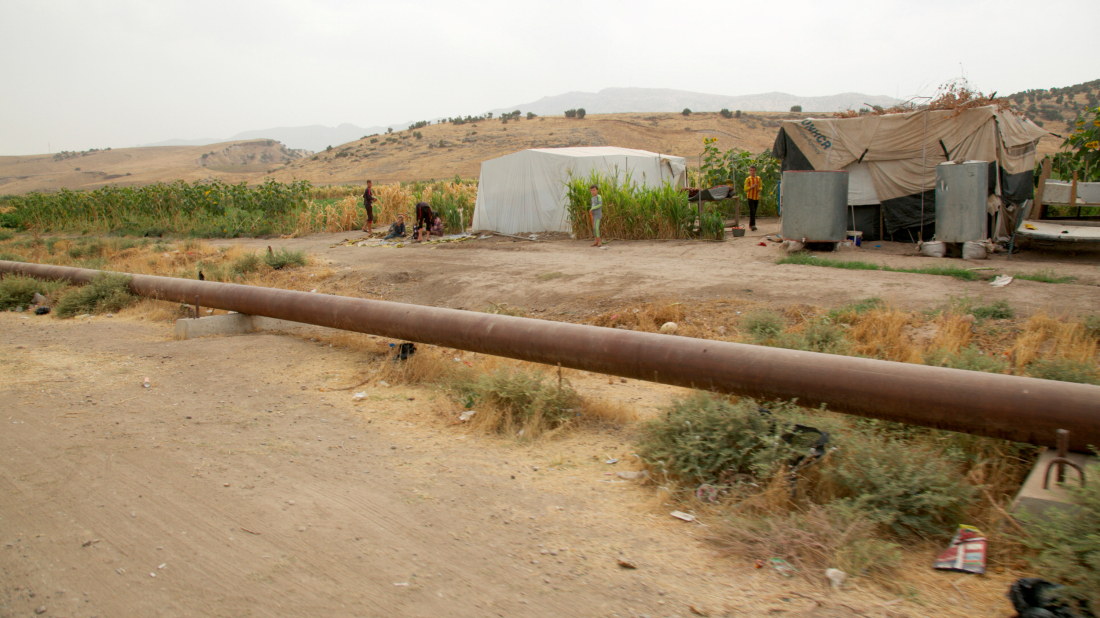
Crude oil flowed on Saturday (27 September) through a pipeline from the semi-autonomous Kurdistan region in northern Iraq to Türkiye for the first time in two-and-a-half years, after an interim deal broke the deadlock, Iraq's oil ministry said.
"Operations started at a rapid pace and with complete smoothness without recording any significant technical problems," the ministry said.
The agreement between Iraq's federal government, the Kurdistan regional government (KRG) and foreign oil producers will see 180,000 to 190,000 barrels per day of oil flow to Türkiye's Ceyhan, Iraq's oil minister told Rudaw on Friday.
The U.S. had pushed for a restart, which is expected to eventually bring up to 230,000 barrels per day (bpd) of crude back to international markets at a time when OPEC+ is boosting output to gain market share.
The preliminary plan, agreed on Wednesday, calls for the KRG to commit to delivering at least 230,000 bpd to Iraq's state oil marketer SOMO, while keeping an additional 50,000 bpd for local use, according to Iraqi officials with knowledge of the agreement.
An independent trader will handle sales from the Turkish port of Ceyhan using SOMO's official prices.
For each barrel sold, $16 is to be transferred to an escrow account and distributed proportionally to producers, with the rest of the revenue going to SOMO, the officials said.

One hundred years after the First World War and more than eighty years after the devastation of the Second World War gave rise to the United Nations, humanity once again finds itself living in an age of permanent crisis.
Flights arriving at Catania airport in eastern Sicily were suspended after volcanic ash from a new eruption of Mount Etna drifted into the airspace around the airport, disrupting operations at one of Italy’s busiest aviation hubs.
For months, efforts to secure the Red Sea have focused on what is happening in the water. Naval deployments have increased, governments have expanded maritime cooperation and shipping companies have adapted to persistent security threats.
Greenland has issued a “strong warning” to a U.S. oil company linked to President Donald Trump after drilling equipment was brought ashore without the required government approvals, according to British media.
Iran said it was nearing a final pact with Oman defining new shipping lanes between them through the Strait of Hormuz but repeated that the U.S. must meet other conditions.
Kyrgyzstan has proposed hosting part of Russian e-commerce giant Wildberries’ warehouse and logistics network, aiming to reduce supply-chain risks and strengthen trade with Russia.
North Korea has deployed troops, weapons and now, according to a Ukrainian intelligence official, a missile unit to support Russia's war against Ukraine, marking Pyongyang's most significant involvement in a war since the 1950s.
U.S. President Donald Trump has called for Iran to pay compensation for decades of deaths and damage, adding a new demand to peace talks as Tehran seeks compensation and sanctions relief before reopening the Strait of Hormuz.
A criminal court in Damascus has sentenced former Syrian President Bashar al-Assad to death in absentia for premeditated murder, torture, arbitrary detention and crimes against humanity, according to Syria’s state news agency SANA.
Russia’s state nuclear corporation Rosatom plans to increase its workforce at Iran’s Bushehr Nuclear Power Plant to 100 specialists by the autumn, depending on the security situation and progress toward a halt in hostilities between Washington and Tehran.
You can download the AnewZ application from Play Store and the App Store.
What is your opinion on this topic?
Leave the first comment