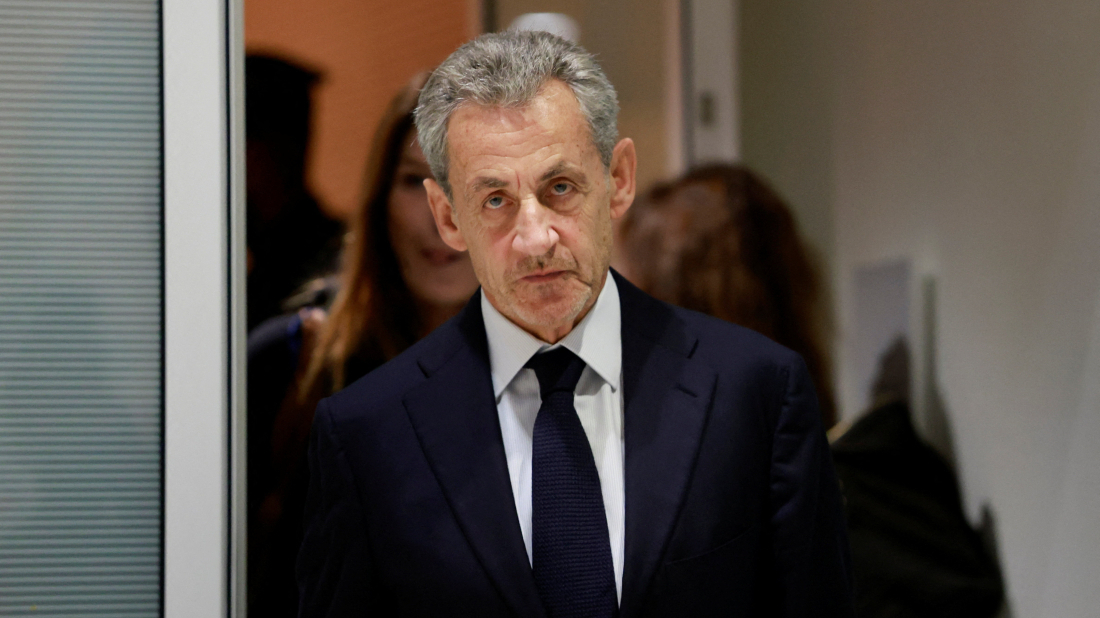
Former French president Nicolas Sarkozy has been sentenced to five years in prison after being found guilty of criminal conspiracy in connection with illegal Libyan financing for his 2007 presidential campaign.
The Paris court’s ruling marks the first time a former French head of state could face jail time over such charges. Sarkozy has vowed to appeal.
Sarkozy’s reaction
Calling the verdict a “scandal,” Sarkozy said it posed a grave threat to the rule of law. “Hate has no limit,” he declared. “If they absolutely want me to sleep in jail, I will sleep in jail, but with my head held high … I am innocent. This injustice is a scandal … I will appeal; I will fight until my last breath.”
His wife, singer Carla Bruni, took to Instagram with a more understated response, posting “Love is the answer” alongside the hashtag #Hatewillnotwin.
Political allies rally
Conservative allies rushed to his defence. Outgoing Interior Minister Bruno Retailleau praised Sarkozy’s “energy and determination,” saying he had “always faithfully served his country.” He expressed confidence the former president would prove his innocence on appeal. Laurent Wauquiez, head of the Les Républicains parliamentary group, also reaffirmed his support, describing Sarkozy as a “statesman who has given so much to our country.”
Jean-Michel Darrois, one of Sarkozy’s lawyers, condemned the ruling as “a firm and heavy sentence” and claimed there was “a special justice for Nicolas Sarkozy.” Another defence lawyer, Christophe Ingrain, said the conviction was based on “fabrication” and “assumptions” rather than evidence.
Critics point to rule of law
Others welcomed the judgment as a sign of judicial independence. Vincent Brengarth, a lawyer representing the plaintiff NGO Sherpa, called the verdict historic: “This is the first time that a former president of the republic will find himself behind bars … it also confirms that we have an independent judiciary that knows how to show courage and authority.”
Clementine Autain, an Ecologist MP, wrote on X that Sarkozy stood “head held high, dirty hands. The rule of law did not fail.”
Far-left lawmaker Manuel Bompard insisted the charges were “extremely serious” and urged Sarkozy’s defenders to “accept the decision.”
Concerns over enforcement
However, politicians across the spectrum raised concerns about the decision to enforce the sentence immediately while legal appeals remain open. Senate president Gérard Larcher warned this practice could undermine the presumption of innocence, a sentiment echoed by far-right leader Marine Le Pen, who described provisional enforcement as “a great danger” to fundamental legal principles.
What comes next
Sarkozy, who has denied wrongdoing throughout, remains free pending appeal. His legal team has pledged to continue the fight, while French society remains sharply divided over the implications of the ruling, both for the justice system and for the legacy of a former president.














What is your opinion on this topic?
Leave the first comment