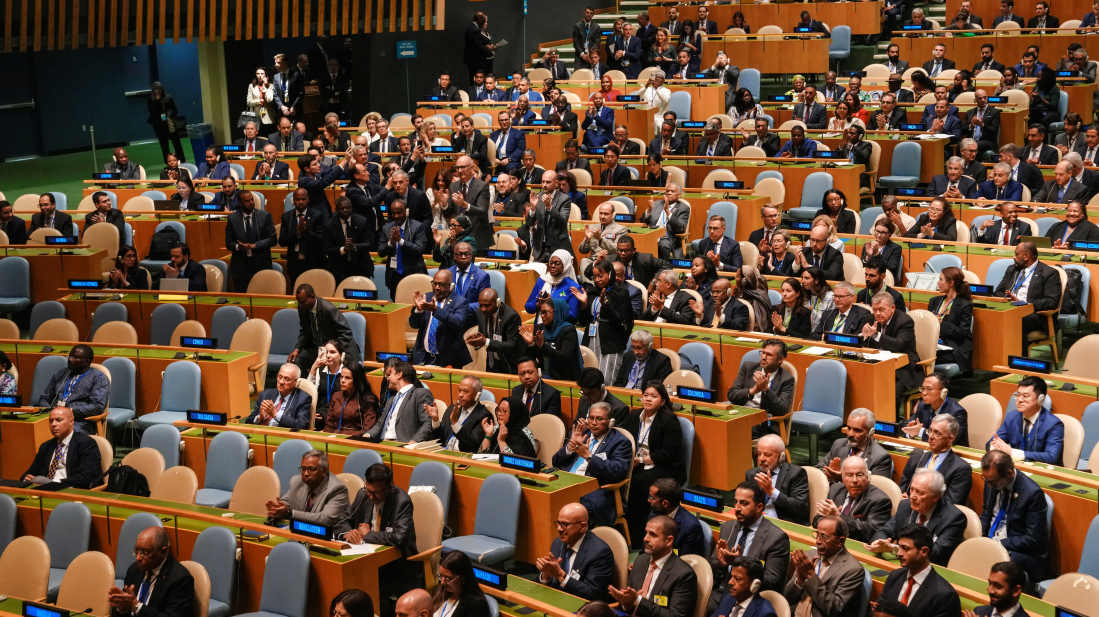
Several global leaders announced their countries’ recognition of the State of Palestine on Monday during a high-level international conference held on the sidelines of the United Nations General Assembly.
The meeting, formally titled the High-Level International Conference for the Peaceful Settlement of the Question of Palestine and the Implementation of the Two-State Solution, was co-led by France and Saudi Arabia.
Participants urged steps to end the war in Gaza and reaffirmed support for a two-state solution.
Spanish Prime Minister Pedro Sanchez said Spain would move forward with recognition of Palestine and called for its full UN membership. Ireland’s Prime Minister Michael Martin echoed the call, stressing that “the only viable option to deliver a peaceful future for Israel and Palestine is a two-state solution.”
Luxembourg’s Prime Minister Luc Frieden announced his country’s recognition, describing it as a step toward diplomacy and coexistence. Malta’s Prime Minister Robert Abela also confirmed recognition, saying Palestinians should live “within their own state, side by side with the state of Israel.”
Andorra’s Foreign Minister Imma Tor Faus declared her government’s approval of recognition, while Belgian Prime Minister Bart De Wever said his country supports a two-state solution but formal recognition will depend on conditions including the release of hostages.
European Commission President Ursula von der Leyen welcomed the momentum, noting that most European Union member states now recognise Palestine.
The UK and Canada also announced their recognition of the State of Palestine, calling it a necessary step toward advancing a two-state solution and achieving peace in the Middle East.
UK Foreign Secretary Yvette Cooper said the decision affirms Palestinians’ right to statehood and aligns with Britain’s long-standing support for a two-state solution.
Canadian Prime Minister Mark Carney also confirmed recognition, citing the need to safeguard prospects for peace amid ongoing conflict and humanitarian challenges.
Germany and Italy, however, signalled they are not likely to follow at this stage. German Foreign Minister Johann David Wadephul said a two-state solution remains essential, while Italian Foreign Minister Antonio Tajani reaffirmed Rome’s support for a negotiated settlement and humanitarian aid to Palestinians.
Arab countries called for wider recognition of Palestine
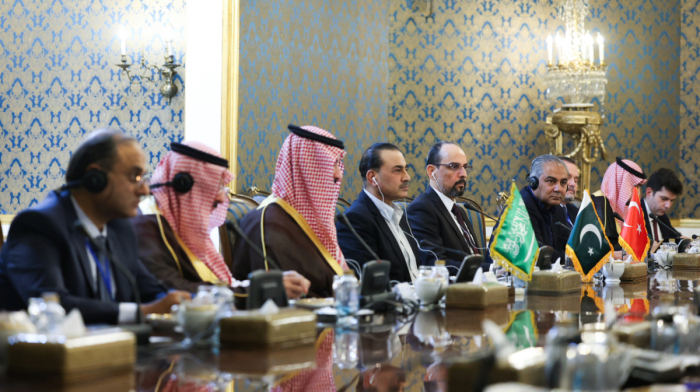
Arab leaders and officials voiced support for a two-state solution, urging an end to the conflict in Gaza and calling on countries that have not yet recognised Palestine to do so.
Speaking on behalf of Egyptian President Abdel Fattah al-Sisi, Prime Minister Mostafa Madbouly praised the meeting as an important step toward advancing peace in the Middle East. He emphasised that stability in the region depends on a comprehensive solution that allows Palestinians to establish their independent state.
Jordan’s King Abdullah II told the gathering that the conflict in Gaza must end and humanitarian aid must be delivered without obstacles. He said the two-state solution remains the only viable path to lasting peace.
Qatar’s Minister of State for Foreign Affairs Sultan al-Muraikhi described the conference as historic and underscored the urgency of international recognition for Palestine.
Officials from the United Arab Emirates and Algeria also urged broader recognition and stronger international action, while Arab League Secretary-General Ahmed Aboul Gheit called for protecting Palestinians and ensuring the viability of a two-state solution.












What is your opinion on this topic?
Leave the first comment