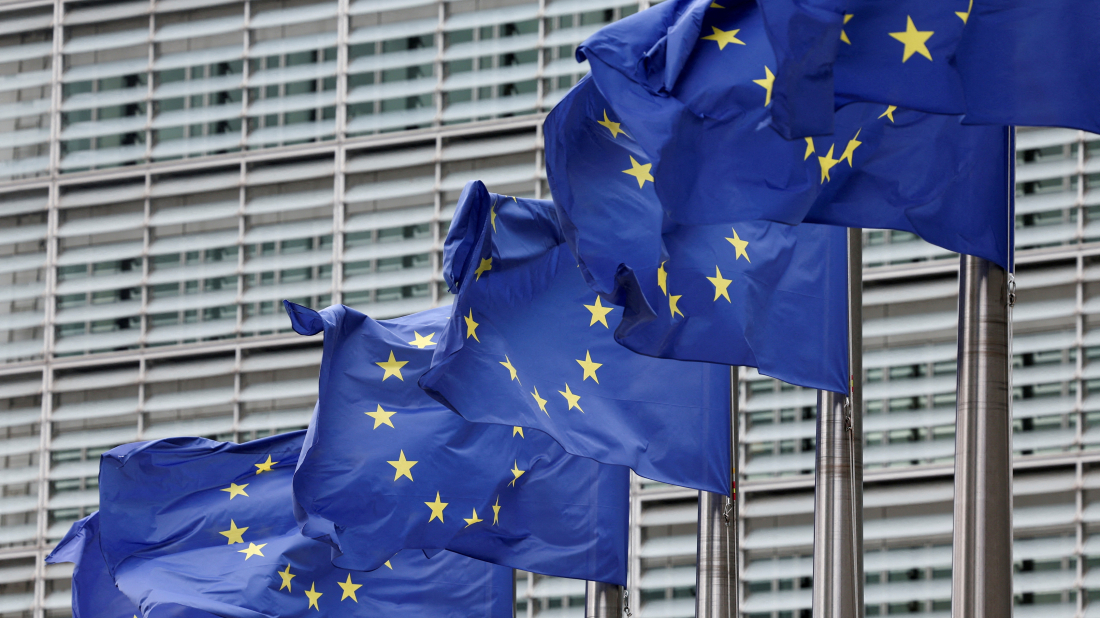
The European Union will strengthen its power grid and launch a new initiative targeting eight key energy bottlenecks across the bloc, according to the European Commission President.
Ursula von der Leyen made the annoucement on Tuesday saying that the EU plans to modernise its electricity infrastructure and integrate national power networks more closely.
Speaking at a conference in Brussels titled "One Year After the Draghi Report", von der Leyen said the Commission would soon propose a new “grid package” and an “energy highways” initiative aimed at eliminating eight critical bottlenecks in the EU’s energy infrastructure.
“National grids are still not fully integrated,” she said, highlighting that energy prices vary widely across the bloc.
“In some member states, electricity is three times more expensive than in others. If energy could flow more freely to where it is needed, many price hikes could have been avoided.”
Von der Leyen said the Commission would provide funding where necessary to overcome infrastructure gaps.
She emphasised that decarbonisation and economic competitiveness depend on lower energy costs.
“Europe is overly dependent on imported fossil fuels,” she said. “Our solution lies in domestic sources — renewables and nuclear — which ensure both energy security and independence.”
According to von der Leyen, more than 70% of the EU's electricity now comes from low-carbon sources. A record €40 billion (about $43 billion) was invested in wind energy in the first half of 2025 alone, following the launch of a wind energy package that cut permitting times by two-thirds. As a result, the EU reduced its fossil fuel bill by €60 billion (about $64.5 billion) last year, she said.
Von der Leyen also pointed to the EU's growing strength in artificial intelligence, noting a 67% increase in European businesses adopting Artificial Intelligence (AI) this year.
“This time, Europe is not trying to catch up — we are among the frontrunners,” she said.
She added that digital infrastructure must serve industrial and innovation goals.
“We have built AI factories and will soon convert the best of them into giga factories,” she said.
Commenting on Europe’s internal market, von der Leyen stressed that it remains incomplete and that existing trade barriers within the bloc act as de facto tariffs. “This must change,” she said.
Draghi Report impact
Her comments come a year after former European Central Bank President Mario Draghi released a report urging the EU to adopt a more coordinated industrial policy, accelerate decision-making, increase investment, and consider joint borrowing to remain economically competitive with the U.S. and China.
The Draghi report warned that the EU’s global competitiveness had weakened due to overlapping crises — including the COVID-19 pandemic, supply chain disruptions, the war in Ukraine, and rapid technological change.














What is your opinion on this topic?
Leave the first comment