Japan opens door to global arms market with overhaul of defence export rules
Japan on Tuesday unveiled its biggest overhaul of defence export rules in decades, scrapping restrictions ...
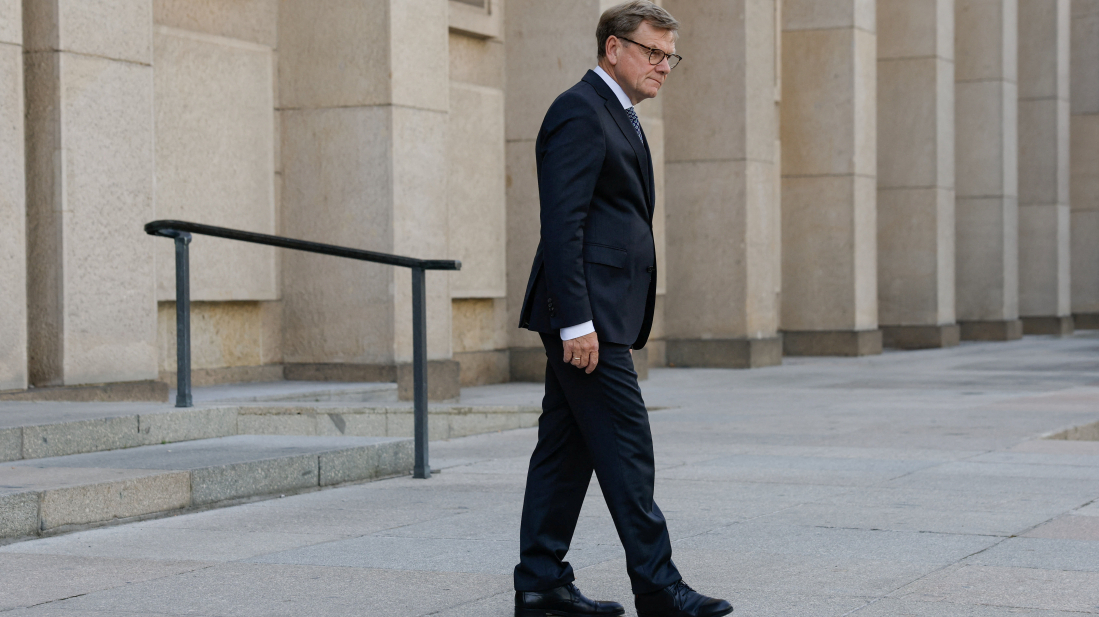
Germany’s Foreign Minister Johann Wadephul said on Thursday that the security of the Baltic states and Germany were inseparable, pledging stronger cooperation to counter what he described as Russia’s blend of conventional and unconventional threats as he travelled to Tallinn.
“The security of the Baltics is also our security in Germany,” Wadephul stressed before his visit to Estonia and Denmark.
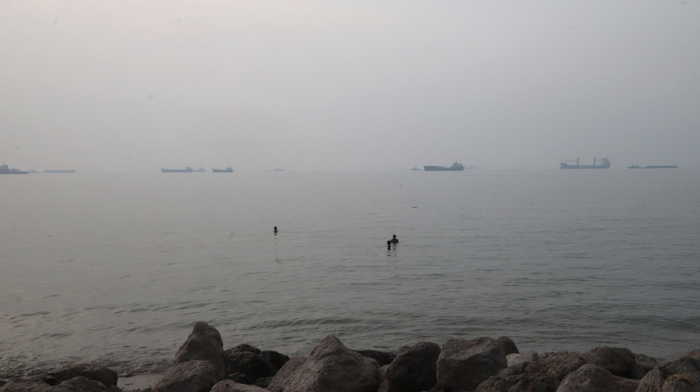
He highlighted rising risks in the Baltic Sea, including Russia’s so-called “shadow fleet” ships Western officials say are used to evade oil sanctions along with incidents of cut cables, displaced buoys and disrupted GPS signals.
Moscow has denied involvement in undersea sabotage in the region, insisting the West is exploiting such accusations to obstruct its maritime oil exports. Russia has also rejected responsibility for a growing number of security incidents across the Euro-Atlantic area, from recurring cyberattacks to arson.
“We are seeing the full arsenal of Russia’s hybrid aggression,” Wadephul warned, noting that Estonia and other Baltic countries had long cautioned of these dangers.
“Today, the EU and NATO benefit from their foresight and expertise and we aim to strengthen this cooperation further,” he added.
Wadephul said security would also be a key topic in Denmark. “The need to better protect critical infrastructure in the Baltic and North Seas is a priority Denmark is advancing under its EU Council presidency,” he noted. “All of Europe benefits from clean beaches, secure trade routes, and reliable energy and data connections.”

Iran accuses the United States of breaching a ceasefire after a commercial ship was seized in the Gulf of Oman, vowing retaliation, as Israel warns south Lebanon residents to avoid restricted areas.
Progessive Bulgaria, led by pro-Russian Eurosceptic Rumen Radev is on track to form Bulgaria’s next government, after official results showed a runaway victory for the coalition in the Balkan nation's parliamentary elections on Monday (20 April).
Secretly filmed footage from two UK laboratories has reignited debate over animal testing in drug development, after a former worker alleged that monkeys, dogs and other animals endured prolonged distress during safety trials for new medicines.
A powerful 7.5 magnitude earthquake has struck off Japan’s north-eastern coast, triggering urgent tsunami warnings with waves of up to 3 metres expected, prompting residents to seek immediate safety.
Blue Origin, the U.S. space company of billionaire Amazon founder Jeff Bezos, successfully reused and recovered a booster for its New Glenn rocket launched from Florida on Sunday (19 April), in the latest chapter of its intensifying rivalry with Elon Musk’s SpaceX.
Start your day informed with AnewZ Morning Brief. Here are the top news stories for the 21st of April, covering the latest developments you need to know
Japan on Tuesday unveiled its biggest overhaul of defence export rules in decades, scrapping restrictions on overseas arms sales and opening the way for exports of warships, missiles and other weapons.
Hungarian election winner Péter Magyar on Monday nominated András Kármán as finance minister, Anita Orbán as foreign minister and István Kapitány as economy and energy minister in his incoming government, as previously indicated.
Residents displaced by Hong Kong’s deadliest fire in decades have begun returning to their damaged homes, hoping to recover belongings that survived the blaze.
Progessive Bulgaria, led by pro-Russian Eurosceptic Rumen Radev is on track to form Bulgaria’s next government, after official results showed a runaway victory for the coalition in the Balkan nation's parliamentary elections on Monday (20 April).
You can download the AnewZ application from Play Store and the App Store.
What is your opinion on this topic?
Leave the first comment