Syria’s economic recovery gains pace with refugee returns and investor confidence
Syria’s economy is showing clear signs of recovery, with economic activity accelerating in recent months, the International Monetary Fund (IMF) said...
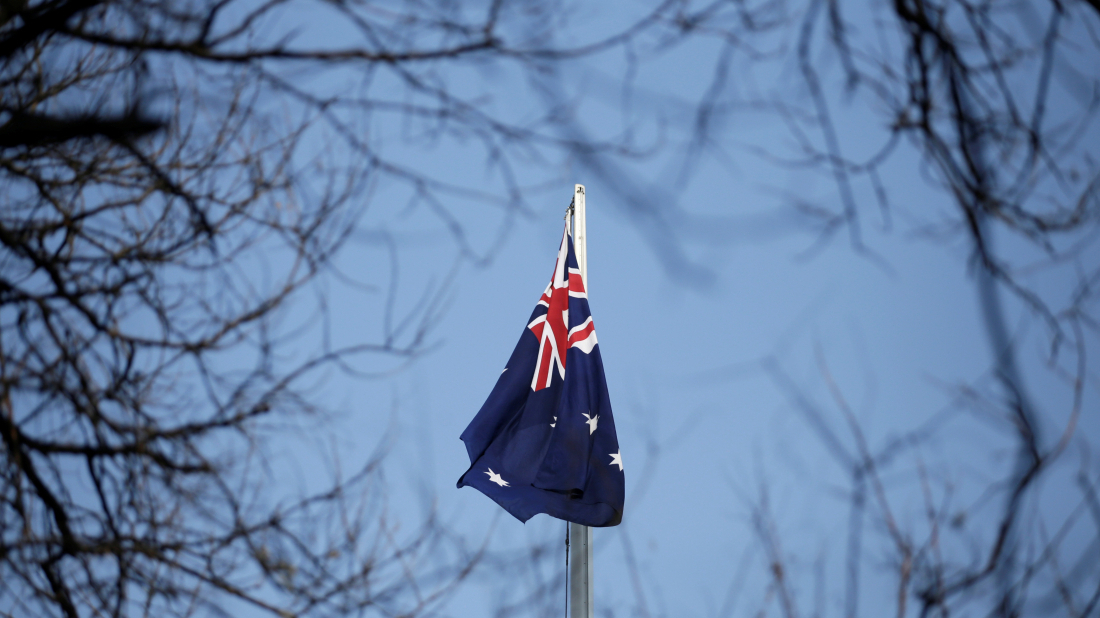
Australia will retain the lowest U.S. tariff rate of 10%, a move expected to boost its exports, while neighbouring New Zealand will face a higher 15% duty under President Donald Trump’s new tariff regime.
Trade Minister Don Farrell said on Friday that Australian products would become more competitive in the U.S. market after Trump kept the baseline tariff for Australia at 10%, while raising duties for 68 other trading partners to between 10% and 41%.
“What this decision means … is that Australian products are now more competitive into the American market,” Farrell told reporters in Adelaide, adding that the government would help exporters increase shipments.
Trump announced a 35% tariff on Canadian goods, 50% on Brazilian exports and 25% on Indian products, with the new rates taking effect in seven days.
New Zealand’s trade minister Todd McClay said he was seeking an urgent call with U.S. officials after tariffs on New Zealand goods rose to 15% from 10%. The United States is New Zealand’s second-largest export market, worth about NZ$9 billion (about $5.3 billion) annually.
Farrell said Australia’s approach to talks with Washington was a “vindication” of the Albanese government’s diplomacy. Australia recently eased restrictions on U.S. beef imports, though Prime Minister Anthony Albanese said the decision had been under consideration for some time and was not tied to trade negotiations.

The Taliban in Kabul has rejected Russian claims that more than 23,000 militants from around 20 international terror groups are currently operating within Afghanistan.
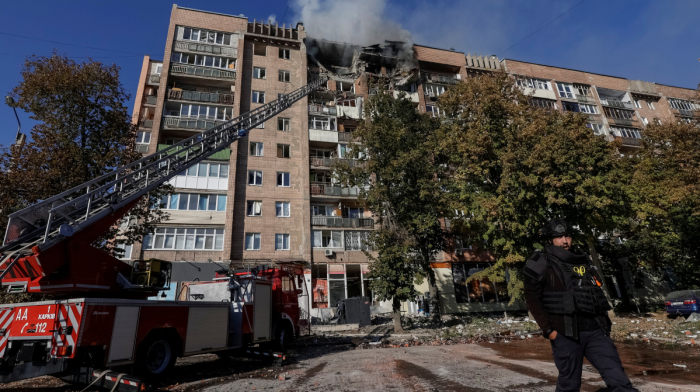
Four years after Russia launched its full-scale invasion of Ukraine on 24 February 2022, the war is no longer defined by shock but by scale.
Seven people were killed after gunmen ambushed a police patrol in Kohat, a district in Pakistan’s north-west near the Afghan border, on Tuesday, in an attack that comes amid rising militant violence and heightened tensions between Pakistan and Afghanistan.
Four years into Russia’s invasion of Ukraine, the war can be measured not only in lives and territory, but in money. In Part One, the war’s cost was measured in casualties and kilometres. In Part Two, it is measured in billions of dollars.
The United Nations mission in Afghanistan said on Monday it had received “credible reports” that at least 13 civilians were killed and seven others injured in overnight Pakistani airstrikes inside Afghanistan.
The U.S. Treasury Department imposed sanctions on Wednesday (25 February) on more than 30 individuals, entities and "shadow fleet" vessels it said enabled Iran's illicit petroleum sales, ballistic missiles and weapons production.
U.S. President Donald Trump’s latest State of the Union address set out a second-term agenda built on economic protectionism, military strength and a hard line on Iran, signalling a strategy that pairs diplomatic engagement with firm red lines, Assoc. Prof. Orkhan Valiyev told AnewZ Daybreak.
Switzerland said on Wednesday (25 February) it would make a one-off payment of 50,000 Swiss francs ($56,000) to each severely injured survivor and to the bereaved families of those killed in the New Year bar fire at the ski resort of Crans-Montana.
Russia has claimed its forces have taken control of a village in Ukraine’s Kharkiv region, while Ukrainian President Volodymyr Zelenskyy said Kyiv’s new Flamingo missiles successfully struck targets deep inside Russian territory, underscoring the continuing intensity of the conflict.
South Korea and the United States will conduct joint military drills, known as Freedom Shield, from 9 to 19 March, military officials from both countries announced on Wednesday.
You can download the AnewZ application from Play Store and the App Store.
What is your opinion on this topic?
Leave the first comment