Oil prices hit four year high: Latest news on the Middle East conflict on 9 March
Global oil prices reached a four year high on Monday (9 March), surpassing $...
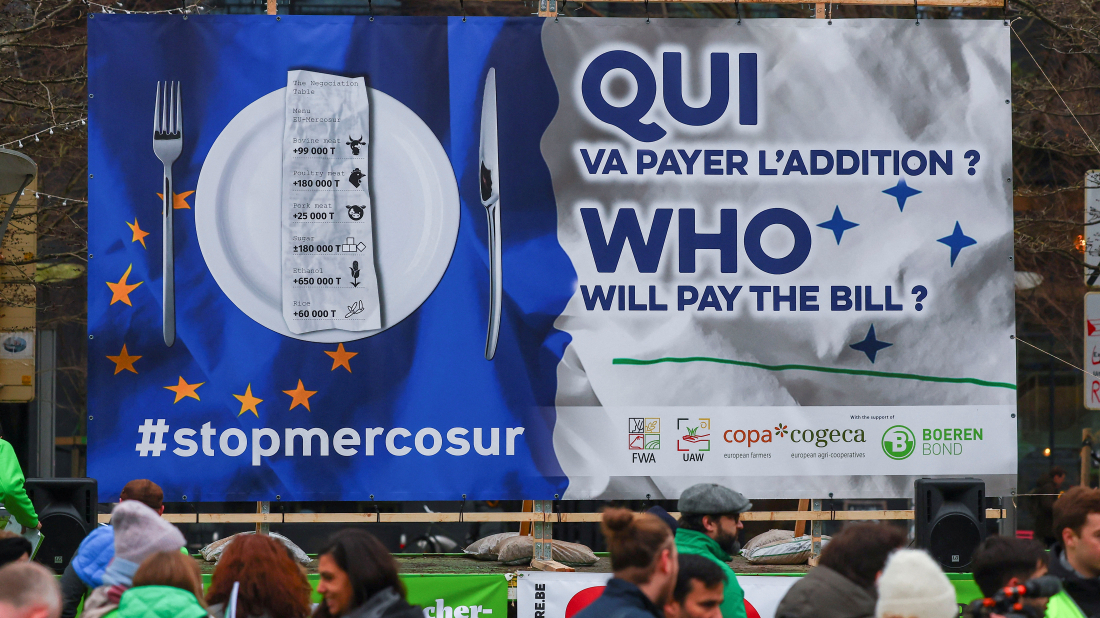
EU officials will visit Ireland early next year to address concerns over the Mercosur trade deal. The agreement, after 25 years of negotiations, promises tariff cuts and new markets for European exports, but faces strong opposition from Irish farmers over competition and paperwork.
EU Commission officials will visit Ireland early next year to address concerns over the Mercosur trade agreement, finalized earlier this month after 25 years of negotiations. The deal, which involves South American countries Brazil, Argentina, Paraguay, and Uruguay, promises to open new markets and reduce tariffs on European exports. However, it has sparked significant opposition, particularly from Irish farmers.
On the positive side, the Mercosur deal offers substantial benefits for European businesses. It would reduce tariffs on key exports like olive oil, wine, and dairy products, while also opening up new markets for European automotive, machinery, and pharmaceutical goods. This is seen as an opportunity for European industries to expand into Latin America, potentially boosting trade and creating jobs.
However, the deal also brings concerns. Many Irish farmers fear that the agreement could lead to cheaper beef and poultry imports from South America, which might harm local farming practices. Additionally, the deal could mean an increase in paperwork, especially for the traceability of meat products, which has been a significant concern for Irish agricultural workers.
The Irish government, alongside the EU, hopes that direct talks with farming representatives will help clarify these concerns and ensure the deal’s long-term benefits are understood.

Mojtaba Khamenei, son of the late Ayatollah Ali Khamenei, is a hardline cleric with strong backing from the Islamic Revolutionary Guard Corps. His rise signals continuity in Tehran's anti-Western policies.
Global oil prices surpassed $119 a barrel on Monday (9 March, 2026), an almost four year high, as the Middle East conflict rumbled on.
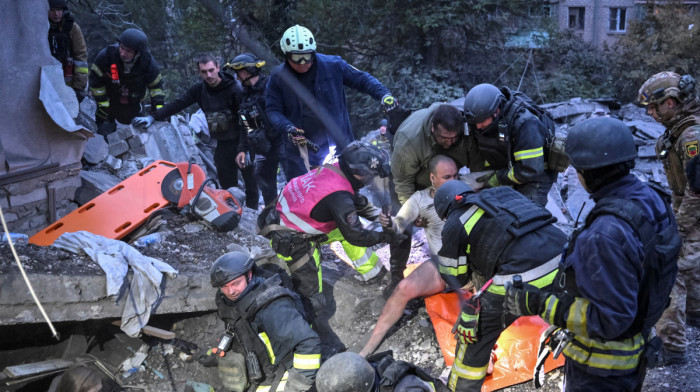
Trump says the United States "don’t need people that join wars after we’ve already won," targeting his criticism at UK Prime Minister Keir Starmer. Israel continues to fire missles at strategic sites in Iran and Gulf regions report more strikes from Iran.
China has urged Afghanistan and Pakistan to resolve their dispute through dialogue after Chinese envoy Yue Xiaoyong met Afghan Foreign Minister Amir Khan Muttaqi, as fighting between the two neighbours entered its eleventh day.
Iran named Mojtaba Khamenei to succeed his father Ali Khamenei as supreme leader on Monday (9 March), signaling that hardliners remain firmly in charge, as the week-old U.S.-Israeli war with Iran pushed oil above $100 a barrel.
U.S. President Donald Trump and UK Prime Minister Keir Starmer spoke by phone on Sunday as tensions between Washington and Westminster deepened over the conflict involving Iran. The call came less than a day after Trump criticised Britain’s response to U.S. strikes on Iranian targets.
Norwegian police are searching for a suspect after an explosion at the U.S. embassy in Oslo on 8 March caused minor damage but no injuries, in what authorities say may have been a deliberate attack linked to the Middle East crisis.
An explosion damaged a synagogue in the Belgian city of Liège early on Monday (9 March) in what authorities said was an antisemitic attack that caused damage but no injuries.
The Group of Seven (G7) finance ministers will meet on Monday to discuss a global rise in oil prices and a joint release of oil from emergency reserves coordinated by the International Energy Agency, the Financial Times reports.
Start your day informed with AnewZ Morning Brief. Here are the top news stories for the 9th of March, covering the latest developments you need to know.
You can download the AnewZ application from Play Store and the App Store.
What is your opinion on this topic?
Leave the first comment