




20:40 CET
Military aid
Syria weighs military aid for Saudi Arabia amid Yemen war, sources say
Syria is carefully considering providing...
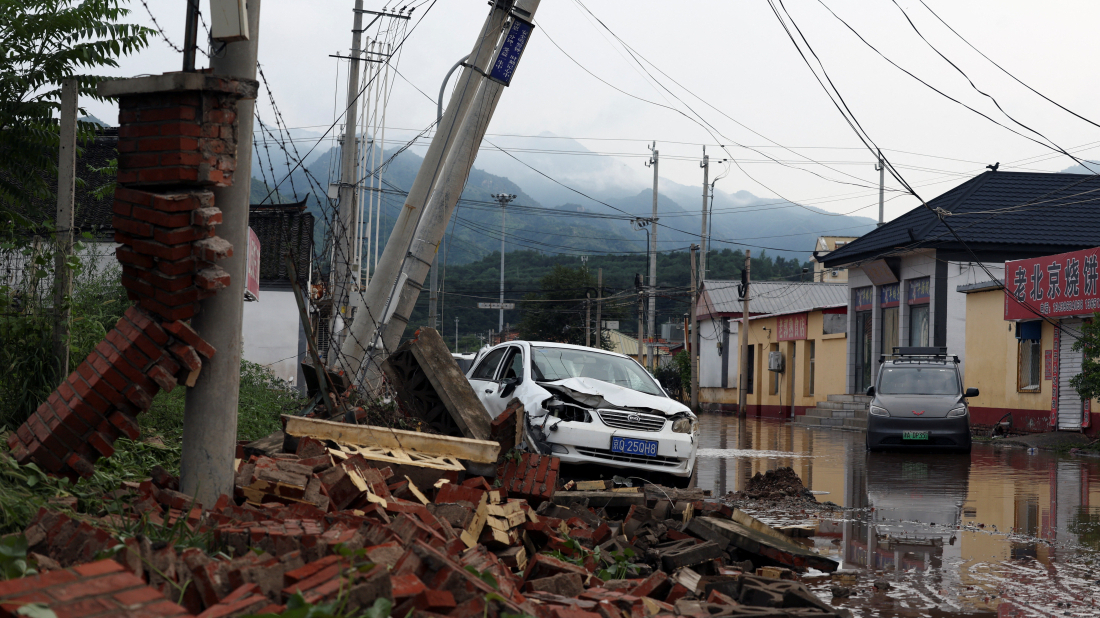


Swollen rivers and torrential rains triggered deadly landslides and widespread flooding across China on Monday, killing at least four people and forcing thousands from their homes, as authorities warned of further extreme weather in the coming days.
Forty-one rivers have flooded nationwide, according to state broadcaster CCTV, citing the Ministry of Water Resources, which issued flood warnings for small and midsize rivers and mountain torrents.
Heavy rain intensified across northern and central China, including in Beijing, Hebei, Hunan, and Inner Mongolia.
In northern Hebei, four people were killed in a landslide and eight remain missing.
In Beijing’s suburban Miyun district, flash floods and landslides inundated villages, displacing more than 4,400 people.
At an elderly care centre, water rose nearly to the roof, trapping residents. Rescue teams swam into the building and used ropes to evacuate 48 people, CCTV reported.
Images on the Chinese social media platform WeChat showed submerged roads in Miyun, with cars and trucks floating and water reaching up the sides of residential buildings. Power outages affected more than 10,000 residents.
Beijing issued its highest-level flood alert on Monday.
The capital’s meteorological observatory warned rainfall could exceed 150 mm in six hours across much of the city, and top 300 mm in some areas. Rain was expected to intensify after 8 p.m. (12:00 GMT), particularly overnight.
The severe weather is part of a broader East Asian monsoon pattern affecting much of the country. Northern China, which has seen record rainfall in recent years, faces growing flood risks—an effect some scientists link to climate change.
In Shicheng Town, near the Miyun Reservoir, floodwaters surged to a peak of 6,550 cubic metres per second—an all-time high, Beijing officials said.
Xiwanzi Village was among the hardest-hit areas, with 100 residents evacuated to a nearby school. Two high-risk road sections were closed in Beijing’s Pinggu district.
Neighbouring provinces are also reeling from the floods.
In Shanxi, state media shared videos of roads turned into rivers and submerged crops and trees. Shaanxi province, home to the historic city of Xi’an, issued flash flood warnings. Search and rescue efforts were underway in Datong, where a driver went missing in the floods.
In Hebei, where two more people died over the weekend, the city of Baoding recorded a record hourly rainfall of 145 mm in Fuping. In Hunan’s Liudiequan Grand Canyon, a tourist was swept away on Sunday as water levels rose suddenly.
China’s National Development and Reform Commission said it had urgently allocated 50 million yuan ($6.98 million) in relief funds for Hebei.
The money will go toward repairing damaged infrastructure, including roads, embankments, schools, and hospitals.
Authorities are on high alert as extreme rainfall increasingly tests China’s flood defences, threatens agricultural production, and displaces vulnerable communities in densely populated areas.

Syria is carefully considering providing...

Scientists, astronauts and space industry leaders gathered in Antalya, Türkiye, on Thursday for the fourth day of the 77th International ...

Spanish politicians traded blame on Thursday after the death of an 87-year-old woman who was evicted from her Madr...


Russia struck Ukraine overnight in one of the biggest attacks of the conflict, killing at least 19 people, Kyiv's Foreign Ministry said on Wednesday. Around 70 missiles were fired at Ukraine during the attack, as well as drones, the Ministry said.

The Saudi-led coalition says it has carried out a series of military operations against Houthi targets in Yemen after attacks on two Saudi airports left three people dead and dozens injured.

Azerbaijan and the five Central Asian states have signed two key documents at the 8th Consultative Meeting of Heads of State in Turkmenbashi, formalising a broader framework for regional cooperation in transport, trade, energy, digitalisation and security.

An investigation into August Hanning, the former head of Germany’s Federal Intelligence Service (BND), has no connection to Azerbaijan, informed sources have told AnewZ.

It started with classrooms. Too many students, not enough teachers, deteriorating buildings and growing anxiety over what comes after high school. But within weeks, a movement that began outside French lycées had spread across the country.
Scientists, astronauts and space industry leaders gathered in Antalya, Türkiye, on Thursday for the fourth day of the 77th International Astronautical Congress (IAC). Designated as “Science and Academy Day,” discussions focused on the challenges of expanding human activities beyond Earth.
Spanish politicians traded blame on Thursday after the death of an 87-year-old woman who was evicted from her Madrid home exacerbated heated debates over housing ahead of an early election next month, as protests raged on across the country.

The Nobel Peace Prize 2026 will be announced on Friday, 9 October, bringing one of the world's most closely watched awards back into focus.
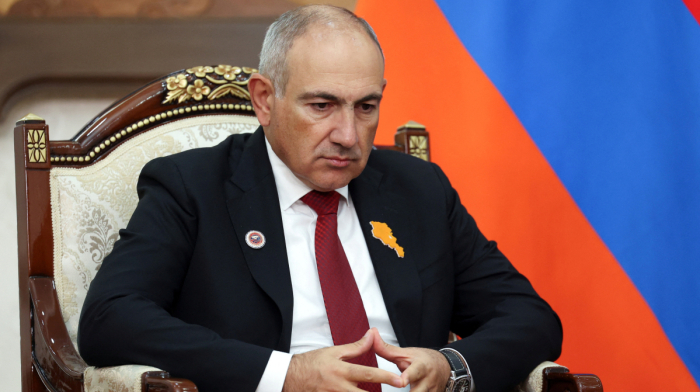
Armenian Prime Minister Nikol Pashinyan said on Thursday 8 October, that Yerevan will discuss the possible construction of railway connections with the Turkish city of Kars and the Azerbaijani city of Nakhchivan with Russian officials next week, according to local media.
It started with classrooms. Too many students, not enough teachers, deteriorating buildings and growing anxiety over what comes after high school. But within weeks, a movement that began outside French lycées had spread across the country.
You can download the AnewZ application from Play Store and the App Store.




What is your opinion on this topic?
Leave the first comment