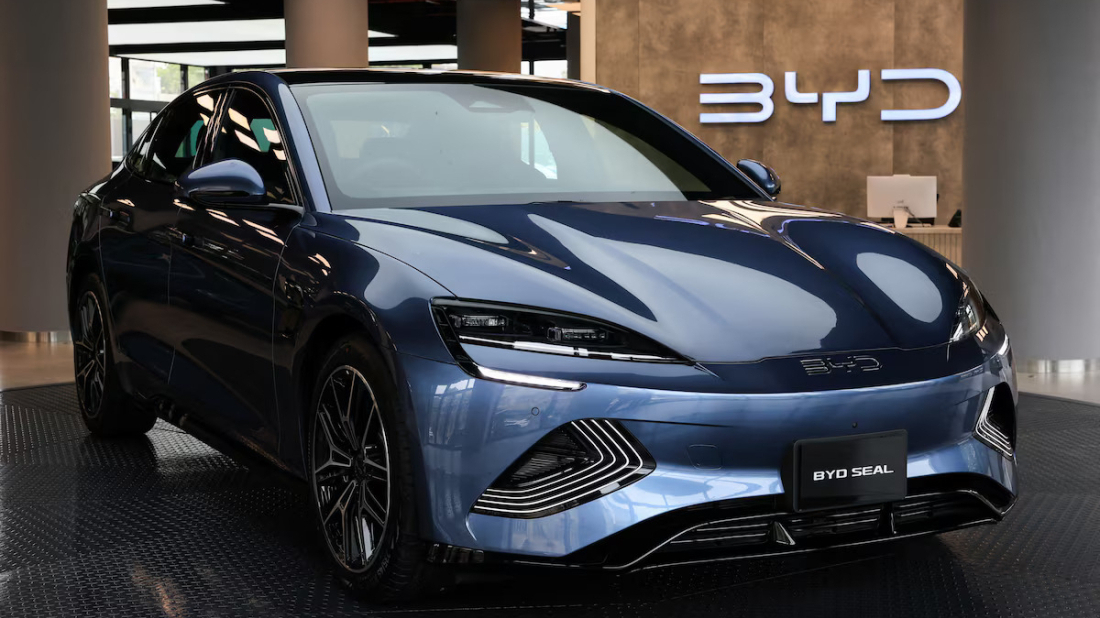
Chinese electric vehicle giant BYD is set to begin local assembly operations in Pakistan by mid-2026, marking a significant step in the country’s transition toward electric mobility.
The assembly plant, currently under construction near Port Qasim in Karachi, is expected to become operational by July or August 2026. This development is the result of a joint venture between BYD and Mega Motor Company, a subsidiary of Hub Power Company (HUBCO), one of Pakistan’s leading energy firms.
The facility will start by assembling semi-knocked-down (SKD) kits imported from China, gradually increasing its localization levels over time. The initial production capacity is estimated at around 25,000 units annually, operating on a double-shift basis. BYD aims to introduce both battery electric vehicles (BEVs) and plug-in hybrid electric vehicles (PHEVs), with a particular focus on models suitable for Pakistan’s infrastructure and market conditions.
BYD has already begun importing and selling fully built electric vehicles in Pakistan, with encouraging early demand in major urban centers like Karachi, Lahore, and Islamabad. The company is targeting a 30–35% share in the country’s nascent EV and hybrid market, which is expected to grow rapidly in the next few years. Pakistan saw sales of just over 1,000 EVs in 2024, but the number is projected to rise significantly as government incentives and consumer interest increase.
This investment aligns with Pakistan’s National Electric Vehicle Policy, which envisions 30% of all new vehicle sales to be electric by 2030. To support this transition, the government has introduced reduced customs duties on EVs and is encouraging the development of charging infrastructure. In response, BYD and its local partners are also planning to set up a network of charging stations in key cities and along major highways.
The move into Pakistan also forms part of BYD’s broader global strategy to expand its manufacturing and sales presence beyond China. The company has recently launched or announced new operations in Brazil, Hungary, Turkey, Thailand, and Mexico. The Karachi facility is BYD’s first major investment in South Asia and could potentially serve as a base for exports to nearby right-hand-drive markets like Sri Lanka, Bangladesh, and even parts of Africa.
While the outlook is promising, BYD will face several challenges, including building out the local supply chain, ensuring consistent power supply for its facility, and educating consumers unfamiliar with EV technologies. Nonetheless, with local demand growing and strong policy support, Pakistan could become one of BYD’s key emerging markets in the region.

















What is your opinion on this topic?
Leave the first comment