Rewriting the Constitution: Kazakhstan faces scrutiny over proposed overhaul
Plans for sweeping constitutional changes in Kazakhstan have sparked controversy, with civil society representatives accusing the authorities of rushi...
Britain's economy unexpectedly shrank for the second month in a row in May, raising pressure on the Labour government and boosting expectations for an interest rate cut in August.
The UK economy contracted by 0.1% in May following a 0.3% drop in April, according to the Office for National Statistics on 11 July.
The data surprised economists, who had forecast a slight recovery. While the services sector saw minimal growth, a fall in industrial production and construction led to an overall decline in GDP.
After a strong start to 2025, growth momentum has stalled. Analysts now suggest the April-to-June quarter may see little or no expansion.
The Bank of England, which had previously raised its annual growth forecast to 1%, may respond by cutting interest rates next month.
“The weak figures suggest an August rate cut looks increasingly inevitable,” said Suren Thiru of ICAEW, despite recent inflation concerns.
Prime Minister Keir Starmer’s Labour government is under mounting pressure to revive growth.
Finance Minister Rachel Reeves, already facing fiscal strain, may be forced to raise taxes again in the upcoming budget, though she had hoped to avoid this.
"While today's figures are disappointing, I am determined to kickstart economic growth," said Reeves on Friday.
Goods exports to the U.S., Britain’s largest trade partner, dropped sharply in April after surging earlier in the year due to fears over new tariffs. May’s export levels saw only a minor recovery, reverting to figures seen three years ago.
The Bank of England estimates that the UK economy grew by about 0.25% in Q2, but that hinges on stable data for June. If GDP shrinks by 0.4% or more, the quarter could end in contraction.
Despite recent setbacks, some economists see glimmers of hope. KPMG’s Yael Selfin noted that real wage growth and lower borrowing costs may help lift consumer spending later this year.

The United States and Azerbaijan signed a strategic partnership in Baku on Tuesday (10 February) encompassing economic and security cooperation as Washington seeks to expand its influence in a region where Russia was once the main power broker.
Greek Prime Minister Kyriakos Mitsotakis arrived in Ankara on Wednesday, where Turkish President Recep Tayyip Erdoğan held an official welcoming ceremony at the Presidential Palace, marking the start of high-level talks between the two NATO allies.
A senior adviser to Iran’s Supreme Leader said on Tuesday that negotiations with the United States must remain focused on the nuclear issue and be grounded in realism, as Washington and Tehran prepare to resume talks mediated by Oman.
China became Brazil’s largest source of imported vehicles in January, overtaking long-time leader Argentina in a shift that underscores Beijing’s rapidly expanding influence in one of Latin America’s biggest auto markets.
James Van Der Beek, who rose to fame as Dawson Leery in the hit teen drama Dawson’s Creek, has died aged 48 following a battle with stage 3 colorectal cancer.
Polls have close in Bangladesh's first general election since the fall of Sheikh Hasina’s government, marking a pivotal moment in the country’s political transition. Turnout reached 47.91% by early afternoon, according to partial data from election authorities.
Stalled U.S.–Iran talks and mounting regional tensions are exposing a growing strategic rift between Washington and Tel Aviv over how to confront Tehran, political analyst James M. Dorsey says, exposing stark differences in approach at a critical moment.
A Republican lawmaker accused on Wednesday (11 February) Attorney General Pam Bondi of concealing the names of Jeffrey Epstein’s powerful associates. The claim was made during a heated House hearing on the Justice Department’s handling of the files.
Start your day informed with AnewZ Morning Brief: here are the top news stories for the 12th of February, covering the latest developments you need to know.
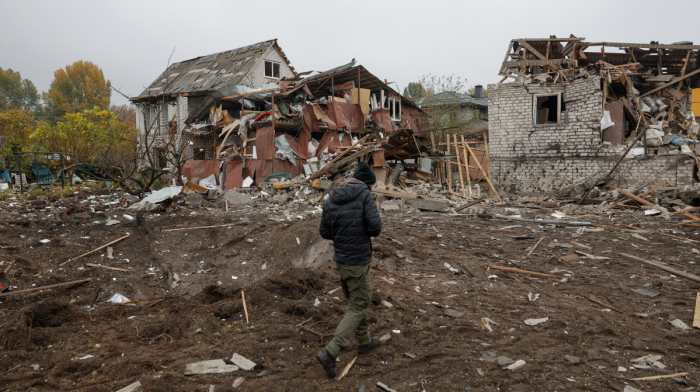
The Ukrainian capital came under a “massive” Russian missile attack early Thursday (12 February), with explosions heard across the capital according to authorities. The assault unfolded as uncertainty lingers over upcoming U.S.-brokered peace talks.
You can download the AnewZ application from Play Store and the App Store.
What is your opinion on this topic?
Leave the first comment