Britain and France have agreed to procure additional highly lethal Storm Shadow cruise missiles and accelerate development of their replacement, under a renewed defence agreement signed today.
The new agreement commits the UK and France to launch the next phase of their joint program for deep-strike and anti-ship missiles, bringing them a step closer to selecting a final design to replace the Storm Shadow.
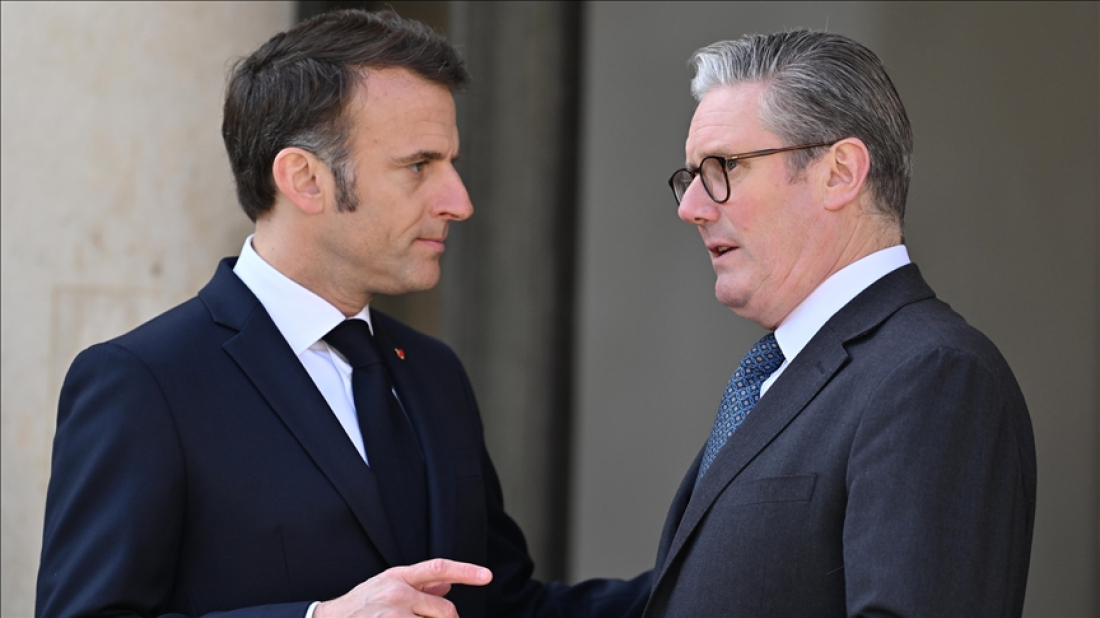
The announcement, made during President Macron’s state visit to the UK, underscores both leaders’ commitment to strengthening Europe’s sovereign defense capabilities in response to the ongoing threat from Russia.
The Prime Minister and President Emmanuel Macron have also agreed to deepen their nuclear cooperation and work more closely than ever before on nuclear deterrence. The UK and France are Europe’s only nuclear-armed powers.
"In an important step forward for the UK-France nuclear partnership - a newly signed declaration will state for the first time that the respective deterrents of both countries are independent but can be coordinated, and that there is no extreme threat to Europe that would not prompt a response by both nations," the UK government said in the statement released today.
According to the statement, cooperation between both countries on nuclear research will also deepen, while working together to uphold the international non-proliferation architecture. Any adversary threatening the vital interests of Britain or France could be confronted by the strength of the nuclear forces of both nations, it added.
"From war in Europe, to new nuclear risks and daily cyber-attacks – the threats we face are multiplying. As close partners and NATO allies, the UK and France have a deep history of defence collaboration and today’s agreements take our partnership to the next level. We stand ready to use our shared might to advance our joint capabilities - equipping us for the decades to come,"- Prime Minister, Keir Starmer stated.
These partnerships include:
- Agreeing to build the next generation of deep strike, anti-ship missiles, replacing the lethally effective Storm Shadow;.
- Upgrading the existing Storm Shadow cruise missile production lines in Stevenage to bolster national stockpiles, making defence investment an engine for growth;
- Jointly developing the next generation of beyond visual range air-to-air missiles for the Royal Air Force’s fighter jets;
-Starting work on new advanced weapons to give an advantage against adversaries. This will include a new partnership to develop high-tech radiofrequency weapons such as microwave weapons and jammers that could be used to shoot down threats like drones and missiles;
- The UK and France will also look to harness the power of AI to make their missiles and drones more lethal, by developing algorithms for synchronised strikes.
The Combined Joint Force will be able to command a Combined UK/French Corps for the first time – the highest scale of deployed ground forces from a command perspective – made up of thousands of troops and working side-by-side with NATO allies.
For the first time it will also integrate space and cyber to counter new threats, boosting the abilities of the UK and France’s joint forces to quickly respond to developments on the battlefield through increased awareness and responsiveness supported by data from beyond just the ground, sea, and air.













What is your opinion on this topic?
Leave the first comment