Syria’s economic recovery gains pace with refugee returns and investor confidence
Syria’s economy is showing clear signs of recovery, with economic activity accelerating in recent months, the International Monetary Fund (IMF) said...
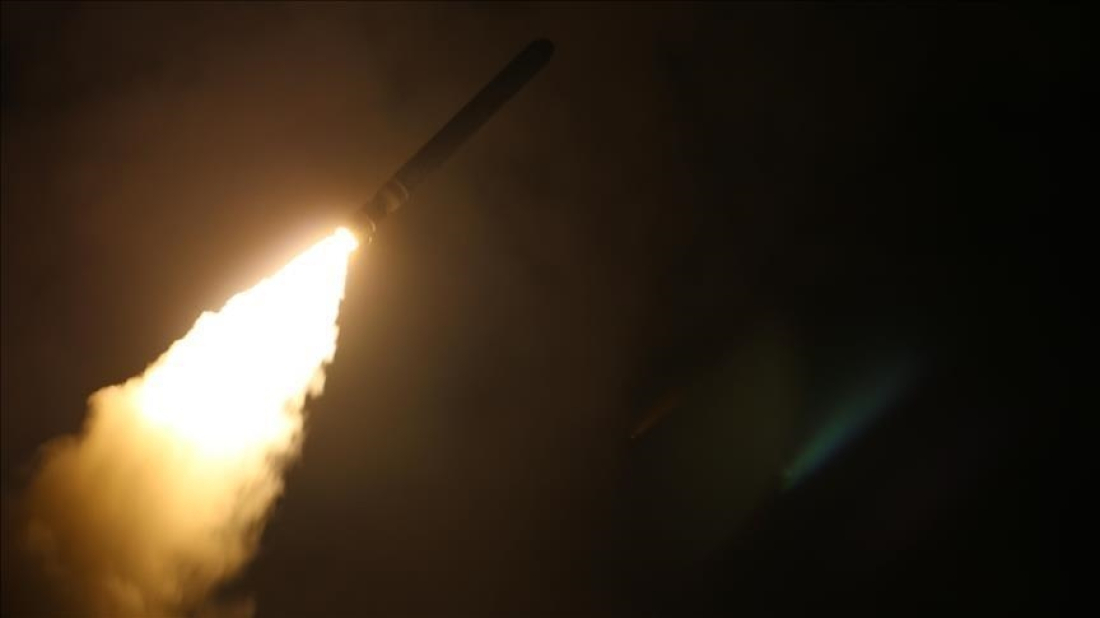
A rocket launched by Taiwanese company TiSpace from Japan's northern Hokkaido island failed shortly after takeoff on Saturday, falling short of its goal to become the first foreign firm to complete a successful launch from Japanese soil.
The 12-metre hybrid-fuelled VP01 rocket, operated through TiSpace’s Japanese subsidiary jtSPACE, lifted off at 11:40 a.m. local time (0240 GMT) from the Hokkaido Spaceport. Its mission was to reach an altitude of 100 kilometres (62 miles), considered the boundary of outer space.
However, video from NHK showed the rocket’s flight becoming unstable within seconds of launch before it went into freefall and crashed within 1.2 kilometres of the site. TiSpace confirmed it terminated the flight early. No injuries or property damage were reported.
The test flight was intended to evaluate engine performance and trajectory control. A successful result would have been a major step toward launching Taiwanese-made satellites on domestically developed rockets.
Despite the setback, the launch marks a milestone in Japan's growing commercial space sector, which has recently opened up to foreign companies through public-private partnerships like the one in Hokkaido.
The Taliban in Kabul has rejected Russian claims that more than 23,000 militants from around 20 international terror groups are currently operating within Afghanistan.
Four years after Russia launched its full-scale invasion of Ukraine on 24 February 2022, the war is no longer defined by shock but by scale.
Seven people were killed after gunmen ambushed a police patrol in Kohat, a district in Pakistan’s north-west near the Afghan border, on Tuesday, in an attack that comes amid rising militant violence and heightened tensions between Pakistan and Afghanistan.
Four years into Russia’s invasion of Ukraine, the war can be measured not only in lives and territory, but in money. In Part One, the war’s cost was measured in casualties and kilometres. In Part Two, it is measured in billions of dollars.
The United Nations mission in Afghanistan said on Monday it had received “credible reports” that at least 13 civilians were killed and seven others injured in overnight Pakistani airstrikes inside Afghanistan.
New research suggests 40,000-year-old carved objects from south-western Germany bear repeated marks arranged in organised sign sequences similar to early proto-cuneiform, although they are not regarded as a form of writing.
The chief executive of Google DeepMind, Demis Hassabis, has called for more urgent research into the risks posed by artificial intelligence, warning that stronger safeguards are needed as systems become more advanced.
NASA successfully completed a critical fueling rehearsal on Thursday (19 February) for its giant moon rocket, Artemis II, after earlier hydrogen leaks disrupted preparations for the next crewed lunar mission. The launch is scheduled for 6 March, according to the latest information from NASA.
ByteDance will take steps to prevent the unauthorised use of intellectual property on its artificial intelligence (AI) video generator Seedance 2.0, the Chinese technology firm said on Monday.
The formation of a black hole can be quite a violent event, with a massive dying star blowing up and some of its remnants collapsing to form an exceptionally dense object with gravity so strong not even light can escape.
You can download the AnewZ application from Play Store and the App Store.
What is your opinion on this topic?
Leave the first comment