Pakistani businesses warn UAE visa delays threaten trade and investment
Pakistani businesses are warning that growing difficulties in obtaining United Arab Emirates (UAE) visas are disrupting trade, delaying investment and...
Azerbaijan marked its National Day at Expo 2025 in Osaka, Japan, with a cultural celebration that highlighted the country’s heritage, innovation, and growing global partnerships. The event took place at Azerbaijan’s national pavilion, which has become one of the most visited at the exhibition since
Japan’s Ambassador and Chief Commissioner for Expo 2025, Koji Haneda, praised Azerbaijan’s strategic role as a bridge between Asia and Europe. He highlighted the Azerbaijani pavilion’s unique concept, inspired by the poem “Seven Beauties” by the famed Azerbaijani poet Nizami Ganjavi, as a powerful representation of the country’s culture and development.
Anar Alakbarov, Assistant to the President of Azerbaijan and Chief Commissioner for Expo 2025, reflected on the longstanding partnership between Azerbaijan and Japan. He noted Azerbaijan’s consistent presence at World Expos since Hannover 2000, with previous pavilions earning awards and attracting significant international attention. Alakbarov also recalled that Azerbaijan was the first nation to sign the participation agreement for Expo 2025.
Following the official remarks, attendees enjoyed a concert program featuring Azerbaijani artists and had the opportunity to tour both Azerbaijani and Japanese pavilions.
Azerbaijan’s pavilion, designed by the Heydar Aliyev Center, is located in the “Connecting Lives” zone and themed “Seven Bridges for Sustainability.” It showcases the country's commitment to sustainable development, cultural openness, and technological advancement, all while paying homage to Nizami Ganjavi’s literary legacy. A symbolic “Friendship Tree” at the pavilion celebrates the enduring ties between Azerbaijan and Japan.
Expo 2025 runs for 184 days and is expected to welcome approximately 28 million visitors from around the world.

U.S. President Donald Trump said on Monday that there is a good chance” of reaching a deal with Iran, but warned that Washington would resume military operation if negotiations fail.
Iran will halt its own attacks as long as the United States maintains its pause on strikes, but Tehran remains sceptical of U.S. intentions, a senior Iranian source told on Sunday.
The Russia-Ukraine war is increasingly reshaping the Caspian region. From threats to energy infrastructure to renewed diplomatic efforts, countries across the region are adapting to the wider consequences of a conflict that continues to disrupt trade, transport and security.
A New York school district has put plans to introduce a humanoid robot into classrooms on hold after fierce criticism from teachers, Indigenous community members and state education officials over the use of artificial intelligence in schools.
A known Islamist suspected of driving a minivan into a crowd near a major LGBTQ Pride gathering in Berlin was shot dead during a police operation at an allotment garden complex, broadcaster RBB reported on Sunday.
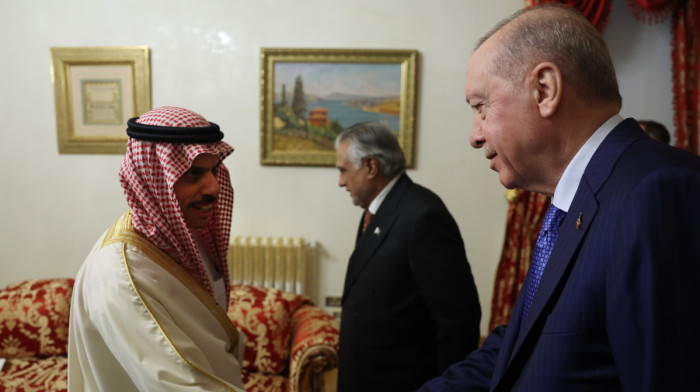
Pakistani businesses are warning that growing difficulties in obtaining United Arab Emirates (UAE) visas are disrupting trade, delaying investment and limiting access to a key export market, despite both Islamabad and Abu Dhabi saying there is no official visa ban.
Türkiye has begun renovating the Akyaka-Gyumri railway as preparations continue for a possible reopening of the Armenia-Türkiye border and the reactivation of the Gyumri-Kars rail link.
Russia's Supreme Court has prohibited the transfer of funds to Digimarket, a U.S.$35 million offshore company linked to Ruben Vardanyan, as legal proceedings continue over efforts to recover more than U.S.$64 million from a loan company.
Armenian Prime Minister Nikol Pashinyan has appealed directly to Russian President Vladimir Putin to help resolve a trade dispute that has disrupted Armenian exports to Russia, adding to tensions in the increasingly strained relationship between the two countries.
The Russia-Ukraine war is increasingly reshaping the Caspian region. From threats to energy infrastructure to renewed diplomatic efforts, countries across the region are adapting to the wider consequences of a conflict that continues to disrupt trade, transport and security.
You can download the AnewZ application from Play Store and the App Store.
What is your opinion on this topic?
Leave the first comment