China to impose export restrictions on steel
China’s Ministry of Commerce announced on Friday that it will introduce a licensing system for steel exports starting in 2026, covering around 300 s...
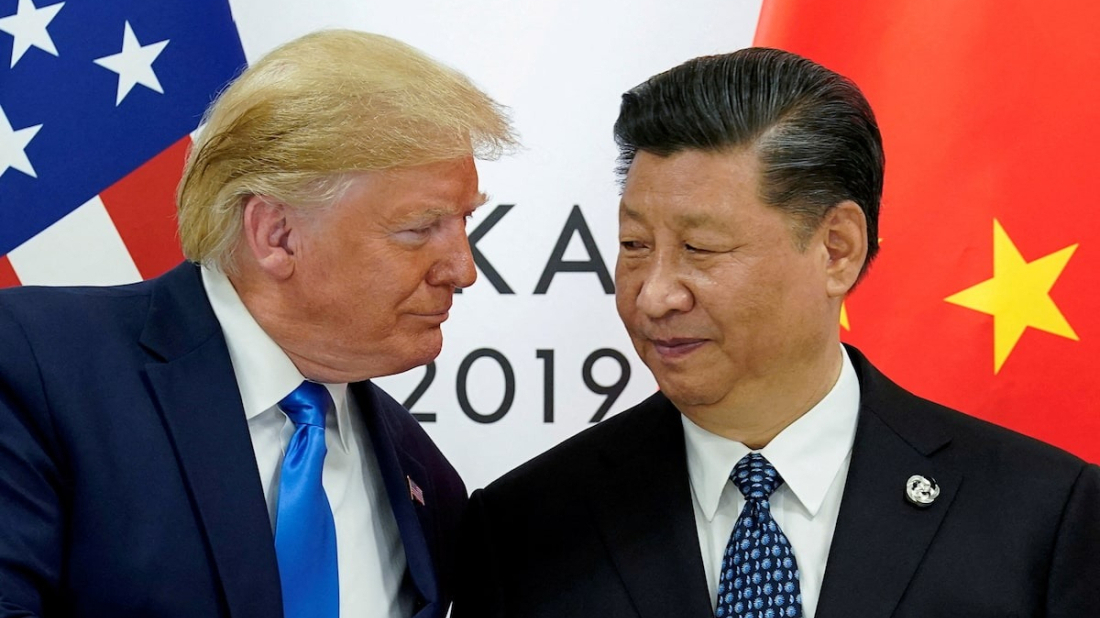
U.S. President Donald Trump and Chinese President Xi Jinping spoke by phone on Thursday to address escalating trade disputes, China’s embassy in Washington confirmed.
The call, which China said was requested by Trump, comes as a fragile 90-day tariff rollback agreement faces renewed pressure from both sides.
Details of the conversation were not disclosed, and the White House has yet to comment. The call is the first confirmed high-level contact between the two leaders since the temporary trade truce was agreed on May 12.
The 90-day deal reduced a series of triple-digit tariffs, sparking optimism in financial markets. However, tensions have since resurfaced, particularly over China’s suspension of critical mineral exports and U.S. restrictions on semiconductor technologies and design tools.
Trump has accused Beijing of breaching the agreement, citing issues including export controls and political influence campaigns. In response, the U.S. administration doubled tariffs on Chinese steel and aluminum to 50%. China denied violating the truce and warned of possible countermeasures.
“The year-end holiday shopping season and global supply chains are at stake,” noted one trade analyst, as investors closely watch for signs of a durable resolution.
The phone call follows China’s traditional reluctance to arrange direct talks between top leaders without first resolving working-level disagreements. Still, Trump has emphasized his belief in leader-to-leader diplomacy to break deadlocks. While he has praised Xi’s leadership style, the broader U.S. stance identifies China as its top geopolitical and economic rival.
Trump and Xi last met in person at the G20 summit in Osaka in 2019. Xi’s most recent visit to the U.S. was in November 2023, during a summit with then-President Joe Biden, which resulted in agreements on military communication and fentanyl cooperation.
With key issues unresolved—including trade balances, Taiwan, and the role of state subsidies—Thursday’s call marks a high-stakes attempt to stabilize relations. Whether the contact leads to renewed negotiations or deepens the divide remains to be seen.

Japan has lifted a tsunami advisory issued after an earthquake with a magnitude of 6.9 hit the country's northeastern region on Friday (12 December), the Japan Meteorological Agency (JMA) said. The JMA had earlier put the earthquake's preliminary magnitude at 6.7.
The United States issued new sanctions targeting Venezuela on Thursday, imposing curbs on three nephews of President Nicolas Maduro's wife, as well as six crude oil tankers and shipping companies linked to them, as Washington ramps up pressure on Caracas.
Iran is preparing to host a multilateral regional meeting next week in a bid to mediate between Afghanistan and Pakistan.
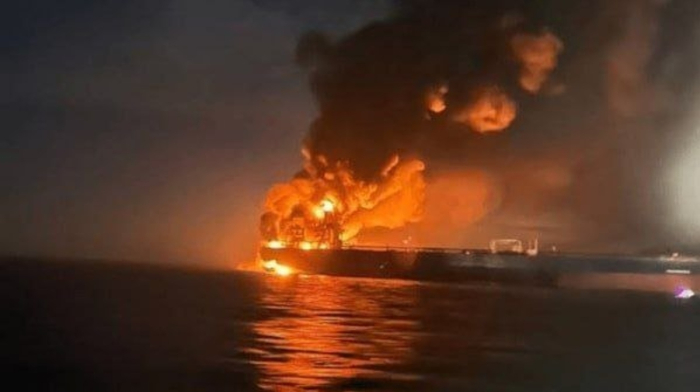
Kyiv has escalated its naval campaign against Moscow’s economic lifelines, claiming a successful strike on a vessel suspected of skirting international sanctions within the Black Sea.
An extratropical cyclone has caused widespread disruption across Brazil’s São Paulo state, with powerful winds toppling trees and power lines, blocking streets and leaving large parts of the region without electricity.
Turkish President Recep Tayyip Erdoğan and Russian President Vladimir Putin met for a closed-door discussion on the sidelines of the International Forum for Peace and Trust in Ashgabat, Turkmenistan, on Friday.
Kazakhstan has begun redirecting part of its crude exports, sending oil from Kashagan to China as the Caspian Pipeline Consortium (CPC) operates at reduced capacity.
Azerbaijan’s post-conflict reconstruction in Karabakh is attracting international attention. The book by British author Graeme Wilson documents this journey, combining first-hand reporting and digital storytelling to highlight both the region’s restoration and the human stories behind it.
Tashkent is hosting the 2025 Fédération Internationale de l’Automobile (FIA) Annual General Assemblies, one of the most significant events in global motorsport and mobility governance, bringing together officials and delegates from around the world.
Iran’s top diplomat, Abbas Araghchi, has welcomed the expansion of ties with neighbouring Azerbaijan, stating that Tehran and Baku are committed to building a ‘shared, secure and mutually respectful’ future, local media reported on Friday.
You can download the AnewZ application from Play Store and the App Store.
What is your opinion on this topic?
Leave the first comment