Armenia has been stripped of its voting rights in the Russian-led Collective Security Treaty Organisation (CSTO) over unpaid membership fees, in another sign of the deteriorating relationship between Yerevan and Moscow.
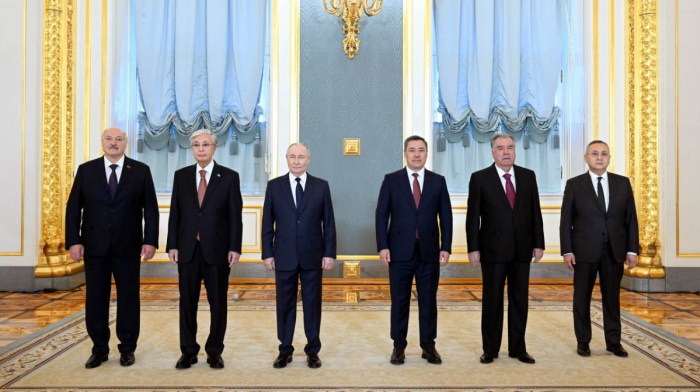
The decision was taken by leaders of the military alliance's member states at a summit in Moscow on Wednesday (11 November), under Article 25 of the CSTO Charter.
Armenia has also lost the right to nominate candidates for positions allocated to it within the organisation. The restrictions will remain in place until it settles its outstanding contributions.
However, the decision does not mean Armenia has been expelled or has formally left the alliance.
Russian Foreign Minister Sergey Lavrov said Yerevan had not submitted an application to withdraw and that the door remained open. CSTO Secretary General Taalatbek Masadykov also confirmed that Armenia's membership had not been terminated.
Armenian Prime Minister Nikol Pashinyan announced in 2024 that Armenia was freezing its participation in the organisation, accusing it of failing to protect the country's security.
So what would a formal withdrawal mean for Armenia, and could it leave the country more vulnerable?
What would Armenia lose by leaving the CSTO?
The most significant consequence would be the loss of the collective security arrangements associated with CSTO membership. Under Article 4 of the Collective Security Treaty, an armed attack against one member is treated as an attack against all. Other members are required to provide assistance, including military support, if requested.
Armenia has questioned the value of that commitment after accusing the CSTO of failing to respond adequately to Azerbaijani military operations.
Armenia argued that Russia and the CSTO had failed to provide meaningful security assistance.
Pashinyan announced in September 2024 that Armenia had frozen its participation, arguing that the alliance had created threats to the country's sovereignty. He also told the Armenian parliament that he would welcome Armenia being expelled.
However, Lavrov has stressed that Armenia retains its fundamental collective security rights despite losing its voting privileges.
A formal withdrawal would therefore represent a more significant break, ending the treaty-based security commitments between Armenia and the other CSTO members.
Can Armenia find alternative defence partners?
For decades, Armenia relied heavily on Russia for its military equipment and security.
Russia accounted for 93.7 per cent of Armenia's imports of major arms between 2011 and 2020, according to the Stockholm International Peace Research Institute (SIPRI).
But Yerevan has increasingly sought alternative suppliers and defence partners. France signed a contract in June 2024 for the supply of CAESAR self-propelled howitzers to Armenia. The two countries have also expanded cooperation on military training, equipment and defence modernisation.
India has emerged as another important supplier, providing Armenia with systems including Pinaka multiple-launch rocket systems.
Buying weapons from other countries is not the same as having a formal security alliance. Neither France nor India offers Armenia the same collective defence commitment that membership of the CSTO provides.
Armenia also continues to host Russia's 102nd Military Base in Gyumri, the country's second-largest city. Pashinyan said in February 2026 that his government had no plans to seek its closure.
What does it mean for Armenia's relationship with Azerbaijan?
Armenia's decision to reconsider its security arrangements comes as it attempts to normalise relations with Azerbaijan after decades of conflict.
Pashinyan's government has pursued a peace agreement with Baku, while also seeking closer ties with the European Union (EU) and the United States.
His Civil Contract party won 49.75 per cent of the vote in June's parliamentary election, securing 64 of the National Assembly's 105 seats. This gave the government a parliamentary majority, but not the two-thirds majority required for constitutional amendments.
Azerbaijan has demanded changes to Armenia's constitution to remove territorial claims over Azerbaijani territory before a final peace agreement can be concluded,
Reducing dependence on Russia could give Armenia greater freedom to pursue its own foreign and security policy. But leaving the CSTO would also mean losing the formal collective defence commitments that come with membership.
What happens next?
Armenia is now in an unusual position: it remains formally a member of the CSTO but has frozen its participation and lost its voting rights within the organisation.
Pashinyan has said his government's interest in the alliance has run its course, although Yerevan has not formally submitted an application to leave.
A withdrawal would mark a significant change in Armenia's security policy, ending its collective defence commitments with Russia and the other CSTO members. But the country would still need to strengthen its own military capabilities and develop alternative security partnerships.
Read more from Armenia:










What is your opinion on this topic?
Leave the first comment