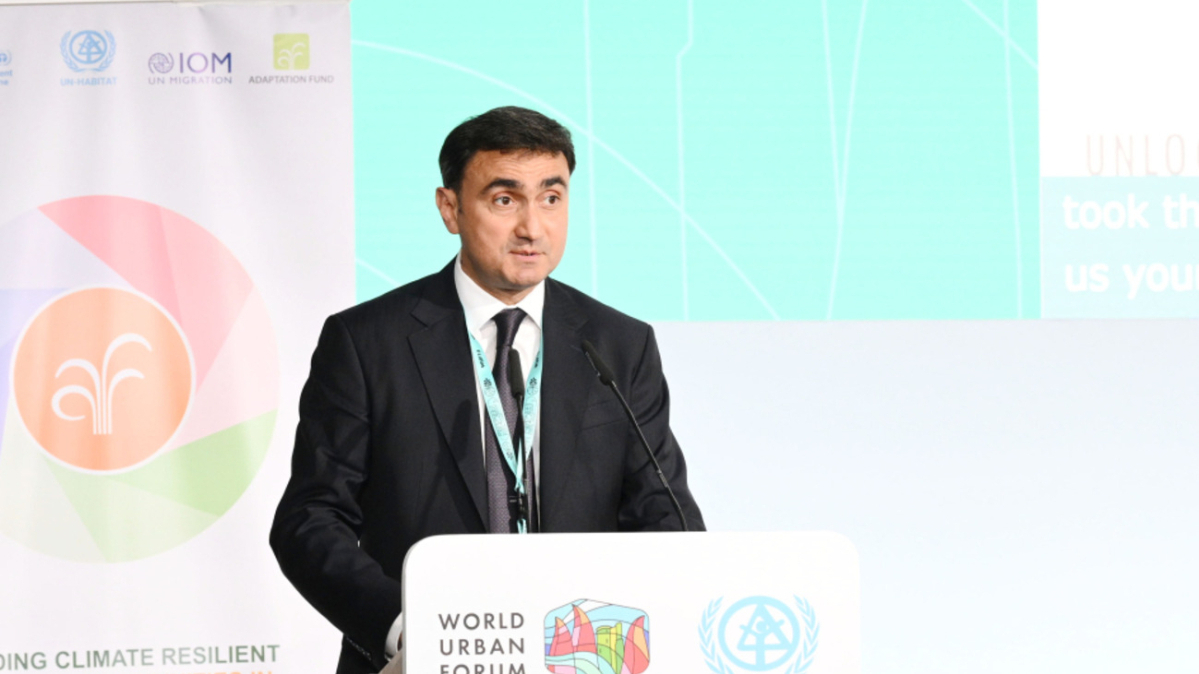
A high-level dialogue on climate-resilient cities and communities along the Caspian Sea was held on 19 May during the 13th session of the United Nations World Urban Forum (WUF13) in Baku.
The event, titled “Climate-Resilient Cities and Communities along the Caspian Sea - Unlocking Vertical Climate Finance for Urban Adaptation”, brought together senior government officials, United Nations representatives, international financial institutions and development partners to explore how climate finance and innovation can support urban adaptation across the Caspian region.
Opening the discussion, Azerbaijan’s First Deputy Minister of Ecology and Natural Resources, Agakerim Samadzade, warned that climate impacts are intensifying across the region.
“The impacts of climate change are becoming more critical each year, with rising temperatures and depleting water resources posing new challenges.”
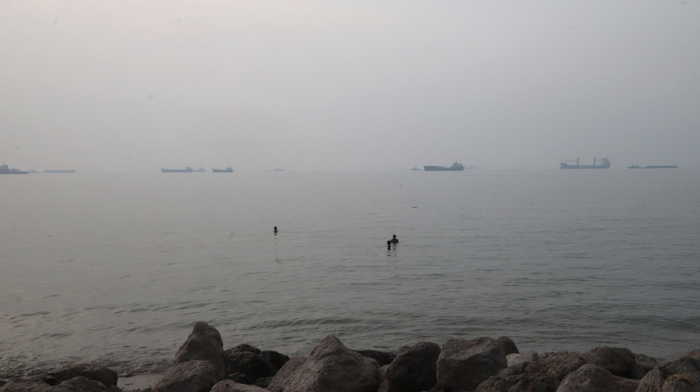
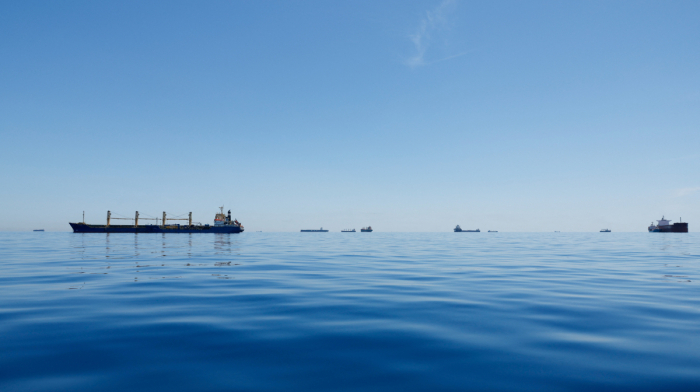
“The decline in the water level of the Caspian Sea has already become a serious problem.”
He added that the consequences are widespread, affecting “the fishing industry, the livelihoods of coastal populations, the tourism economy, and the overall ecosystem.”
The session was moderated by Mahir Aliyev, Regional Coordinator of the United Nations Environment Programme, who underlined the importance of regional coordination on environmental resilience.
UN-Habitat calls for scalable adaptation solutions
Katja Schaefer, Inter-Regional Advisor at UN-Habitat, outlined ongoing efforts to design adaptation projects that can be scaled across the wider Caspian region.
“An adaptation fund project that looks at strengthening the resilience of communities, strengthening biodiversity, livelihoods, but also looking at infrastructure pilot projects that can go to scale across the whole country and the wider region.”
She added that lessons from Azerbaijan could be extended to neighbouring countries.
“We are also aiming to actually use the experiences that we will be having here in Azerbaijan to go to scale in Kazakhstan and in Turkmenistan.”
Financing climate-resilient infrastructure
Norio Saito, Senior Director at the Asian Development Bank, stressed the importance of structured financing models that combine public and private investment.
“Some of the basic infrastructure needs to be financed by the public sector.”
He added that, once foundational systems are in place, private investment opportunities become more viable.
“If you properly structure the projects, then it can be pursued for the public-private partnership arrangement.”
He noted that such frameworks could help attract more private capital into climate-resilient urban infrastructure.
Azerbaijan pilot project and regional ambition
Runze Wang, Programme Manager at the UN-Habitat Azerbaijan Country Office, highlighted a $10 million Adaptation Fund-supported initiative in Azerbaijan aimed at strengthening urban resilience.
“The project that we're working here is enabled by the Adaptation Fund, which has provided to Azerbaijan $10 million to implement the project around the climate resilience in the country.”
He pointed to a corridor development project in Baku designed to improve public space while also serving as a buffer against urban flooding.
“The ambition is to bring this project to another level and inspire other players in the region of the Caspian Sea, so that more countries can join this effort of creating climate resilience around the Caspian region.”
From dialogue to regional action
Participants emphasised that the Caspian region is increasingly exposed to climate stress, particularly water scarcity and environmental degradation linked to the declining sea level.
The dialogue underscored the need for stronger cross-border cooperation, innovative financing mechanisms and scalable pilot projects to build long-term resilience.
WUF13 continues in Baku with a broader agenda focused on housing, climate adaptation, urban finance and sustainable development, bringing together global stakeholders to help shape future urban policy.











What is your opinion on this topic?
Leave the first comment