A rare Israeli security statement warning of an alleged Iranian-linked plot targeting global sites, including a key Azerbaijani pipeline, has drawn renewed attention to regional security dynamics.
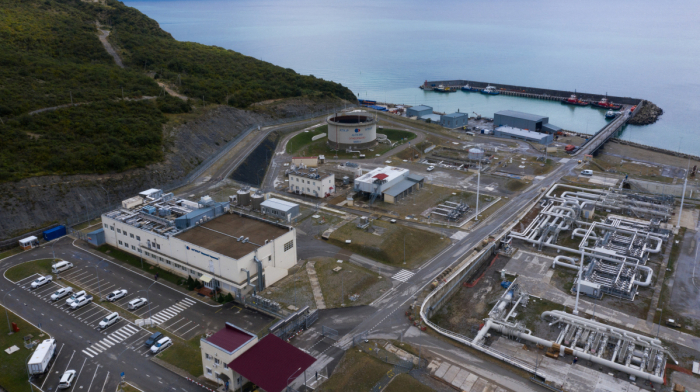
Israel issued a joint statement from Mossad, Shin Bet and the Israel Defense Forces (IDF), saying it had uncovered a network linked to Iran’s Islamic Revolutionary Guard Corps (IRGC) that was allegedly planning attacks on targets worldwide, including the Baku–Tbilisi–Ceyhan (BTC) oil pipeline.
The coordinated nature of the statement - described as highly unusual - has prompted debate over both its significance and timing.
Political analyst Aytan Gurbanova told AnewZ such messaging should be interpreted cautiously.
“Every state communicates sensitive information according to its own strategic timing,” she says, describing the development as part of a broader pattern in international relations rather than a turning point.
Link to Azerbaijan’s earlier disclosure
The Israeli statement follows a 6 March announcement by Azerbaijan’s State Security Service, raising questions about whether the two disclosures are connected.
While some observers suggest the Israeli statement may reinforce concerns first raised in Baku, Gurbanova stops short of drawing a direct link.
Instead, she indicates that the development may reflect a wider regional picture rather than a single coordinated narrative.
Focus on the BTC pipeline
At the centre of the discussion is Azerbaijan’s strategic infrastructure, particularly the Baku–Tbilisi–Ceyhan pipeline. The route, which connects the Caspian Sea to global markets via Türkiye and Georgia, is widely regarded as both an economic lifeline and a symbol of national sovereignty.
Gurbanova emphasises that such assets remain firmly protected. “The security of our territory and strategic infrastructure is fully under the control of the Azerbaijan state,” she says, adding that “Azerbaijan’s security agenda is defined in Baku, not elsewhere.”
Assessing the threat environment
Questions have been raised about how plausible it is that Iran would target critical infrastructure such as the BTC pipeline.
While not dismissing regional risks, Gurbanova suggests Azerbaijan’s security posture remains robust and grounded in national control.
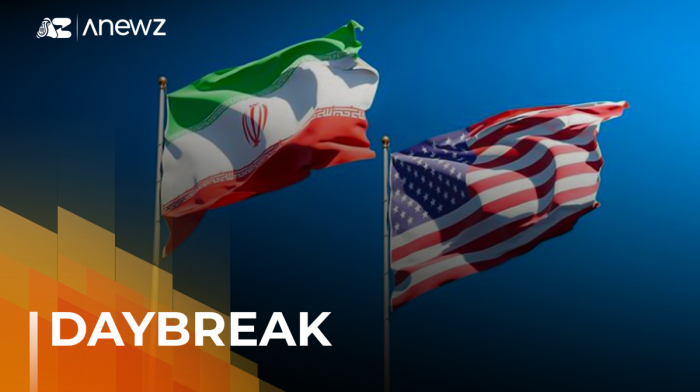
Her assessment comes amid heightened tensions between Iran and Israel, which have increasingly played out beyond their immediate borders.
Timing and regional tensions
The timing of the Israeli disclosure has also drawn scrutiny, particularly given the broader geopolitical climate.
Gurbanova cautions against overinterpreting the announcement, again pointing to the strategic considerations that often shape such disclosures.
The developments come against a backdrop of ongoing tensions between Iran and Israel, fuelling speculation about potential escalation.
Despite these tensions, Gurbanova stresses that Azerbaijan continues to pursue a balanced and independent foreign policy.
“We do not accept the logic that friendship with one state requires hostility toward another,” she says. Instead, Baku follows what she describes as “balance, dignity and independence,” maintaining relations with multiple partners while avoiding alignment with any single geopolitical bloc.
That approach is underpinned by a broader diplomatic philosophy. “We believe in preventive security, direct communication, and responsible statecraft,” she explains.
Stability remains the priority
Gurbanova maintains that Azerbaijan’s core objective is stability, even as regional rhetoric intensifies.
“Our national interest lies in regional stability,” she says, noting that economic cooperation and connectivity are prioritised over escalation.
Relations with Iran, she adds, continue to be handled with care. “We are open to cooperation with all countries, including Iran, but firm in protecting our interests,” she says.
At the same time, she warns that rising tensions could have wider implications.
“Azerbaijan benefits from peace, connectivity and economic cooperation, not escalation,” she says.
A steady course amid uncertainty
As geopolitical tensions persist, Azerbaijan remains at the crossroads of competing regional interests.
For Gurbanova, consistency in policy is essential. “We do not believe in emotional diplomacy,” she says, pointing to a pragmatic approach rooted in national priorities.
In a complex and evolving security environment, Azerbaijan’s strategy, she argues, remains clear: protect its infrastructure, maintain balance, and avoid being drawn into conflicts that do not serve its long-term interests.








What is your opinion on this topic?
Leave the first comment