On the eve of the United Nations Security Council meeting on Friday to vote on a six-month extension of Iran’s nuclear sanctions under Resolution 2231, Tehran has stepped up its last-minute diplomatic measures to avert the return of pre-2015 sanctions.
Tehran’s intensified approach to prevent the re-instalment of these sanctions took place both on the sidelines of the General Assembly in New York and at the World Atomic Week in Moscow.
Russia and China which are permanent member states of the Security Council have proposed a resolution to extend the Iran Sanctions Resolution 2231 by April 2026 in a bid to strike a deal over Tehran’s nuclear program meanwhile.
Tehran and the European powers however remain at loggerheads in the U.N. Security Council over possible return of the nuclear sanctions if they fail to reach an agreement by Sep. 28.
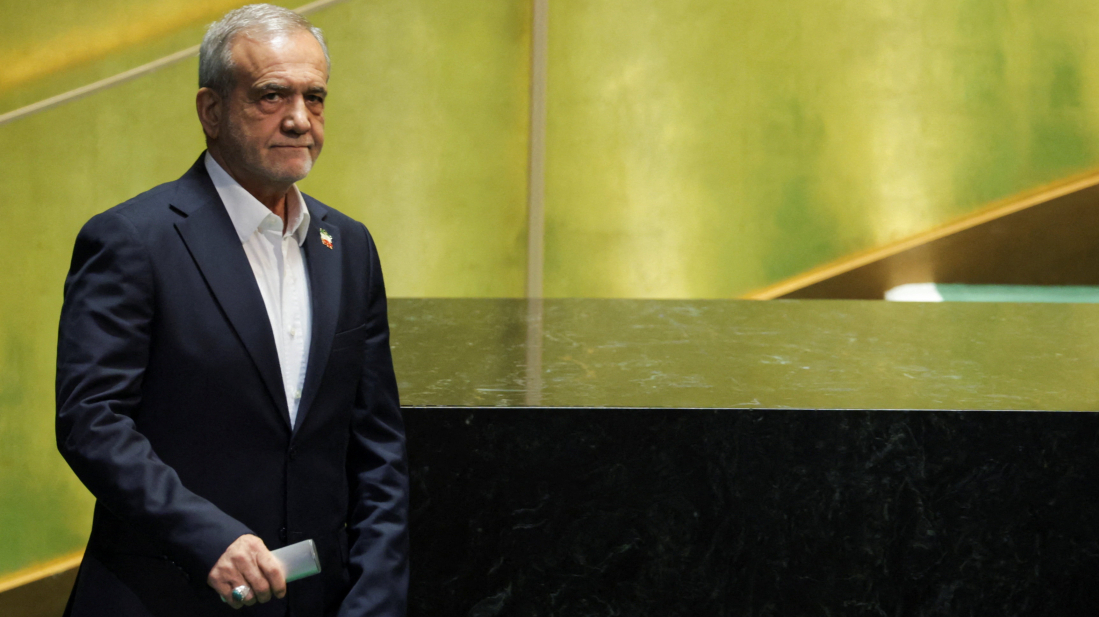
Iran’s President Masoud Pezeskhian and Foreign Minister Abbas Araghchi have been meeting their counterparts including from the European powers France, Germany, and the UK which referred their nuclear dispute with Iran to the world body in August.
President Emmanuel Macron of France said after meeting with Pezeskhian on Wednesday at the UN, that it was still possible to strike a deal with Iran to prevent sanctions but that “time was running out”.
He also said that “it is up to Iran to meet the legitimate conditions we have set”.
Araghchi also met for two times Rafael Grossi, the director general of the U.N. nuclear watchdog
IAEA in recent days, as well the EU Foreign Policy chief Kaja Kallas to negotiate a breakthrough to the standoff.
And Iran’s Deputy Foreign Minister Kazem Gharibabadi met the Russian and Chinese envoys to U.N. and the Security Council’s non-permanent member states which will be voting on the joint Russia-China draft proposal.
In Moscow, Head of Atomic Energy Organization of Iran Mohammad Eslami said at the World Atomic Week forum, “Our nuclear program is utterly transparent and there will be no turning back.”
During his visit to the Russian capital, Tehran and Moscow signed an MoU on building Small Modular Reactors (SMR) capable of generating maximum electrical power of 300 Megawatts.
Commentators familiar with the matter suggest that Tehran’s success in getting the support of Russia and China, which are wielding the veto power in the Security Council and the agreement on buying Russian nuclear reactors despite ongoing pressures may increase the chances of securing a delay of sanctions.
In the meantime, US nuclear negotiator with Iran, Steve Witkoff and a State Department spokesman have hinted at Washington’s readiness to resume the stalled talks with Tehran.
However, the Iranian Foreign Ministry Spokesman Esmaeil Baghaei rejected their remarks as a “deception” citing bombing of Iran’s civilian nuclear sites in the middle of negotiations last June.
Iran retaliated by cutting off the mediated nuclear negotiations with the United States and suspended the ties with the UN nuclear watchdog after its major civilian nuclear sites were attacked during the 12-day war.
The E3 have laid down the three conditions of resumption of nuclear talks with the U.S., return of the inspectors of the International Atomic Energy Agency, and access to the stockpiled enriched uranium in return for a limited suspension of the sanctions.
Back in Tehran, the Secretary of Iran’s Supreme National Security Council Ali Larijani was quoted saying in an interview with the American public broadcaster PBS that Tehran will terminate its cooperation with IAEA if the sanctions are re-imposed.
Iran’s Parliament is set to discuss the petition by 70 lawmakers calling for withdrawing from the Non-Proliferation Treaty (NPT) on Sunday coinciding the date the pre-2015 sanctions could be re-instated.










What is your opinion on this topic?
Leave the first comment