live U.S.-Iran standoff continues as Hormuz shipping and diplomacy remain uncertain
Shipping traffic through the Strait of Hormuz remains limited on Thursday, with no increase in vessel crossings as U.S.-Iran talks to res...
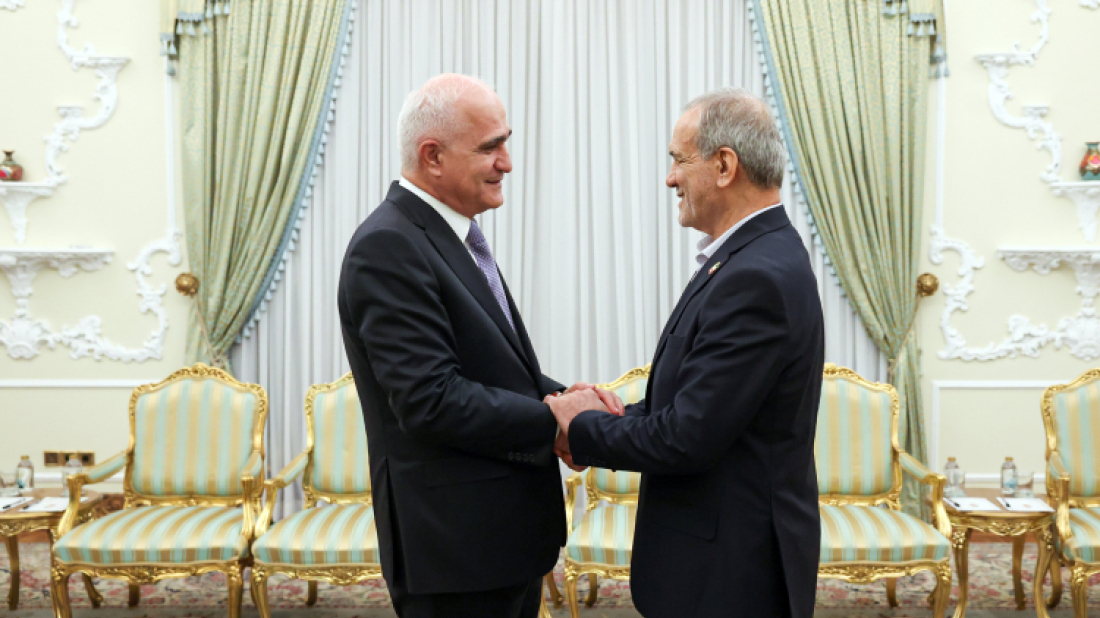
The Iranian President Masoud Pezeshkian and Azerbaijani Deputy Prime Minister Shahin Mustafayev reviewed bilateral relations between the two neighbouring countries official sources said on Tuesday.
The meeting also focused on expansion of existing ties, stronger economic cooperation and implementation of bilateral agreements.
“Iran is interested in expanding its relations with the Republic of Azerbaijan in all political, economic and cultural areas,” President Pezeshkian said, according to the news release of the Iranian President’s Office.
He stated that there was “no obstacle in the path of developing interactions and cooperation” between the two countries adding that Iran wants enhanced relations with neighbouring and Islamic countries.
During the meeting, bilateral cooperation agreements were reached between Tehran and Baku with the visiting Azerbaijani deputy prime minister affirming his country's elation at improved relations with Iran.
He said that following President Pezeshkian’s state visit to Baku in April, the President of Azerbaijan Ilham Aliyev ordered to put on agenda the serious and diligent implementation of agreements reached during his visit.
Mustafayev also stated that Baku respects the territorial integrity of its neighbours and will not allow its territory to be used for aggression against Iran.
The Pezeshkian-Mustafayev meeting took place on the eve of the Iranian President’s departure to New York on Tuesday to take part in the 80th UN General Assembly Session.
The Iranian leader is scheduled to deliver a speech at the world body on Wednesday afternoon New York time and meet counterparts on the sidelines of the annual event.
Iran’s Foreign Minister Abbas Araghchi is in New York and in addition to meeting his counterparts from Austria, Sudan, Oman, Poland, and Egypt, held a meeting with the Director General of the International Atomic Energy Agency, Rafael Grossi.
This year’s General Assembly is convening days ahead of the September 28 deadline for likely return of Iran’s nuclear sanctions called for by France, Germany and the UK which have referred their dispute with Tehran to the UN Security Council.

The collective-defence agreement between Türkiye, Saudi Arabia and Pakistan signals that regional powers no longer want to rely solely on external security guarantees. Whether it becomes a stabilising deterrent or another axis of rivalry remains unresolved.
Shipping through the Strait of Hormuz has slowed, according to the latest data, as uncertainty over the waterway’s reopening kept most shipowners away. Six commodity vessels crossed the strait on Tuesday, down from nine the day before and below the 10-day daily average of 11.
Shipping traffic through the Strait of Hormuz remains limited on Thursday, with no increase in vessel crossings as U.S.-Iran talks to resolve the conflict remained stalled. Nine commodity vessels transited the key waterway on Wednesday, unchanged from the previous day, according to Kpler data.
Iran has said the Strait of Hormuz will remain closed until the U.S. fulfils the terms of an interim deal, including lifting the maritime blockade and sanctions and releasing Iran’s frozen assets.
Start your day informed with AnewZ Morning Brief. Here are the top news stories for the 19th of August, covering the latest developments.
Syria says it assured Israel that Türkiye had no plans to establish a military presence at the Abu al-Duhur airbase before Israeli forces struck the site on Tuesday.
Israeli Prime Minister Benjamin Netanyahu has issued his strongest warning yet over Türkiye's growing military role in Syria, saying Israel will not accept Turkish forces expanding their presence further south.
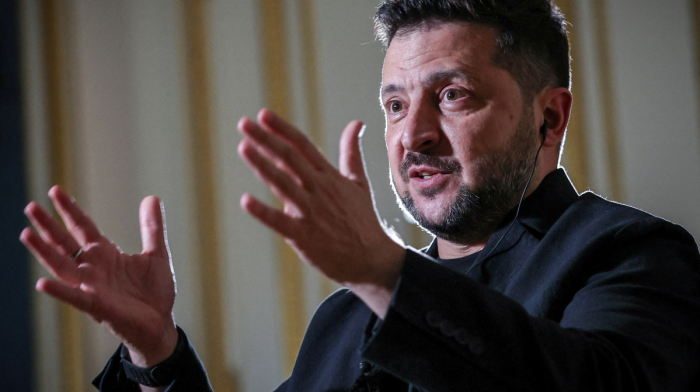
Azerbaijan’s support for Ukraine could provide a model for neighbouring countries seeking to strengthen their sovereignty, the director of development at an organisation supporting Ukraine’s armed forces has told AnewZ.
Two days inside Uzbekistan’s newsrooms, hospitals, factories and technology hubs reveal a country eager to show how it is changing — while that transformation is still under way.
Syrian Foreign Minister Asaad al-Shaibani arrived in Islamabad on Wednesday for a two-day visit, marking the first trip by Syria’s top diplomat to Pakistan in 19 years as Damascus seeks to deepen ties with the country.
You can download the AnewZ application from Play Store and the App Store.
What is your opinion on this topic?
Leave the first comment