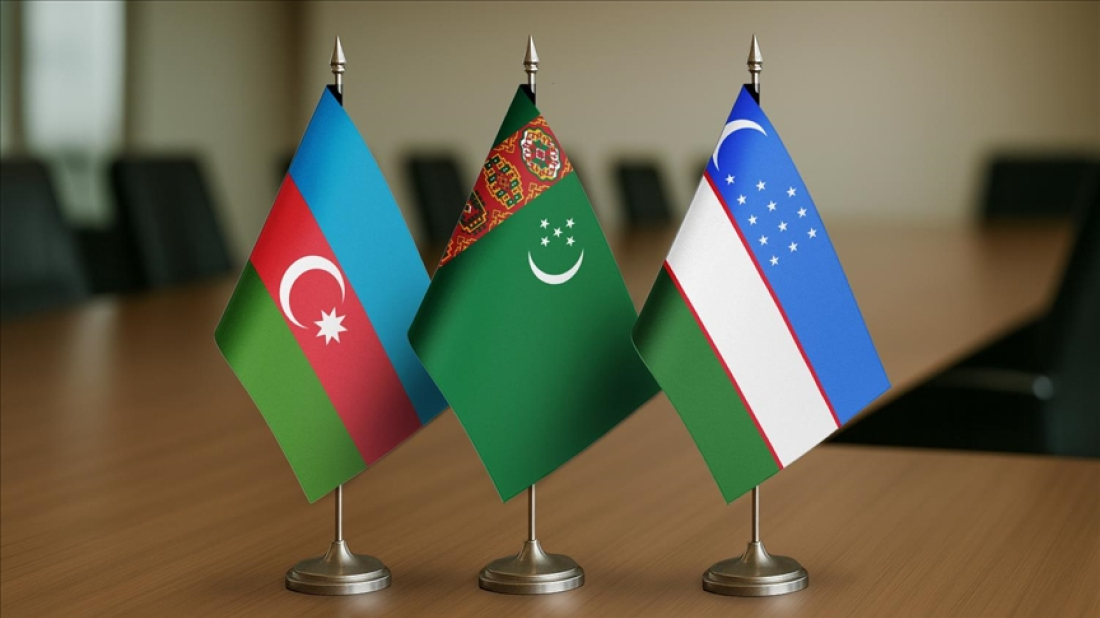
Azerbaijan, Turkmenistan, and Uzbekistan have strengthened trilateral cooperation, enhancing ties among the Turkic states around the Caspian Sea.
While the foundation of the Kars-Dilucu railway — a key section of the Zangezur Corridor — was being laid, a significant meeting took place in Turkmenistan on 22 August. Azerbaijani President Ilham Aliyev, Uzbek President Shavkat Mirziyoyev, and Turkmen Halk Maslahaty Chairman Gurbanguly Berdimuhamedow convened to discuss cooperation in transport, energy, trade, tourism, and cultural sectors.
The most notable outcomes focused on transport and energy. Being landlocked states, the three countries prioritise cooperation among themselves based on mutual trust, rather than relying on neighbouring countries with limited access due to security and sanctions. The liberation of Azerbaijani territories and the growing role of the Turkic Council have created a positive environment for regional collaboration.
Recent developments in transport are particularly significant. The cargo capacity of the Baku-Tbilisi-Kars railway has increased from 1 million to 5 million tonnes, while the Baku International Sea Trade Port’s capacity now reaches 15 million tonnes. Following the agreement reached between Azerbaijani and Armenian leaders in Washington, the potential opening of the Zangezur Corridor’s Armenian section has become more likely, making this route increasingly attractive for Caspian states.
Following the trilateral summit, Uzbek Transport Minister Ilham Mahkamov announced the signing of a tripartite agreement to establish joint companies in transport, logistics, and the private sector. Uzbekistan also plans to purchase ships from Azerbaijan and Turkmenistan and operate its own ferries on the Caspian Sea.
Another key project accelerating transport cooperation is the China-Kyrgyzstan-Uzbekistan (CKU) railway. This route offers a 900 km shorter path to European markets compared with Russian routes and could carry up to 15 million tonnes of cargo annually. Uzbekistan and Kyrgyzstan intend for goods transported via this railway to continue through the Turkmenistan-Caspian-Azerbaijan corridor.
Energy cooperation is also advancing. Plans are underway to generate electricity from Turkmen gas and transmit it via the Caspian to Azerbaijan and Europe, providing an alternative to the Trans-Caspian Gas Pipeline and addressing objections previously raised by Iran and Russia.
Additionally, SOCAR has begun oil exploration in Uzbekistan, with the potential discovery of a significant well in the near future. This will enhance Uzbekistan’s energy security and take energy cooperation with Azerbaijan to a new level.
Overall, trilateral cooperation between Azerbaijan, Turkmenistan, and Uzbekistan is deepening ties among the Turkic states around the Caspian, increasing their strategic and transit significance between East and West. The expansion of this collaboration will also support Turkey’s energy security and reinforce its role as a transport hub.














What is your opinion on this topic?
Leave the first comment