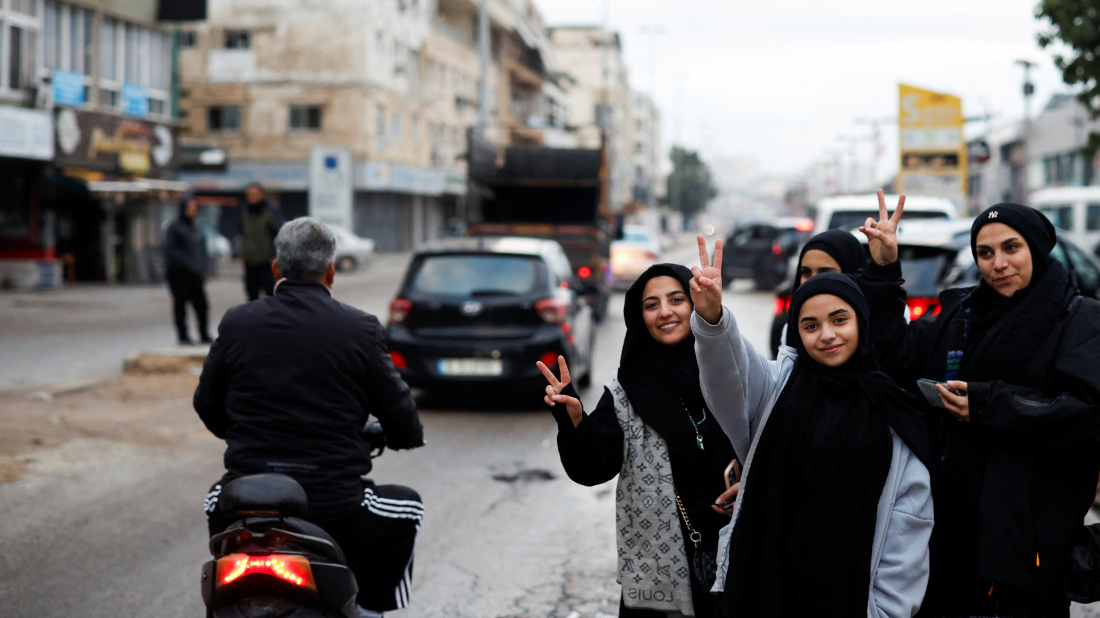
World leaders have reacted to the ceasefire agreement between Israel and Hezbollah, which came into effect this morning. Many have expressed hope that the deal will bring greater stability to the region and encourage further diplomatic efforts.
World leaders have reacted to the ceasefire agreement between Israel and Hezbollah, which came into effect this morning. Many have expressed hope that the deal will bring greater stability to the region and encourage further diplomatic efforts.
U.S. President Joe Biden expressed support for the Israel - Hezbollah ceasefire agreement, calling it "good news." He added that the agreement is *"designed to be a permanent ceasefire"* and that it is a crucial step towards lasting peace.
He said that: " The fighting across the Lebanese - Israeli border will end. Will end. This is designed to be a permanent cessation of hostilities. What is left of Hezbollah and other terrorist organizations will not be allowed, I emphasize, will not be allowed to threaten the security of Israel again. Just as the Lebanese people deserve a future of security and prosperity, so do the people of Gaza. They too deserve an end to the fighting and displacement.
French President Emmanuel Macron welcomed the deal, calling it a "new chapter".
A just and lasting political solution, through two states, is necessary. This agreement shows the way forward through political courage, which alone can offer lasting peace and security to the region. – he added
Australian Foreign Minister Penny Wong also welcomed the signing of a ceasefire deal . Wong stated that Australia has long advocated for a ceasefire, along with the international community, both in Gaza and in Lebanon. We want to see diplomatic efforts that ensure compliance with UN Security Council resolutions, which is in the interest of all parties.
German Foreign Minister Annalena Baerbock added that the situation between Israel and Hezbollah is at a critical moment, offering hope for a potential resolution.
*"We are at a critical moment, thanks to U.S. and French mediation. A ceasefire and a political solution aligned with UN Resolution 1701 are within reach. Israel has a duty to protect civilians while defending itself, and alongside our Arabic partners, we agree that UN humanitarian organisations in Gaza must remain operational." she said
However, concerns remain about whether there will be another escalation if one of the sides violates the terms of the ceasefire.











What is your opinion on this topic?
Leave the first comment