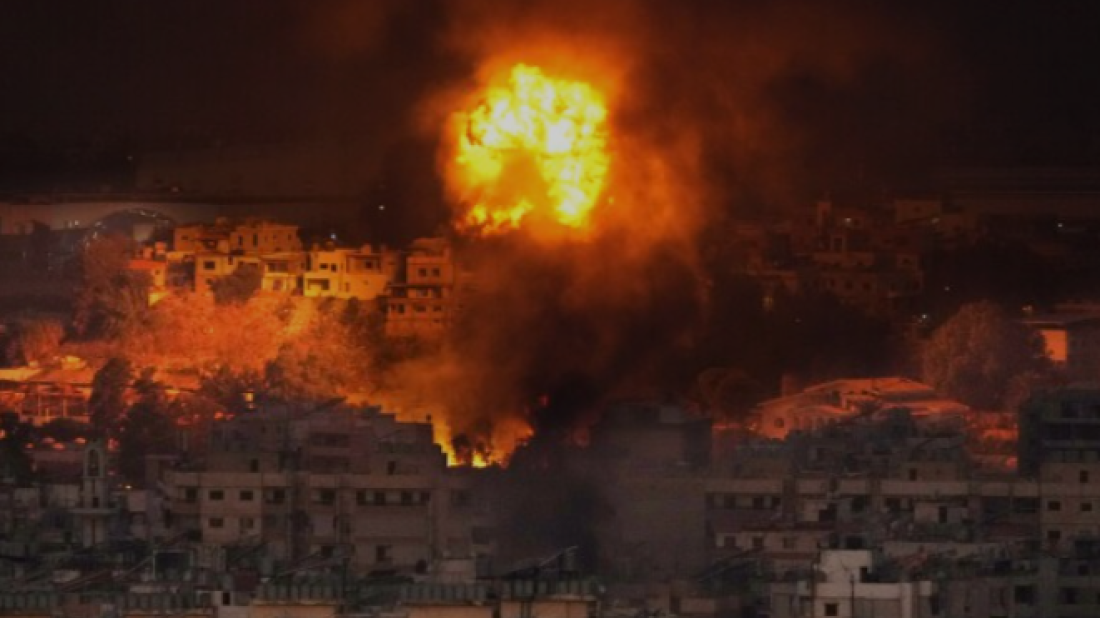
An Israeli airstrike on Beirut's southern suburbs early Tuesday killed at least three people and injured seven, escalating tensions and threatening the fragile ceasefire between Israel and Hezbollah.
At least three people were killed and seven others wounded in an Israeli airstrike on Beirut’s southern suburbs early Tuesday morning, according to the Lebanese health ministry. The attack further strained an already fragile four-month ceasefire between Israel and Hezbollah.
The Israeli military confirmed the strike, stating that it targeted a Hezbollah militant who had recently been involved in directing Hamas operatives and providing assistance to them.
This latest airstrike follows a similar attack just days earlier in the southern suburbs of Beirut, a known Hezbollah stronghold called the Dahiyeh. However, Hezbollah has yet to issue a statement regarding the identity of the person targeted in the most recent attack.
The strike caused significant damage to the upper three floors of a building in the area. A Reuters reporter on the scene noted that the balconies of the affected floors were destroyed, while the lower floors remained intact, suggesting a targeted strike. Ambulances were seen at the site, assisting with the recovery of casualties. Witnesses reported that no evacuation warning had been issued prior to the attack, and many families fled the area in panic.
The attack further undermines the already shaky ceasefire agreement brokered in January, which had been intended to end the year-long conflict and ensure the removal of Hezbollah fighters and weapons from southern Lebanon, the deployment of Lebanese troops to the area, and the withdrawal of Israeli ground troops. However, both sides accuse each other of failing to fully uphold the terms of the truce.
The ceasefire has shown signs of unraveling in recent months, with Israel delaying its planned troop withdrawal in January. In March, Israel claimed to have intercepted rockets fired from Lebanon, which prompted retaliatory airstrikes on Hezbollah targets in Beirut’s southern suburbs and southern Lebanon. Hezbollah has denied any involvement in the rocket fire.
The U.S. State Department expressed support for Israel's actions, stating that Israel was defending itself against rocket attacks from Lebanon. A spokesperson for the U.S. government attributed the resumption of hostilities to "terrorists" launching rockets into Israel from Lebanon.
The ongoing conflict between Israel and Hezbollah has its roots in the broader regional instability exacerbated by the Gaza war that began in October 2023. The war, which resulted in significant casualties on both sides, prompted Hezbollah to join the fray, launching rockets at Israeli military positions in support of its Hamas allies.
The Gaza war itself was triggered by a deadly Hamas attack on Israel on October 7, 2023, which resulted in the deaths of over 1,200 people and the kidnapping of around 250 hostages, according to Israeli reports. The Palestinian health authorities have reported more than 50,000 fatalities in Gaza since the conflict began.















What is your opinion on this topic?
Leave the first comment