live Humanitarian aid convoy sent by Azerbaijan reaches Iran border - Tuesday, 10 March
Welcome to our live coverage as the conflict involving Iran enters its 11th day. Tensions in the region remain high as the United States and Iran e...
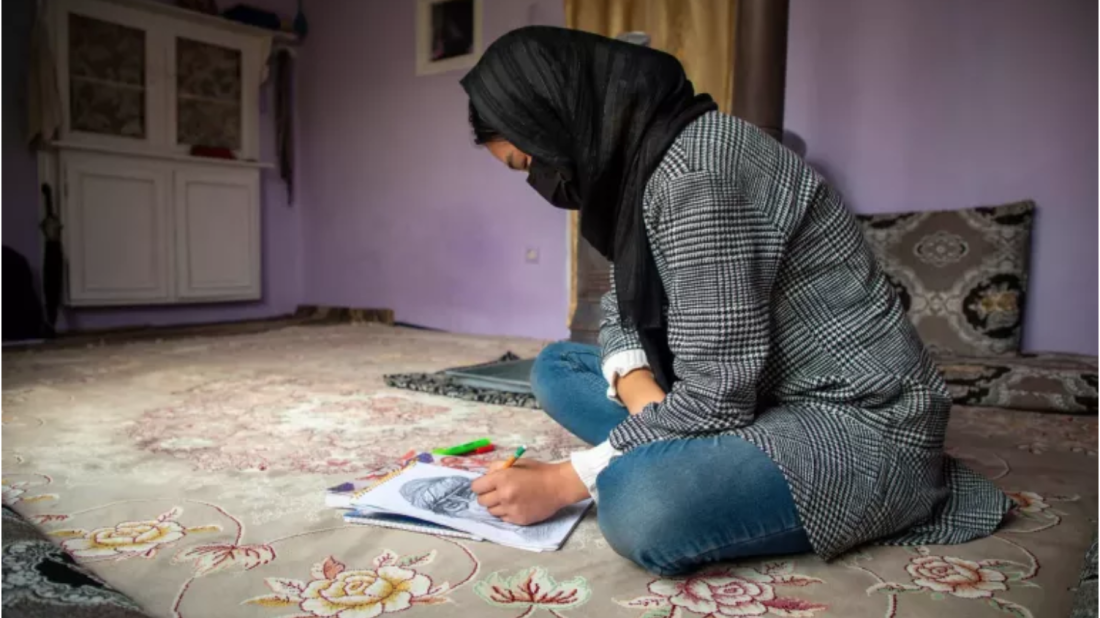
UNICEF on Saturday urged the interim Taliban-led administration in Afghanistan to lift the ban on girls' secondary education as the new school year begins without girls for a third consecutive year.
As new school year starts in Afghanistan, almost 400,000 more girls deprived of their right to education, bringing total to 2.2 million, according to the United Nations agency for children.
The agency stated that the consequences for these girls - and for Afghanistan - are catastrophic.
"This decision continues to harm the future of millions of Afghan girls. If this ban persists until 2030, over four million girls will have been deprived of their right to education beyond primary school," - UNICEF stated, highlighting the increased risk of child marriage and its negative repercussions on their well-being and health.
In addition, the country will experience a shortage of qualified female health workers. This will endanger lives.
"With fewer female doctors and midwives, girls and women will not receive the medical treatment and support they need. We are estimating an additional 1,600 maternal deaths and over 3,500 infant deaths. These are not just numbers, they represent lives lost and families shattered," - the agency added.
UNICEF has urge the de facto authorities to lift this ban immediately.
"Education is not just a fundamental right; it is the pathway to a healthier, more stable, and prosperous society,” it added.
Despite the ban, UNICEF was able to provide access to education for 445,000 children through community-based learning—64 per cent of whom are girls.

Mojtaba Khamenei, son of the late Ayatollah Ali Khamenei, is a hardline cleric with strong backing from the Islamic Revolutionary Guard Corps. His rise signals continuity in Tehran's anti-Western policies.
Global oil prices surpassed $119 a barrel on Monday (9 March, 2026), an almost four year high, as the Middle East conflict rumbled on.
China has urged Afghanistan and Pakistan to resolve their dispute through dialogue after Chinese envoy Yue Xiaoyong met Afghan Foreign Minister Amir Khan Muttaqi, as fighting between the two neighbours entered its eleventh day.
Welcome to our live coverage as the conflict involving Iran enters its 11th day. Tensions in the region remain high as the United States and Iran exchange increasingly sharp warnings over the strategic Strait of Hormuz, a critical artery for global oil supplies.
Entry and exit across the state border between Azerbaijan and Iran for all types of cargo vehicles, including those in transit, will resume on 9 March, according to a statement by the Cabinet of Ministers of Azerbaijan.
The Cabinet of Ministers of Kyrgyzstan has approved a new programme aimed at developing educational courses and training sessions for young parents.
Kazakhstan has evacuated 8,585 citizens from Middle Eastern countries as regional tensions escalate. Authorities are coordinating air and land evacuations while analysts warn the crisis could reshape security and energy risks across the Caspian region.
The United States has designated Afghanistan a “State Sponsor of Wrongful Detention”, accusing the Taliban of holding American citizens to gain political concessions and demanding the immediate release of detained Americans.
Azerbaijan is evacuating nearly 200 people from the Middle East on a special charter flight departing from Oman.
Up to 30 tonnes of food will be delivered to Iran amidst ongoing hostilities with U.S. and Israel, following a phone converstation between the President of Azerbaijan Ilham Aliyev and Iranian counterpart Massoud Pezeshkian.
You can download the AnewZ application from Play Store and the App Store.
What is your opinion on this topic?
Leave the first comment