Azerbaijan’s airspace emerges as strategic lifeline amid Middle East conflict
As conflict continues to unsettle the Middle East, airlines are being forced to make difficult, fast-moving decisions - redrawing flight paths and ...
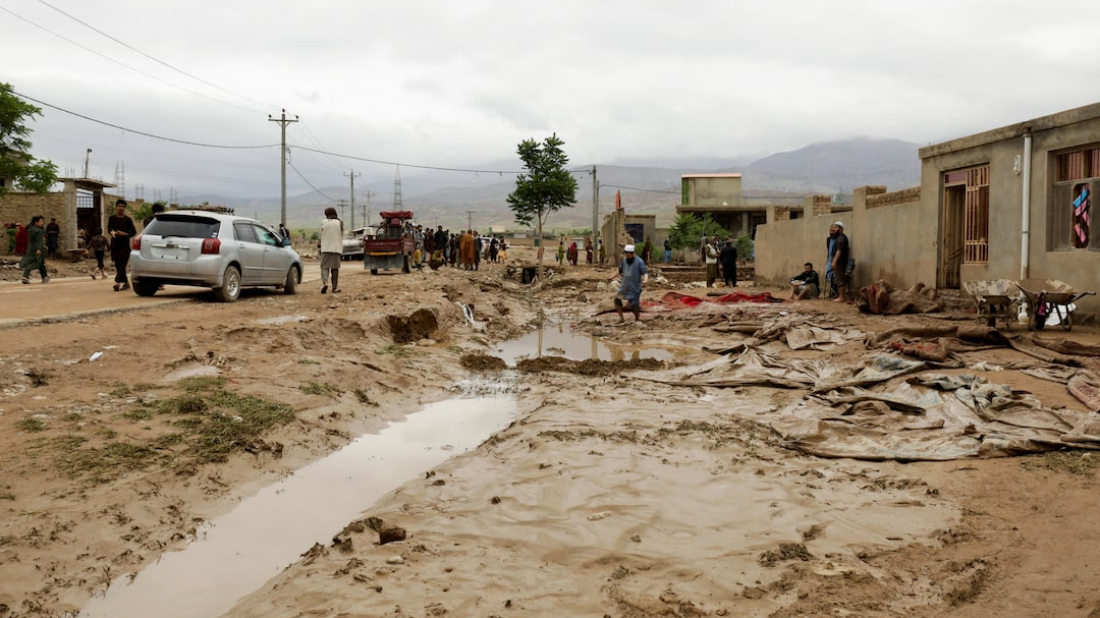
The death toll from flash floods triggered by heavy rains in Afghanistan has surged to 35 over the past two days, with an additional six people killed and five injured in southern Helmand province, according to local officials.
The devastating flash floods swept through several districts in Helmand, including Garashk, Sangin, Musa Qala, Nawzad, and Babaji, as well as the provincial capital, Lashkar Gah, said Hafiz Abdul Bari Rashid, the Provincial Director of Information and Culture. In neighboring Kandahar and Farah provinces, 29 people lost their lives, with 21 of those fatalities coming from two families in Farah.
Since Monday, most parts of Afghanistan have experienced not only heavy rainfall but also snowfall, exacerbating the already dire conditions across the country.
Last year, flash floods in northern Afghanistan were even more catastrophic, claiming the lives of 315 people and injuring more than 1,600. Authorities continue to monitor the situation closely as rescue and relief efforts remain underway.
Local officials are urging residents to take precautions and seek shelter, while emergency response teams work to assist those affected by the ongoing floods. The worsening weather conditions have compounded the challenges faced by communities already struggling with the aftermath of previous natural disasters.

The pilot and co-pilot of an Air Canada Express regional jet were killed after it collided with a fire truck while landing at New York's LaGuardia airport late on Sunday, in an incident that closed the airport, authorities and U.S. media said.
President Donald Trump said the U.S. was considering "winding down" its military operation against Iran, as Iran and Israel traded attacks on Saturday (21 March) and Iranian media said the nuclear enrichment facility in Natanz had been attacked.
U.S. President Donald Trump warned that American forces could target Iranian power plants if the strategic Strait of Hormuz remains closed, and Iran, in return, warned that any attack on its energy infrastructure would trigger strikes on regional facilities.
Iran has launched long-range and intermediate-range ballistic missiles towards the joint U.S.-UK military base on Diego Garcia in the Indian Ocean, in what Israeli officials said was a major escalation in the war.
A British nuclear-powered submarine armed with Tomahawk cruise missiles has reportedly taken up position in the Arabian Sea, the Daily Mail reported on Saturday (21 March). The deployment gives the UK the ability to carry out long-range strikes if tensions in the Gulf escalate.
Turkish authorities on Sunday arrested a reporter for allegedly spreading false information, sparking small demonstrations by journalists and civil society groups in İstanbul and Ankara.
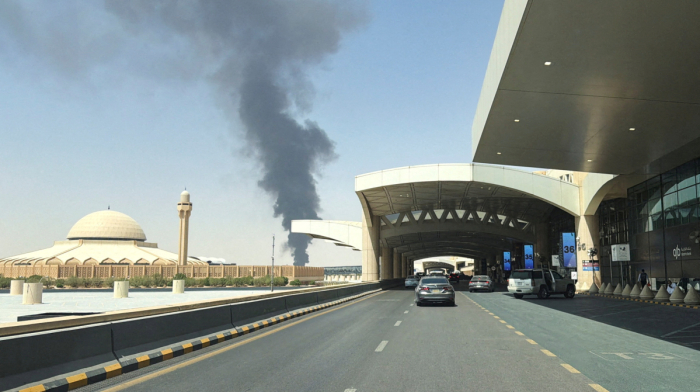
As conflict continues to unsettle the Middle East, airlines are being forced to make difficult, fast-moving decisions - redrawing flight paths and searching for safe skies. Amid this uncertainty, Azerbaijan has emerged as a crucial gateway linking Europe and Asia.
Four weeks into the U.S.-Israel war on Iran, military and civilian officials have strongly warned of immediate tit-for-tat attacks against U.S. targeting of its power plants in reaction to blocking of the strategic waterway of Strait of Horumz.
Israel said on Monday its own forces had misfired artillery that killed an Israeli farmer near the Lebanese frontier, the first Israeli civilian killed in a border conflict being waged in parallel with the war in Iran.
In a metro station in downtown Tehran, pictures of Iranian school children alleged to have been killed by U.S.-Israel attacks are being displayed along the walls.
You can download the AnewZ application from Play Store and the App Store.
What is your opinion on this topic?
Leave the first comment