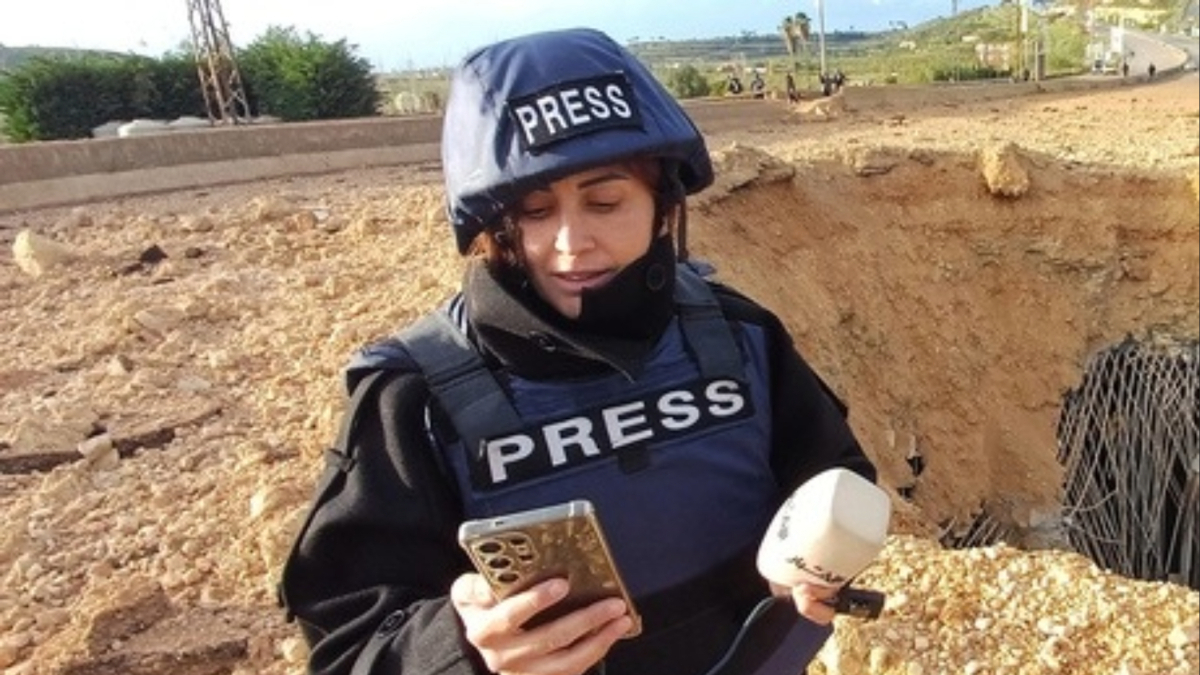
A Lebanese journalist has been killed and another wounded following Israeli strikes in southern Lebanon, according to Lebanese officials and local media.
Amal Khalil, 43, a reporter for Al-Akhbar, died on Wednesday (22 April) while covering developments near the town of al-Tayri. Freelance photographer Zeinab Faraj, who was with her, suffered a head injury.
There was no immediate comment from the Israel Defense Forces (IDF) on Khalil’s death. Earlier, it said it had received reports that two journalists were injured during its strikes.
Strike hits vehicle and shelter
According to Lebanon’s health ministry and a senior military official, Khalil and Faraj were near the area when an Israeli strike hit a vehicle in front of them. They ran into a nearby house for shelter, which was later struck.
Rescue teams were initially able to reach Faraj and take her to safety. However, attempts to reach Khalil were delayed. Elsy Moufarrej, Head of the Union of Journalists in Lebanon, said rescuers were blocked after a sound grenade was dropped at the scene.
The local Health Ministry said Israel’s military “prevented the completion of the humanitarian mission by firing a sound grenade and live ammunition at the ambulance.”
The Israeli military denied obstructing rescue teams.
Rescuers returned hours later. After searching through the rubble, Khalil’s body was recovered several hours after the strike.
Lebanese leaders condemn the attack
Lebanon’s Prime Minister Nawaf Salam said the targeting of journalists and obstruction of rescue efforts constituted “war crimes.”
''Targeting journalists, obstructing access to them by relief teams, and even targeting their locations again after these teams arrive constitutes described war crimes'', he said.'
''Israel's targeting of media workers in the south while they carry out their professional duties is no longer isolated incidents, but has become an established approach that we condemn and reject, as do all international laws and conventions.''
“Lebanon will spare no effort in pursuing these crimes before the relevant international bodies,” he added on X.
Lebanon’s Information Minister Paul Morcos said, “Killing of journalists is a crime and a flagrant violation of international and humanitarian law.”
The Israeli military said it had identified two vehicles leaving a structure it described as linked to Hezbollah and crossing what it calls a “forward defence line”. It said the vehicles approached troops in a way that posed an immediate threat, prompting a strike on one vehicle and a nearby building. It added that it does not target journalists and that the incident is under review.
Lebanese state media reported that two people were killed in the initial strike on the vehicle. Their identities have not been confirmed.
Deadliest day since ceasefire as conflict toll rises
Khalil’s death brings the number of people killed on Wednesday to five, making it the deadliest day since a 10-day ceasefire began on 16 April. The ceasefire, brokered with United States involvement, aimed to halt fighting between Israel and Hezbollah.
The International Committee of the Red Cross said Khalil was killed while carrying out her duties. Earlier, Lebanon’s state news agency reported that “Israeli occupation forces are besieging journalists Amal Khalil and Zeinab Faraj, and preventing the Red Cross and the Lebanese army from reaching them.”
Ongoing tensions amid a fragile ceasefire
More than 2,400 people have been killed in Lebanon since Israel launched its offensive following Hezbollah’s attack on 2 March, according to Lebanese authorities. The conflict has also displaced more than one million people.
Israel says it has seized a strip of land along the border to create a buffer zone, citing security concerns after repeated rocket fire from Hezbollah into northern Israel.
Khalil had been reporting on the conflict since it resumed in early March. Her death comes ahead of a planned second round of talks between Israeli and Lebanese officials in Washington on extending the ceasefire.



















What is your opinion on this topic?
Leave the first comment