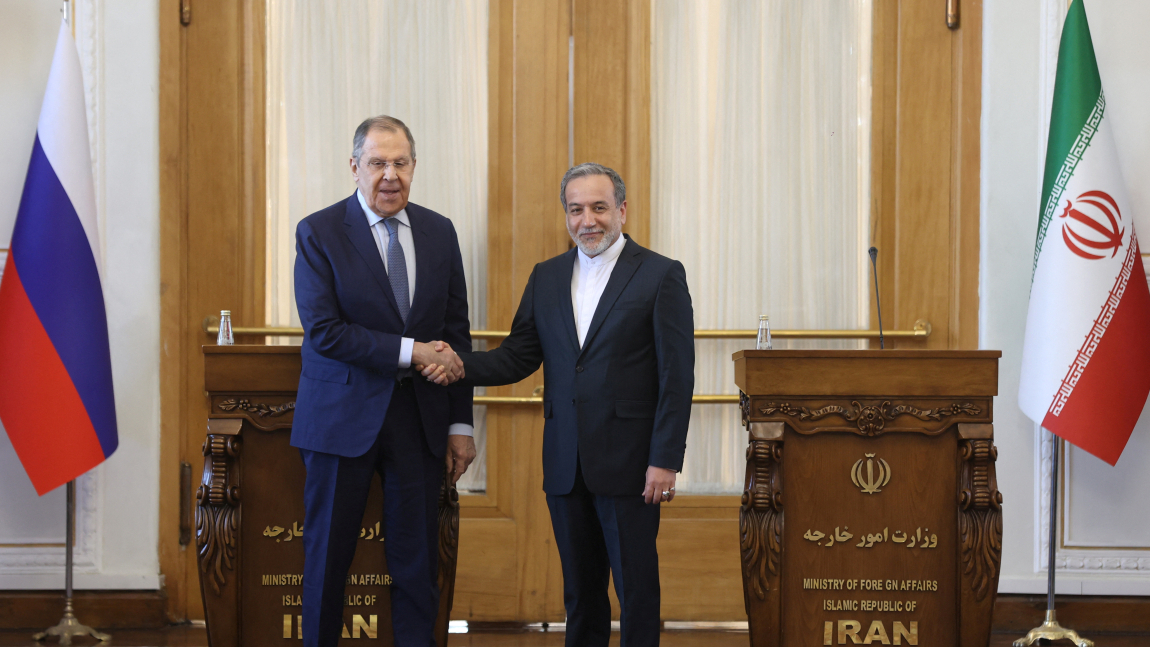
Iran's Foreign Minister Abbas Araghchi and his Russian counterpart Sergei Lavrov discussed the upcoming Board of Governors session of International Atomic Energy Agency (IAEA) meeting in a phone call on Wednesday.
Prior to their conversation, news of leaked IAEA confidential reports said the UN watchdog said it lost track of Iran’s enriched uranium in the wake of 12-day Israel-US bombing of its nuclear sites last June.
According to a statement released by the Iranian Foreign Ministry on Thursday, “The two sides emphasised continued coordination and cooperation among Tehran, Moscow, and Beijing at the IAEA’s upcoming board meeting,”.
Russian Foreign Ministry’s statement also said that Araghchi and Lavrov talked about “France, the UK and Germany seeking to launch an anti-Iranian campaign” at the IAEA meeting next week in Vienna.
According to news media reports, IAEA said it has been unable to verify the status of Iran's stockpile of enriched uranium after Israel and United States struck its major civilian nuclear sites under UN safeguards in June.
Tehran retaliated by suspending its cooperation with UN nuclear watchdog including the inspections arguing that the quarterly report by IAEA’s board meeting released days before the attacks justified the US-Israeli invasion.
However, Iran’s Foreign Ministry confirmed on Monday that IAEA monitors inspected some Iranian sites including Tehran’s research reactor last week after receiving the clearance from the Supreme National Security Council which is required by a legislation passed by Parliament.
Iran also strongly criticised IAEA Director General Rafael Grossi for failing to condemn the attacks on its nuclear facilities under safeguards. Grossi, however, rejected Tehran’s criticisms.
On Tuesday, ambassadors of China, Iran, and Russia to the Vienna-based international organisations met with Grossi and his colleagues after they held a trilateral coordinating meeting earlier.
"Permanent Representatives of China, Iran and Russia met today with the #IAEA Director General Mr. Rafael Grossi and his team to exchange views on the forthcoming session of the IAEA Board of Governors," Russia's representative to the Vienna-based International Organizations Mikhail Ulyanov wrote in a post on X.
China and Russia are permanent members of the Security Council wielding the veto power and have voted against return of UN nuclear sanctions on Iran.
Last Wednesday, the ambassadors of Iran, Russia and held a trilateral consultation meeting during which Ulyanov said they “compared notes and coordinated positions on the eve of the next regular session of Board of Governors”.
The IAEA Board of Governors meets five times a year: in March and in June, twice in September before and after the General Conference - and in November. Its next session will be held on November 17-21.










What is your opinion on this topic?
Leave the first comment