Syrian army crushes SDF advance as Aleppo clashes rage
A significant number of members of the Syrian Democratic Forces (SDF), affiliated with the PKK/YPG, have reportedly defected in Aleppo as Syrian secur...
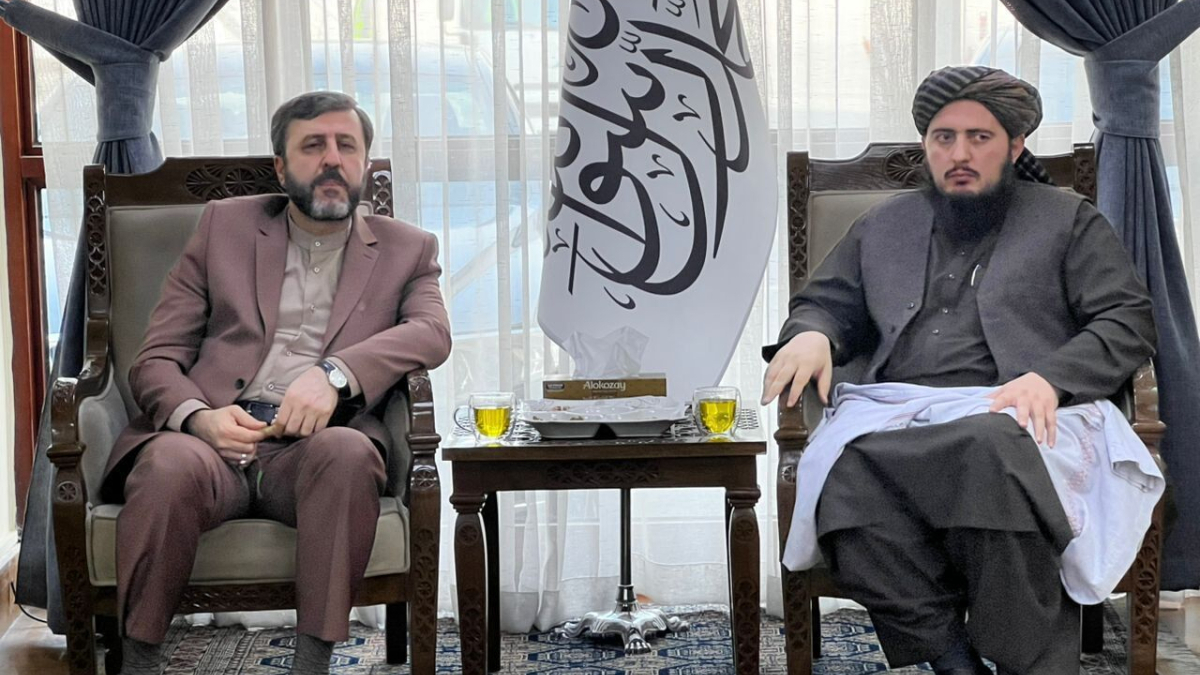
Iran’s deputy foreign minister for Legal affairs Kazem Gharibabadi has said that plans are underway for the repatriation of Iranian prisoners and enhancing border security and controls.
He said that these matters were discussed during his visit to Afghanistan on Sunday, where renewing border demarcation signs and implementing Afghanistan’s obligation to provide Iran’s water share.
Iran and Afghanistan have longstanding tensions over Helmand River water rights, the management of shared borders, and the issue of Afghan nationals illegally residing in Iran.
“It was decided to take the Iranian nationals imprisoned in Afghanistan into the custody of our embassy in Kabul and facilitate their immediate transfer to Iran,” Gharibabadi said in a post on X.
He expressed satisfaction over outcome of the meetings with the Afghan officials including Minister of Borders and Tribes, Deputy Minister of Water and Energy (Water Commissioner), and the First Deputy Minister of Foreign Affairs.
During the visit, he added, bilateral issues on border, water, legal and judicial cooperation were reviewed, and “Both sides stressed the need to strengthen border controls to prevent drug smuggling, human trafficking, and curb terrorist elements”.
“It was also agreed to resume the project to renovate border demarcation signs which has been suspended for seven years,” he said.
The Iranian official also said that a meeting of the water commissioners of the two countries would be held in Iran in the near future within the framework of implementing Afghanistan’s commitments to provide Iran’s water share.
Gharibabadi, who arrived in Kabul on Sunday, visited Herat Province on the second leg of his visit on Wednesday and met its governor Noor Mohammad Islamjar.
“Negotiations between Iran and Afghanistan on the water rights of the Helmand River, protecting the Hamoun wetlands, and determining the legal regime of Harirud River are ongoing as special issues,” he told reporters after returning to Iran.
Iran has been demanding the complete implementation of the 1972 Helmand Treaty and securing it water rights under the treaty.

Open-source intelligence (OSINT) sources reported a significant movement of U.S. military aircraft towards the Middle East in recent hours. Dozens of U.S. Air Force aerial refuelling tankers and heavy transport aircraft were observed heading eastwards, presumably to staging points in the region.
Snow and ice stalled travellers in northwest Europe on Wednesday, forcing around a thousand to spend the night in Amsterdam's Schiphol airport but delighting others who set out to explore a snow-blanketed Paris on sledges and skis.
Diplomatic tensions between Tokyo and Beijing escalated as Japan slams China's export ban on dual-use goods. Markets have wobbled as fears grow over a potential rare earth embargo affecting global supply chains.
Two people have been killed after a private helicopter crashed at a recreation centre in Russia’s Perm region, Russian authorities and local media have said.
Iran’s chief justice has warned protesters there will be “no leniency for those who help the enemy against the Islamic Republic”, as rights groups reported a rising death toll during what observers describe as the country’s biggest wave of unrest in three years.
Tens of thousands of Iranians have taken to the streets in Tehran and across at least 28 cities in a wave of anti-government demonstrations, now entering their twelfth day.
Iran is now facing a near‑total internet blackout as anti-government protests sweep the country. Major cities including Tehran have seen connectivity drop sharply, leaving millions of residents isolated from online communication.
A series of statements by Georgian Parliament Speaker Shalva Papuashvili has reignited debate over freedom of speech, the role of the Orthodox Church, and the influence of the European Union.
A significant development in the complex Azerbaijan - Armenia scenario is the growing confrontation between Armenia’s political leadership and the Armenian Apostolic Church.
President Ilham Aliyev has said the opening of the Zangezur corridor is no longer in question, describing it as a strategic transport link that will connect mainland Azerbaijan with the Nakhchivan Autonomous Republic and carry cargo from China and Central Asia to wider regional markets.
You can download the AnewZ application from Play Store and the App Store.
What is your opinion on this topic?
Leave the first comment