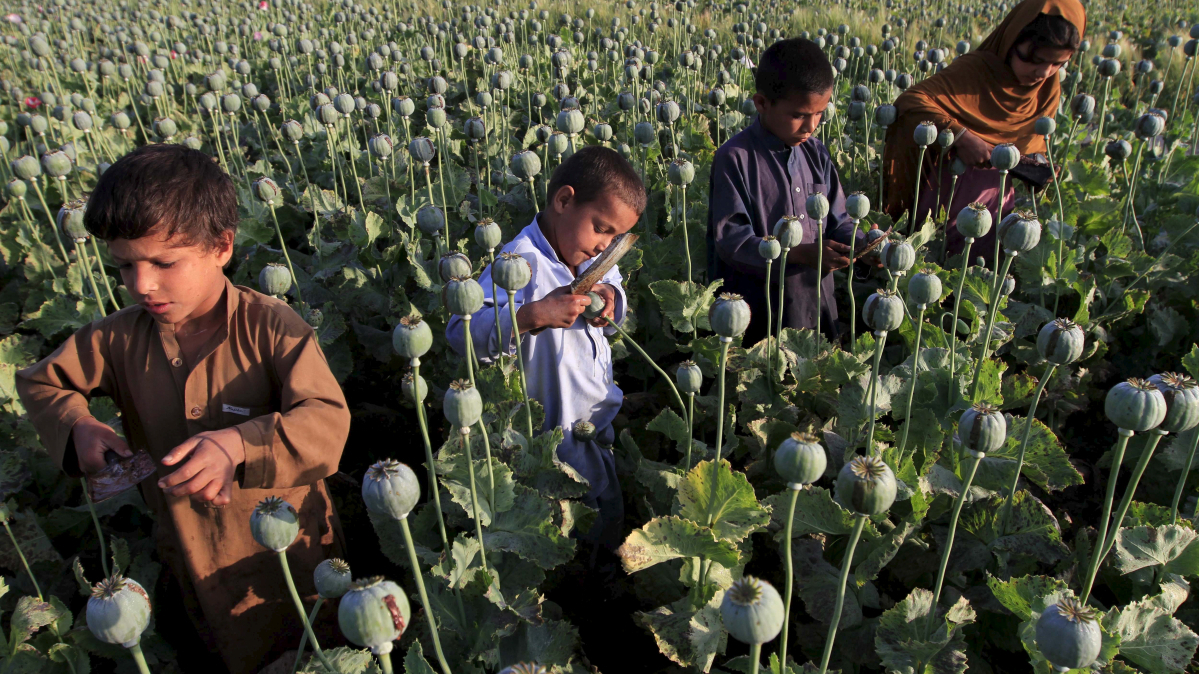
Opium poppy cultivation in Afghanistan surged by 330 per cent in 2026 despite a four-year ban, the United Nations said on Thursday. Afghan authorities disputed the findings, while Japan urged continued support for farmers seeking alternative livelihoods.
The United Nations Office on Drugs and Crime (UNODC) estimated that 43,300 hectares (433 square kilometres) were planted with opium poppies this year, up from 10,200 hectares (102 square kilometres) in 2025. Estimated opium production jumped from 296 tonnes to 1,466 tonnes.
Cultivation remains well below the 232,000 hectares recorded in 2022, before the ban. However, UNODC said poppy growing had spread to 16 provinces, with 76 per cent of cultivation concentrated in the north-east.
Farmers have been concealing poppy fields among cereal crops and behind walls to avoid eradication, the agency said. It warned that shrinking opium stockpiles could fuel further cultivation and increase heroin trafficking beyond Afghanistan.
UNODC Executive Director Monica Juma called for closer cooperation between Afghan authorities and the international community.
“It is essential for the de facto authorities and the international community to work together to support farming communities.”
Afghan ministry disputes UN findings
Afghanistan’s Interior Ministry rejected the report, arguing that UNODC had relied too heavily on satellite imagery while failing to account for crop eradication efforts.
According to the ministry, more than 26,000 hectares of narcotics-producing crops had been destroyed before harvest, reducing cultivation to almost zero by its own assessment.
“Therefore, any assessment that fails to take these measures and their results into account in its calculations is incomplete, unreliable and unfair,” the ministry said.
It also called on UNODC to publish its data sources, satellite image dates and methodology for accounting for eradication operations.
Japan urges continued support for farmers
Japan’s embassy in Kabul welcomed Afghanistan’s counter-narcotics efforts since 2022 but stressed the need for sustained assistance to help farmers move away from poppy cultivation.
“CN requires sustained efforts, both to reduce poppy cultivation and to support alternative livelihoods for former poppy farmers,” the embassy said.
Japan said it had contributed more than $33 million to counter-narcotics efforts since 2021 and signed an additional two-year, $9.4 million agreement with UNODC in September.
Read more:

















What is your opinion on this topic?
Leave the first comment