Uzbek President Shavkat Mirziyoyev held high-level talks in Seoul aimed at expanding South Korean investment, industrial cooperation and partnerships in technology, finance and infrastructure.
The meetings formed part of Mirziyoyev’s state visit to South Korea and covered parliamentary and economic ties, critical minerals, digital technology, transport and automotive manufacturing.
Political and economic cooperation
Mirziyoyev met South Korea’s National Assembly Speaker Cho Jung-sik and Prime Minister Han Son-suk to discuss further developing the two countries’ special strategic partnership.
During talks at the National Assembly, the two sides discussed strengthening parliamentary cooperation and overseeing the implementation of agreements reached at the highest level, particularly those covering trade, investment and cultural ties.
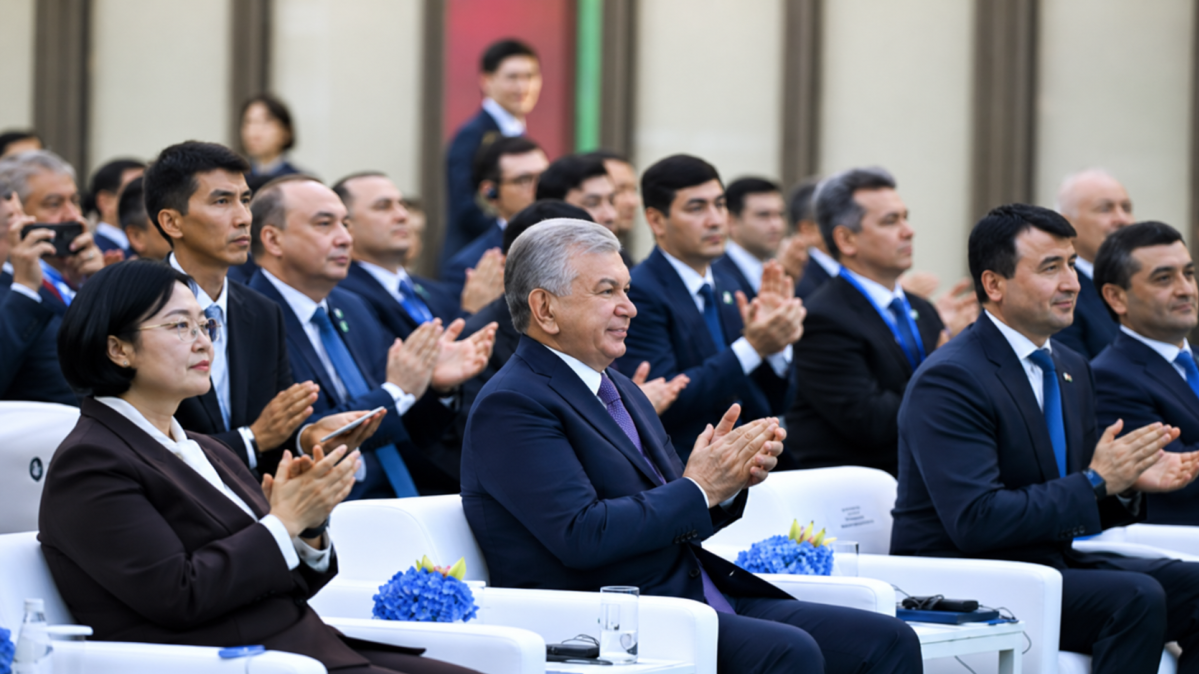
The president also took part in an Uzbek-Korean business forum attended by more than 300 representatives of government bodies, financial institutions and leading companies from both countries. He proposed combining Uzbekistan’s resource base with Korean technology and investment to create new sources of economic growth.
Proposed areas for cooperation include industrial production, energy and the green economy, transport infrastructure, digitalisation and artificial intelligence, semiconductors, biotechnology and pharmaceuticals.
$8 billion partnership and critical minerals
Financial cooperation featured prominently in the talks, with Mirziyoyev supporting a new $8 billion partnership programme with the Korea Eximbank. The two sides also discussed speeding up projects involving high-speed trains, a new Bio Centre, critical mineral processing and digital technologies.
A joint fund to finance critical mineral projects has also been launched. Uzbekistan and South Korea also discussed plans to establish a centre for the design and testing of semiconductors and new materials, involving Korean geological and materials research institutions.
Automotive and transport projects
Talks with Hyundai Motor Group, Kia and Hyundai Rotem focused on expanding production in Uzbekistan and increasing the localisation of automotive components.
The sides discussed launching new Kia models, producing electric and hybrid vehicles and expanding exports. Uzbekistan also discussed additional supplies of Hyundai Rotem high-speed trains, alongside the potential establishment of a service centre and the localisation of train components.
The first Hyundai Rotem high-speed trains have already begun operating on the Tashkent–Khiva route, halving travel times, according to the Uzbek presidential press service.
Finance, airports and urban infrastructure
Mirziyoyev also discussed financial cooperation with Shinhan Financial Group. The sides reviewed credit lines for Uzbek commercial banks and plans to establish a Shinhan Bank subsidiary in Uzbekistan, as well as green lending, digital banking and financial solutions for small and medium-sized businesses.
In talks with Korean infrastructure corporation KIND, Uzbekistan discussed a joint investment platform and plans fortransport and social infrastructure. The sides also considered developing a master plan for the area surrounding the future Tashkent international airport, connecting it to logistics hubs and urban infrastructure.
Meanwhile, Incheon International Airport Corporation discussed the modernisation of Urgench International Airport and the construction of the new Tashkent airport. The Korean company plans to open an office in Tashkent, which could also serve as a centre for airport management, digitalisation and personnel training.
Broader role for Korean companies
Mirziyoyev also met Lotte Group Chairman Shin Dong-bin. The sides discussed development projects using Korean technology, cooperation in copper foil production and Lotte’s potential involvement in managing Uzbekistan’s tourism centres.
The Uzbek president called on Korean companies to participate in projects ranging from copper processing and electrical equipment to robotics, energy storage, pharmaceuticals and urban infrastructure.
The meetings also produced a proposal to establish an Uzbek-Korean Industrial and Technological Alliance to expand cooperation between companies and research institutions.
The talks in Seoul point to a broader expansion of Uzbekistan-South Korea economic cooperation, moving beyond individual investment projects towards larger partnerships spanning manufacturing, finance, technology, critical minerals and strategic infrastructure.










What is your opinion on this topic?
Leave the first comment